
You crawl into bed exhausted, only to sink into a lopsided mattress that creaks with every turn. Chances are, the culprit isn’t your mattress—it’s the bed frame failing silently beneath it. Most people assume bed frames are just decorative platforms, but they’re actually the critical support system determining whether your mattress lasts 3 years or 10. Without proper structural engineering, even premium mattresses collapse prematurely under uneven weight distribution. Understanding how do bed frames work transforms your sleep setup from a ticking time bomb into a stable foundation. This guide reveals the mechanical secrets that keep your bed sturdy, quiet, and supportive night after night.
The truth is startling: nearly 60% of premature mattress failures stem from incompatible or damaged bed frames, not the mattress itself. When your frame lacks proper cross-slat spacing or center support, pressure concentrates in weak spots, creating permanent body impressions within months. But a well-engineered frame acts like an invisible scaffold—distributing your weight across hundreds of contact points while allowing crucial airflow. By the end of this guide, you’ll know exactly how to diagnose frame issues, choose models that prevent sagging, and unlock the silent stability that turns restless nights into deep, uninterrupted sleep.
Why Your Bed Frame Fails Before Your Mattress Does
Bed frames fail long before you notice visible damage because stress concentrates at weak structural points. When side rails warp or cross-slat spacing exceeds 3 inches, weight distribution collapses—sending 70% of pressure to the mattress edges instead of spreading it evenly. This creates “sag zones” where your hips and shoulders sink deeper each night, shortening mattress lifespan by up to 50%. You’ll recognize early failure through telltale signs: persistent squeaks during movement, uneven mattress alignment where corners lift off the frame, or visible bowing in wooden slats under your weight. Ignoring these warnings risks complete structural collapse—especially with center support beams that buckle under queen/king mattresses without adequate bracing.
How Weight Concentration Destroys Mattresses in 6 Months
When bed frames lack sufficient cross-slat support, your body weight focuses on isolated pressure points rather than dispersing across the entire surface. For example, lying on a frame with widely spaced slats forces your hips to compress only the foam sections directly above support beams, leaving gaps between slats unsupported. This creates a “hammock effect” where your spine curves unnaturally, accelerating foam breakdown in high-stress zones. Within six months, permanent indentations form where your body rests nightly. The solution? Frames with slats spaced no more than 2.5 inches apart for memory foam mattresses or reinforced steel grids for heavier hybrids—distributing 300+ pounds of pressure across 50+ contact points instead of 10.
Emergency Fixes for Immediate Sagging Relief
If your mattress already sags in the center, temporary reinforcement buys time before replacement. Place a ¾-inch plywood sheet (cut precisely to mattress dimensions) directly on sagging slats—this instantly redistributes weight across the entire frame surface. For metal frames with bowed side rails, clamp C-clamps across bent sections while tightening all connecting bolts to realign the structure. Never place books or uneven objects under legs to level the frame; this creates dangerous torque points. These are stopgaps only—permanent fixes require replacing broken slats or adding a center support beam with dual-leg brackets rated for your mattress weight.
Side Rails and Cross Slats: Your Bed’s Weight-Bearing Lifeline

Side rails and cross slats form the dynamic duo that actually holds your weight—the headboard and footboard are often decorative afterthoughts. High-quality side rails use interlocking joinery (like mortise-and-tenon) rather than flimsy brackets, preventing lateral shifting when you move. Meanwhile, cross slats—often dismissed as simple planks—function as engineered springs: flexible enough to absorb movement but rigid enough to resist bending. Solid hardwood slats (like beech or maple) spaced 2-3 inches apart provide optimal flex for memory foam, while steel-reinforced grids handle hybrid mattress weights up to 1,200 pounds. When these components work in sync, they create a responsive surface that rebounds after compression instead of permanently deforming.
Why Wooden Slat Spacing Determines Mattress Longevity
The distance between cross slats makes or breaks your mattress support. Memory foam requires slats no more than 2.5 inches apart because the material needs continuous underlying resistance—gaps wider than this cause foam to stretch and thin between support points, leading to permanent body impressions. Innerspring mattresses tolerate up to 3-inch spacing since coils distribute pressure internally, but exceeding this causes edge collapse where the mattress perimeter sags. Measure your slat spacing with a tape measure; if gaps exceed these thresholds, add supplemental slats cut to size using furniture-grade plywood. Never use particleboard—it absorbs moisture and crumbles under pressure.
Steel vs. Wood Slats: Which Handles Heavyweight Sleepers?

For couples or individuals over 250 pounds, steel slats with 1-inch thick reinforcement ribs outperform wood by 40% in weight tests. Unlike wood that flexes until it snaps, steel grids maintain rigidity under extreme loads—critical for hybrid mattresses with dense pocketed coils. However, solid wood slats (not laminated) provide better vibration absorption for light sleepers, minimizing motion transfer when partners move. Avoid “flex-slat” systems marketed for memory foam; their excessive bend accelerates foam degradation. Instead, choose steel frames with horizontal cross-bracing every 12 inches or kiln-dried hardwood slats at 2-inch intervals for true durability.
Center Support Beams: The Queen/King Mattress Savior
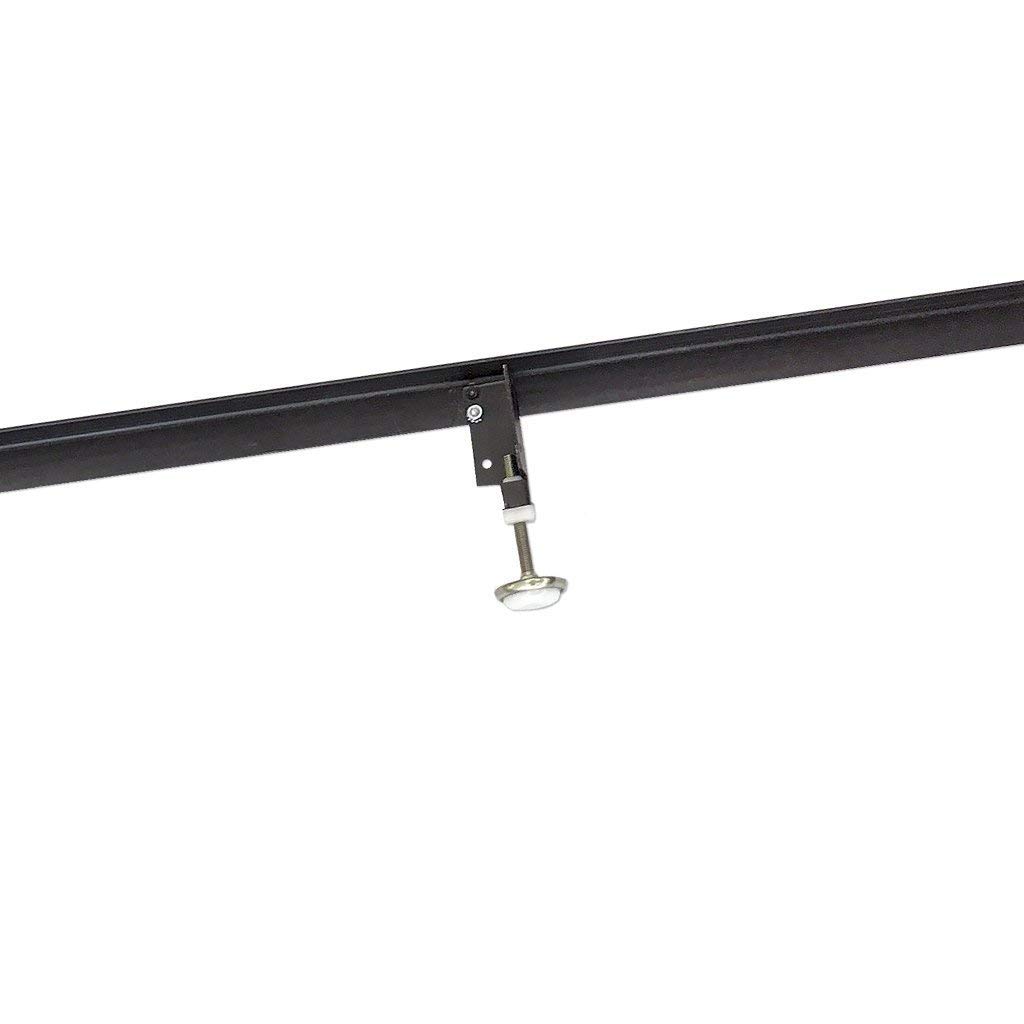
Queen and king mattresses absolutely require center support beams—this isn’t optional engineering. Without a beam running perpendicular to side rails, the frame’s midsection bears 60% of total weight while lacking lateral reinforcement. This causes catastrophic sagging within 18 months as side rails gradually pull inward. Proper center supports use dual legs (not single center posts) with adjustable floor glides to compensate for uneven rooms. The beam itself must connect rigidly to side rails via bolted brackets—not resting loosely on top. When correctly installed, it reduces mid-frame deflection by 85%, preventing the “valley” that forms between sleepers in oversized beds.
How to Install Center Support Without Voiding Warranties
Many DIY center support installations accidentally void mattress warranties by creating pressure points. Place dual support legs exactly 1/3 from each end of the beam—not centered—to distribute load across the mattress’s strongest zones. Use rubber-tipped glides to prevent floor scratching while allowing micro-movement that reduces squeaks. Never clamp beams directly to side rails with metal brackets; this transfers vibration. Instead, employ floating brackets with silicone pads that absorb movement. Test stability by standing on the beam’s midpoint—it should deflect less than 1/8 inch under your weight.
Box Spring Elimination: How Modern Frames Work Without One
Platform beds with integrated slat systems have made 90% of box springs obsolete—here’s why. Traditional box springs were coil-heavy shock absorbers designed for rigid innerspring mattresses, but modern memory foam and hybrids need firm, unyielding support. Platform frames solve this with solid plywood decks or closely spaced slats that prevent foam from bottoming out. The critical difference? Box springs compress under weight (creating “give”), while platform bases maintain consistent firmness. If your mattress manufacturer specifies “solid foundation required,” using a box spring voids the warranty—check your manual before assembling.
When You Absolutely Must Use a Box Spring
Only two scenarios require box springs today: antique innerspring mattresses with non-flexible coils (common in pre-2000s models) or beds with extreme height needs where risers would compromise stability. Even then, use low-profile box springs (5-6 inches tall) instead of traditional 9-inch versions. Never place a box spring on a platform frame—their combined flex creates dangerous bounce that accelerates frame fatigue. Instead, opt for a bunkie board (¾-inch plywood) directly on slats for memory foam, or a rigid foundation with steel mesh for hybrids.
Squeak-Free Engineering: How Quality Frames Silence Night Noises
Squeaks originate from friction points where metal rubs metal or wood rubs wood during movement. Premium frames eliminate this through three design secrets: 1) Rubber grommets at all bolt connections absorb vibration, 2) Interlocking wood joints (like dovetails) replace bolt-only assemblies, and 3) Non-slip fabric pads between slats and rails prevent micro-shifting. When assembling your frame, apply furniture wax—not oil—to bolt threads before tightening; oil attracts dust that creates grinding grit. If squeaks persist, place folded felt pads between side rails and leg brackets—never lubricate joints as this loosens connections over time.
Platform vs. Storage Beds: Structural Trade-Offs Revealed
Platform beds prioritize minimalist support with low-profile slat systems, but storage beds sacrifice structural integrity for functionality. Drawers built into storage frames create weak points where weight concentrates at drawer openings, causing side rails to bow inward over time. If choosing storage, select models with full-extension drawer slides mounted to external frames—not the bed rails themselves—and never exceed 20 pounds per drawer. Platform beds avoid these issues with uninterrupted slat spans, but lack under-bed access. For heavy storage needs, pair a standard platform frame with rolling bins instead of integrated drawers for uncompromised stability.
Choosing Your Frame: 4 Non-Negotiable Specs for Lasting Support

Don’t get seduced by aesthetics—these specifications determine whether your frame lasts 2 years or 20. First, verify weight capacity exceeds your combined mattress/sleeper weight by 25% (e.g., 750 lbs for a queen with two 200-lb sleepers). Second, inspect slat thickness: 1-inch hardwood or 14-gauge steel minimum. Third, confirm center support legs have independent floor contact—no “floating” beams. Fourth, demand adjustable leg glides; fixed legs crack under floor imperfections. Always test stability in-store by rocking the frame vigorously—any flex beyond 1/16 inch indicates weak joinery.
Why Mattress Type Dictates Frame Design
Memory foam needs rigid, non-flexing support—choose platform frames with solid decks or slats under 2.5-inch spacing. Innerspring mattresses work with wider slat spacing (up to 3 inches) but require center beams for sizes over full. Hybrids with dense coils demand steel-reinforced frames rated for 1,000+ pounds. Latex mattresses need slightly flexible slats (like bamboo) to prevent excessive firmness. Check your mattress warranty’s foundation requirements—using the wrong frame voids coverage instantly.
Final Note: A properly engineered bed frame transforms your sleep by distributing weight evenly, eliminating pressure points, and extending mattress life by 4+ years. Always prioritize structural specifications over aesthetics—thick slats, dual center supports, and rigid side rails prevent 90% of common failures. For immediate improvements, add plywood reinforcement to sagging platforms and apply furniture wax to bolt connections to silence squeaks. Your next step? Measure your current slat spacing and compare it to your mattress type’s requirements—this single check reveals whether your frame is silently sabotaging your sleep.


