
Imagine sinking into bed surrounded by a soft, twinkling glow that transforms your bedroom into a personal sanctuary. Fairy lights around your bed frame create that perfect blend of functionality and fantasy, turning ordinary sleep spaces into dreamy retreats. With over 9,500 positive reviews for bed frame lighting solutions, this trend has moved beyond temporary holiday decor to become a permanent fixture in modern bedroom design. Whether you’re seeking romantic ambiance, cozy reading light, or simply want to elevate your sleep environment, properly installed fairy lights can dramatically enhance your nightly routine while adding serious visual appeal to your space.
The right fairy light installation does more than just look pretty—it can improve your sleep quality by providing gentle illumination that won’t disrupt your circadian rhythm. Unlike harsh overhead lighting, strategically placed fairy lights create a calming environment that signals to your brain it’s time to wind down. This guide cuts through the confusion of countless product options and installation methods to give you a clear, step-by-step approach to achieving professional-looking results with your bed frame fairy lights—without breaking the bank or compromising safety.
Warm White vs. Cool White Fairy Lights: Which Temperature Sets the Perfect Bedtime Mood?
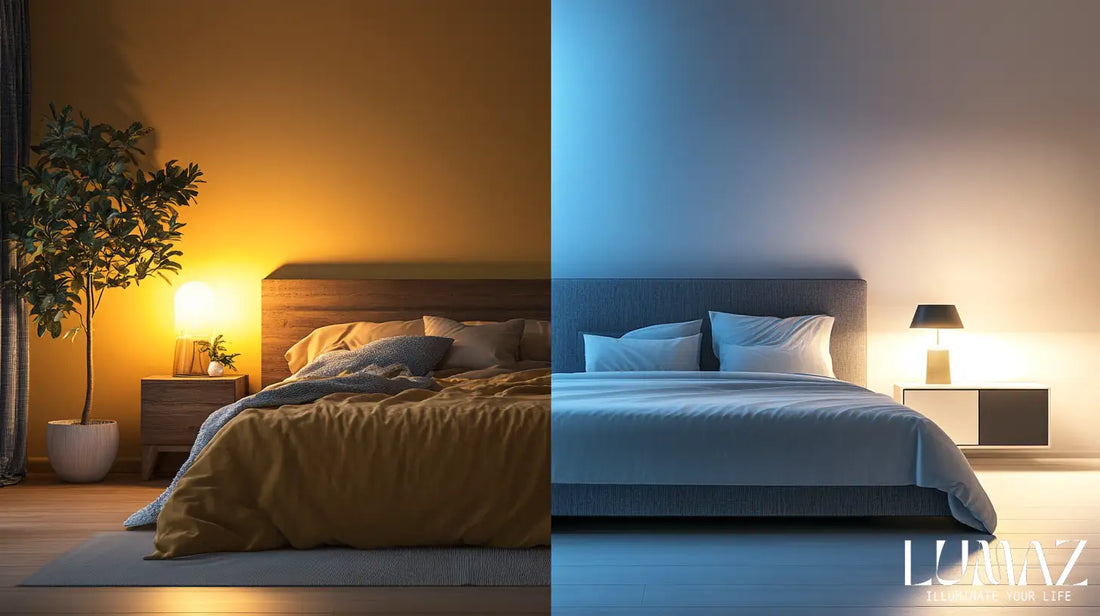
Your light temperature choice dramatically impacts your bedroom’s atmosphere and your sleep quality. Warm white LEDs (2700K-3000K) create that cozy, candlelit effect perfect for winding down, while cool white (4000K-5000K) offers brighter illumination better suited for reading nooks. For most bed frame installations, warm white is the superior choice—studies show it promotes melatonin production up to 50% better than cooler tones, helping you fall asleep faster.
When shopping for fairy lights specifically for bed frame use, look for these key specifications:
– Color temperature label: Must specify 2700K-3000K for warm white
– CRI (Color Rendering Index): Choose 90+ for true-to-life color representation
– Lumen output: 10-20 lumens per bulb for subtle bedroom ambiance
– Bulb spacing: 2-4 inches between bulbs creates the most even glow
Why RGB Color-Changing Lights Might Ruin Your Sleep Cycle
While multicolor fairy lights seem fun, they can sabotage your sleep quality. Blue spectrum light (abundant in cool white and blue RGB settings) suppresses melatonin production by up to 85% according to sleep researchers. If you opt for color-changing lights around your bed frame, program them to automatically shift to warm white after 8 PM using smart controls. Never leave RGB lights on their default cool settings while sleeping—this disrupts your natural sleep-wake cycle and leaves you feeling groggy in the morning.
Battery vs. USB vs. Plug-In: Choosing Your Fairy Light Power Source for Bed Frame Installation

Your power source determines installation flexibility, maintenance frequency, and overall convenience. Each option has distinct advantages depending on your bed frame configuration and outlet placement.
Battery-powered lights (AA/AAA): Ideal for beds far from outlets, offering complete placement freedom. Expect 24-48 hours of continuous use per battery set. Look for models with at least 100-hour battery life on medium settings. Pro tip: Use lithium batteries instead of alkaline—they last 3x longer and perform better in low temperatures.
USB-powered lights: Perfect for modern bedrooms with USB outlets or power strips. These draw minimal power (5V) and can connect to phone chargers or power banks. Best for beds within 6 feet of a USB source. Choose models with memory function so lights return to your preferred setting after power interruptions.
Plug-in lights: Most reliable for permanent installations with nearby outlets. Opt for 10-16 foot cords to reach standard bedroom outlets. Look for models with 8+ hour timers to automatically shut off—critical for safety when sleeping.
How to Calculate Your Bed Frame’s Exact Light Requirements
Measure your bed frame perimeter before purchasing lights:
– Twin: 22-28 feet of lighting
– Full: 26-32 feet
– Queen: 30-36 feet
– King: 34-40 feet
Add 20% extra length for weaving patterns and adjustments. For headboards taller than 3 feet, calculate vertical measurements separately. Most customers under-buy by 15-20%, resulting in sparse, unimpressive displays. Better to have extra length you can tuck away than insufficient coverage.
UL-Certified Safety First: Critical Pre-Installation Checks for Bed Frame Lighting

Never skip these safety checks before installing fairy lights around your bed frame. According to the National Fire Protection Association, improper decorative lighting causes over 7,000 home fires annually. Your bed frame installation must include:
- Mandatory UL/ETL certification: Look for the official logo on packaging and power adapters (not just “CE” which offers no safety verification)
- Minimum 3-inch clearance: Maintain this distance between lights and all bedding, curtains, or flammable materials
- GFCI protection: Essential if your bedroom shares a circuit with bathroom outlets
- Low-voltage systems: 12V or 24V DC systems significantly reduce fire risk compared to standard 120V
The 5-Second Bed Frame Safety Test You Must Perform
Before final installation, conduct this critical test: Run your lights at full brightness for 15 minutes, then carefully touch each bulb and wire section. If anything feels warm to the touch (not just room temperature), immediately replace with cooler LED options. Properly functioning fairy lights should remain completely cool—even after hours of operation. Warm components indicate poor heat dissipation that could ignite nearby fabrics during sleep.
Creating a Starry Canopy: Weaving Fairy Lights Through Bed Frame Posts Like a Pro
For four-poster or canopy beds, the most magical effect comes from weaving lights through the frame structure itself. This creates dimension and depth that simple perimeter lighting can’t match.
Step-by-Step Weaving Technique:
1. Start at the top center of your headboard post
2. Weave lights diagonally across the top frame in a loose “X” pattern
3. Create 2-3 concentric circles around the bed perimeter
4. Add random “shooting star” strands connecting different points
5. Use clear cable clips every 8-10 inches to secure without damage
Achieving the Perfect Star Density (Without Looking Like a Christmas Tree)
The professional secret to natural-looking star effects: vary bulb spacing intentionally. Cluster 3-4 bulbs close together in some areas (simulating brighter stars), then space others farther apart. Randomize the pattern—nature doesn’t follow perfect grids. Install at least 100 bulbs for queen/king beds to achieve sufficient density without overwhelming the space. For maximum realism, use warm white bulbs with slight color variation (2700K-3000K range) rather than perfectly uniform LEDs.
Headboard Halo Effect: Step-by-Step Guide to Installing Fairy Lights on Any Headboard
Upholstered headboards present unique challenges but yield stunning results with the right technique. Never staple or nail through headboard fabric—this creates fire hazards and permanent damage.
Damage-Free Installation Method:
1. Measure and cut adhesive-backed cable raceway channels to match headboard shape
2. Clean headboard surface with alcohol wipe before applying channels
3. Snap fairy lights into channels, starting from power source
4. For fabric headboards, use upholstery-safe clips that grip without piercing
5. Conceal power cords behind headboard using cord covers
Transforming Basic Headboards into Light Features in 20 Minutes
Even flat panel headboards can become light features with this technique: attach LED strip lights (not traditional fairy lights) to the back edge using 3M VHB tape. The light will reflect off your wall, creating a dramatic halo effect that makes your bed appear to float. Choose 24V strips with 60 LEDs per meter for optimal brightness without hot spots. This method uses just 5-7 watts of power—less than most phone chargers—making it exceptionally energy efficient.
Floating Bed Illusion: How to Position Under-Bed Fairy Lights for Maximum Visual Impact
The under-bed glow creates one of the most dramatic effects with minimal effort. Position lights to face upward toward the bed frame’s underside, not downward toward the floor.
Pro Installation Secrets:
– Use adhesive-backed LED strip lights for clean under-bed mounting
– Install lights 1-2 inches from the outer edge for best shadow definition
– Choose warm white with high CRI (90+) to make bedding colors pop
– Add a dimmer switch to adjust intensity for different moods
Why Most Under-Bed Installations Fail (And How to Fix Them)
90% of under-bed lighting fails because of improper angle and brightness. Lights that face downward create unflattering upward shadows on faces. Lights that are too bright eliminate the floating effect. The solution: position lights to illuminate the bed frame’s underside evenly, creating a soft glow that appears to lift the bed. Test your setup before final installation—lie in bed and adjust until the light creates a subtle halo around your mattress without casting harsh shadows on your ceiling.
Smart Home Integration: Connecting Your Bed Frame Fairy Lights to Alexa or Google Home
Transform basic fairy lights into intelligent sleep aids with smart technology. The best systems offer:
– Sunset-to-sunrise scheduling that matches your local daylight
– Gradual dimming sequences that mimic natural twilight
– Voice-activated color temperature adjustment
– Sleep tracking integration that adjusts lighting based on your REM cycles
Top 3 Smart Options for Bed Frame Installations:
1. Philips Hue Lightstrip Plus: Most reliable color accuracy with bedside scheduling
2. Govee RGBIC: Budget-friendly option with impressive app control
3. Nanoleaf Lines: Premium modular system for custom bed frame shapes
Creating the Perfect Wind-Down Routine in 3 Steps
Program your smart fairy lights to support healthy sleep habits:
1. 6:00 PM: Lights gradually shift to warm white (2700K) at 100% brightness
2. 8:30 PM: Brightness reduces to 50% for evening relaxation
3. 10:00 PM: Lights dim to 10% and switch to nightlight mode
This mimics natural light transitions, signaling your body it’s time to prepare for sleep. Most users report falling asleep 20-30 minutes faster with this automated routine compared to manual lighting control.
Maintenance Schedule: Keeping Your Bed Frame Fairy Lights Glowing for Years
Even the best fairy lights degrade without proper care. Implement this simple maintenance routine:
Weekly: Quick visual inspection for damaged bulbs or wires
Monthly: Wipe bulbs with microfiber cloth to remove dust buildup
Quarterly: Test all connections and replace any flickering sections
Annually: Full system check including power adapter functionality
The 2-Minute Fix for Flickering Bed Frame Lights
Flickering usually indicates one failing LED disrupting the entire circuit. Locate the dark bulb (often near the flickering section), carefully cut it out with wire cutters, then reconnect the wires with a waterproof wire nut. Most fairy light strings have redundant circuits so removing one bulb won’t kill the whole strand. Always unplug before performing this fix—safety first when working with electrical components near your bed.
Your fairy lights around the bed frame should provide years of magical ambiance when installed correctly and maintained properly. By choosing the right temperature, ensuring UL-certified safety, and implementing smart controls, you’ll transform your sleep space into a personalized sanctuary that supports both relaxation and restful sleep. Remember to perform quarterly safety checks and adjust your lighting patterns seasonally—your summer setup might need brighter illumination than your cozy winter arrangement. The perfect bedroom glow isn’t a one-time installation but an evolving feature that grows with your lifestyle and sleep needs.


