
That unsettling creak when you roll over. The slight wobble when you sit on the edge. These aren’t just annoyances—they’re warning signs your bed frame might be dangerously close to exceeding its weight capacity. Most people never think about bed frame weight capacity until something breaks, but this critical specification determines whether your sleeping foundation will last for years or fail catastrophically in the middle of the night. Understanding your true weight requirements could prevent a potentially dangerous collapse that sends you and your mattress crashing to the floor.
When manufacturers list a bed frame’s weight capacity, they’re not just providing a number—they’re defining the absolute limit of what their engineering can safely support. This isn’t theoretical; it includes everything from your mattress and box spring to you, your partner, pets, and even that heavy quilt you pile on during winter. Ignoring these limits doesn’t just void your warranty—it creates genuine safety hazards where structural components can suddenly fail without warning. In this guide, you’ll discover exactly how to calculate your specific weight needs, identify the structural features that determine capacity, and avoid common mistakes that compromise your bed’s stability.
Why Bed Frame Weight Limits Are Critical for Avoiding Dangerous Collapses
Exceeding your bed frame’s weight capacity isn’t merely inconvenient—it’s a legitimate safety hazard waiting to happen. When a frame operates beyond its engineered limits, stress points begin failing silently until the structure can no longer contain the pressure. The first warning might be subtle: a new squeak here, a slight wobble there. But these minor symptoms often precede sudden, catastrophic failure where critical joints separate or support legs buckle without warning.
Immediate Risks of Overloaded Bed Frames
Structural failure during use – The most dangerous scenario occurs when the frame collapses while you’re sleeping or sitting on the edge. Without warning, the entire structure can give way, sending sleepers crashing to the floor with potential injuries from impact or being pinned by heavy components. Metal frames may develop hairline cracks that suddenly propagate, while wooden frames can experience joint separation that happens instantaneously.
Progressive damage you can’t see – Even if your frame hasn’t collapsed yet, exceeding weight limits causes invisible damage. Bolts stretch, welds weaken, and wood fibers compress beyond recovery. This “hidden damage” accumulates with each use, creating a ticking time bomb that fails when you least expect it—often during a particularly active night’s sleep or when multiple people sit on the bed simultaneously.
Warranty voidance – Most manufacturers explicitly void warranties when frames are used beyond specified capacity limits. That expensive frame you thought was covered becomes your financial responsibility the moment you exceed its engineered limits, leaving you with no recourse when (not if) it eventually fails.
Standard vs. Heavy-Duty Bed Frames: Matching Capacity to Your Actual Needs

Bed frame weight capacity isn’t one-size-fits-all—manufacturers engineer specific models for different usage scenarios. Understanding these categories prevents you from either overpaying for unnecessary capacity or dangerously under-specifying your foundation.
How to Identify Your Required Capacity Tier
400-600 lb capacity frames – These standard models work for lighter sleepers with basic mattresses. If you’re a single person under 250 lbs using a standard innerspring or thinner memory foam mattress (typically 60-90 lbs), this capacity range may suffice. However, add a second sleeper or a heavier hybrid mattress, and you’ve likely exceeded safe limits without realizing it.
600-1,000 lb capacity frames – This heavy-duty category handles most real-world scenarios. They accommodate couples where combined weight reaches 500 lbs plus a 120 lb hybrid mattress and bedding. Look for these frames if you have a memory foam or latex mattress (which can weigh 100-150 lbs alone), or if either sleeper exceeds 250 lbs. These frames feature noticeably thicker materials and additional support points.
1,000+ lb commercial-grade frames – Designed for institutional use, these over-engineered frames handle extreme weights. They’re essential if you have an adjustable base (which adds 100+ lbs of motors and mechanisms), extremely dense mattresses, or combined sleeper weights exceeding 600 lbs. Don’t confuse marketing terms like “heavy-duty”—verify actual tested weight limits in manufacturer specifications.
Calculate Your Exact Bed Frame Weight Needs in 3 Simple Steps
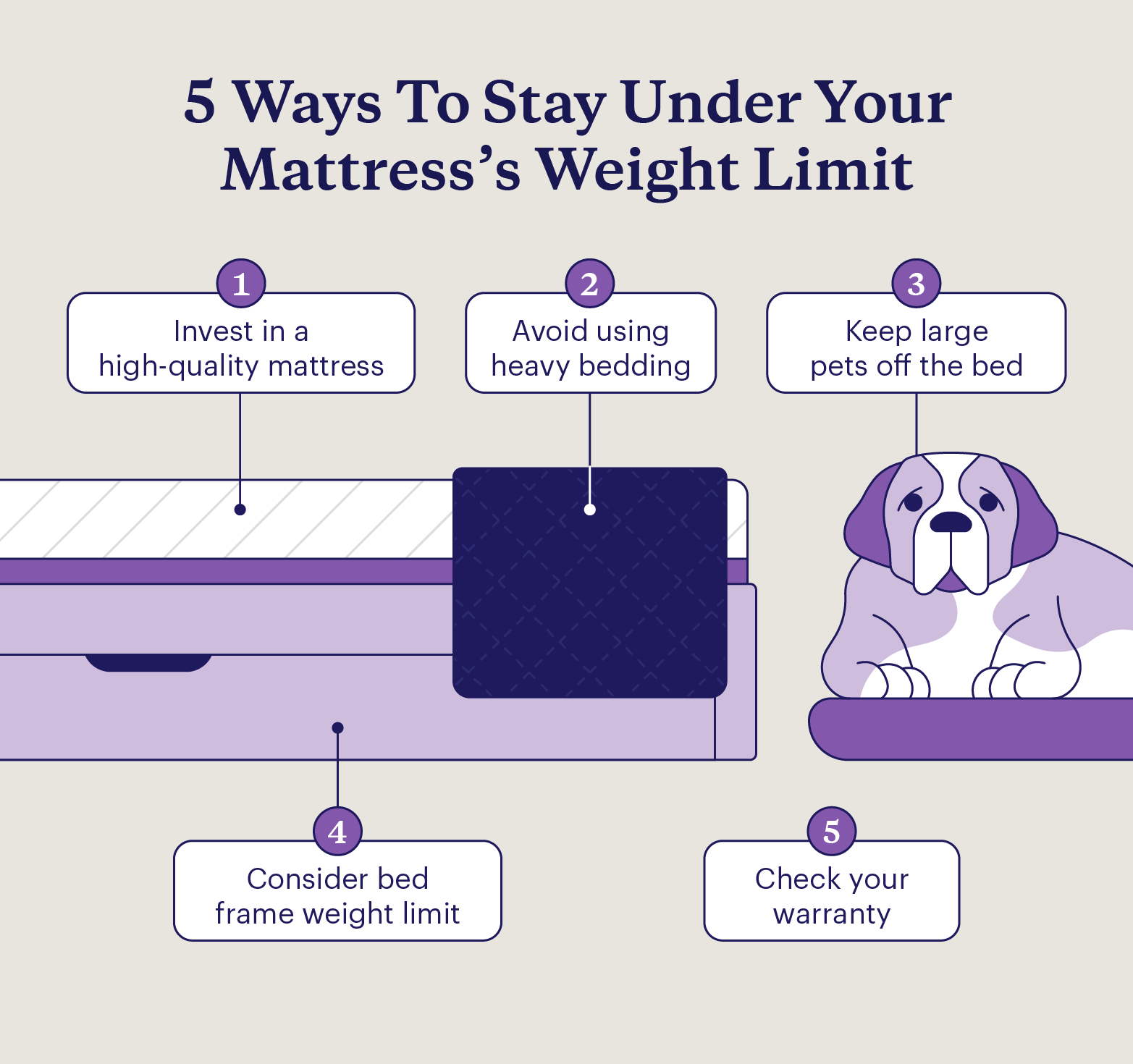
Guessing your weight capacity requirements is dangerous. Follow this precise calculation method to determine your actual needs with safety margin built in.
Step 1: Add Your Complete Load Components
Grab your calculator and add these weights:
– Your mattress weight (check manufacturer specs—hybrids often 100-150 lbs)
– Combined weight of all regular sleepers
– Typical additional weight (pets, heavy comforters, books you read in bed)
Example calculation: Queen hybrid mattress (120 lbs) + two sleepers (180 + 220 lbs) + weighted blanket (30 lbs) = 550 lbs total static load.
Step 2: Apply Critical Safety Margin
Multiply your total static load by 1.3 to account for dynamic forces. Movement during sleep creates impact loads up to 30% higher than static weight—rolling over, getting in/out of bed, or even vigorous activity temporarily multiplies stress on the frame.
Using our example: 550 lbs × 1.3 = 715 lbs minimum required capacity. This means you need a heavy-duty frame rated for at least 750 lbs, not the standard 600 lb model that might seem sufficient at first glance.
Step 3: Verify Against Frame Specifications
Never rely on marketing terms like “sturdy” or “reinforced.” Find the manufacturer’s actual tested weight capacity in product specifications. If it’s not clearly stated, assume the frame isn’t engineered for precise capacity requirements and move to another option. Remember: weight capacity includes everything on the frame, not just sleepers.
5 Critical Assembly Mistakes That Compromise Your Bed Frame’s Weight Capacity
Even the strongest bed frame becomes dangerously weak when assembled incorrectly. These common errors silently reduce your frame’s effective weight capacity by 30% or more.
Skipping Center Support Installation
Queen and king size beds absolutely require center support beams with at least one center leg—yet many users omit this component to save time. Without it, weight concentrates at the edges, potentially reducing effective capacity by 40%. You’ll notice early warning signs: mattress sagging in the middle and excessive flex when sitting near the center.
Using Incorrect Fastener Torque
Bolts that are too loose allow movement that fatigues metal and wood over time. Bolts that are too tight can strip threads or crack components. Most frames require 15-25 ft-lbs torque on critical joints—use a torque wrench for critical connections rather than guessing with a standard wrench. Check connections again after two weeks as initial settling occurs.
Ignoring Floor Surface Requirements
Placing a bed frame on uneven flooring creates dangerous stress points. Even a 1/4-inch height difference between legs can reduce effective capacity by 25% as weight redistributes unevenly. Always use adjustable legs to compensate for uneven floors, and place frames directly on subflooring—not carpet padding—which can compress under load.
Can Two 400 lb Frames Hold 800 lbs? Debunking Weight Capacity Myths
Common misconceptions about bed frame weight capacity lead to dangerous assumptions. Let’s clarify these critical misunderstandings.
Myth: Weight Capacity Is Additive Across Multiple Frames
Reality: Placing two separate bed frames side-by-side doesn’t combine their capacities. Each frame operates at its individual limit. If you exceed 400 lbs on either frame, that frame will fail regardless of the other frame’s capacity. For true 800 lb capacity, you need a single engineered frame designed for that total load.
Myth: Mattress Weight Doesn’t Count Toward Capacity
Reality: Your mattress consumes 20-30% of your frame’s capacity before you even get in bed. A heavy hybrid mattress might weigh 150 lbs—meaning a “600 lb capacity” frame actually only supports 450 lbs of sleeper weight. Always include mattress weight in your calculations.
Queen vs. King Size: How Dimensions Impact Weight Capacity Requirements
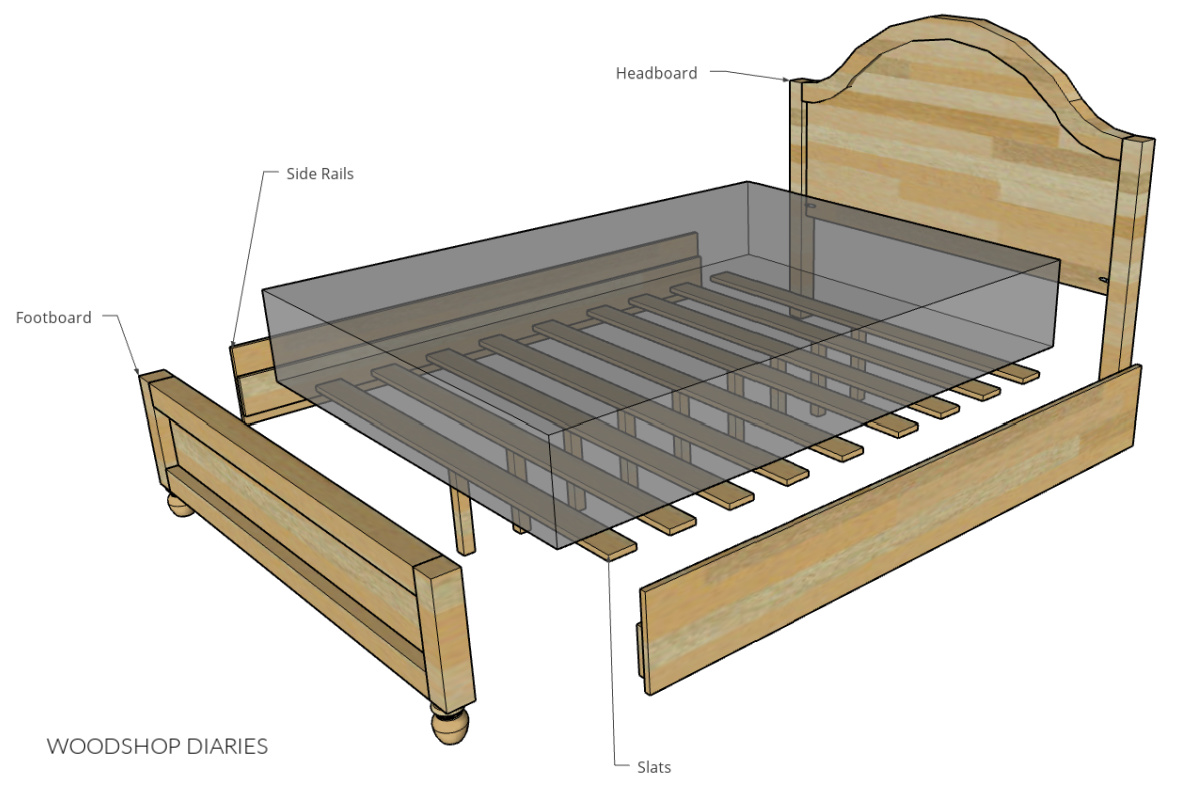
Larger beds require significantly higher capacity due to increased leverage forces. A king-size bed with the same sleeper weight as a queen actually places more stress on the frame structure.
Why King Beds Need Higher Capacity Ratings
The extra width of king and California king frames creates greater leverage forces on support points. A 76-inch wide king bed generates 20% more stress on center supports than a 60-inch wide queen with identical weight distribution. That’s why quality king frames always include multiple center support legs—never settle for just one center leg on king-sized beds.
Visual Warning Signs Your Frame Is Overstressed
- Mattress sagging more than 1 inch in the center
- Visible bending in metal side rails when viewed from the foot of the bed
- Uneven leg contact where some legs lift slightly when weight is applied
- New squeaks or creaks that develop after initial assembly period
How to Test Your Existing Bed Frame’s Weight Capacity Before Disaster Strikes
Before investing in a new frame, verify whether your current one still meets safety standards with this simple field test.
The Progressive Load Test Method
- Start with no weight on the bed
- Add 100 lbs of weight (sandbags, books in boxes) to the center
- Check for unusual flexing or sounds
- Gradually add 50 lb increments up to your calculated needs
- Stop immediately if you notice excessive flexing (more than 1 inch), new noises, or leg separation
Important: Never exceed the manufacturer’s stated capacity during testing. If your frame shows stress at loads below its rating, replace it immediately—hidden damage may have already compromised structural integrity.
Hospital-Grade Bed Frames: When You Need 1,000+ lbs of Uncompromising Support
For genuine heavy-duty needs, commercial-grade frames offer engineering you won’t find in standard retail models. These frames feature 14-16 gauge steel (thicker than the 18-20 gauge in standard frames), industrial fasteners, and multiple cross-bracing elements that distribute weight across eight or more contact points with the floor.
Critical Features of True Heavy-Duty Frames
- Center support beam with dual legs positioned at one-third points, not just the middle
- Slat spacing no wider than 3 inches to prevent mattress sagging
- Reinforced corner brackets with gusset plates, not just right-angle brackets
- Weight verification labels showing actual tested capacity, not marketing claims
When shopping for heavy-duty frames, ignore terms like “reinforced” or “sturdy” and demand specific capacity numbers backed by testing documentation. The strongest frames will clearly state “tested to support X lbs” with details about test methodology.
Final Note: Your bed frame’s weight capacity isn’t just a number—it’s the foundation of your safety and sleep quality. By calculating your actual needs with proper safety margins, selecting frames with verified capacity ratings, and avoiding common assembly mistakes, you’ll ensure years of stable, quiet support. Always choose a frame rated at least 25% higher than your calculated needs to account for dynamic forces and future changes. When in doubt between capacity tiers, spend the extra for the heavier-duty model—your safety and peace of mind are worth far more than the modest price difference.


