
That persistent creak every time you roll over isn’t just annoying—it’s a warning sign your wooden bed frame needs attention. A sturdy foundation is essential for quality sleep and mattress longevity, yet even well-crafted frames develop squeaks, wobbles, or cracks from nightly use. Ignoring these issues risks structural failure and costly replacements. The good news? Most wooden bed frame repair problems can be fixed in under two hours with basic tools you likely own. This guide delivers actionable solutions for silencing noise, reinforcing weak joints, and restoring your bed’s stability without breaking the bank.
Pinpointing Your Wooden Bed Frame’s Squeak, Wobble, or Crack
Before grabbing tools, isolate the exact failure point—this prevents wasted effort and ensures lasting repairs. Start by stripping the mattress and bedding completely. With a helper applying weight at different positions (sitting, shifting side-to-side), systematically inspect these critical zones:
- Joint Connections: Check where headboard/footboard meets side rails—loose bolts here cause 80% of wobbles. Listen for rubbing sounds at metal brackets or wooden tenons.
- Center Support System: Press down firmly on the middle of the frame. Sags indicate broken slats, a failed center leg, or inadequate weight distribution.
- Slats and Rails: Run hands along rail edges where slats connect. Squeaks often originate from wood-on-wood friction at these contact points.
- Leg Attachments: Wiggle each leg vertically and horizontally. Movement means stripped screw holes or cracked wood at the joint.
Note whether issues worsen under specific pressures—this diagnosis determines your repair strategy. A creak when weight shifts left likely points to a loose left-side rail connection, while uniform wobbling suggests foundational instability.
Must-Have Tools and Materials for Wooden Bed Frame Repair
Gather these essentials before starting—most are household staples or inexpensive hardware store finds. Skipping proper supplies risks incomplete fixes that reappear within weeks:
- Core Repair Kit: Phillips and flat-head screwdrivers, adjustable wrench, rubber mallet, and medium/fine sandpaper (120/220 grit)
- Critical Adhesives: Waterproof wood glue (Titebond II or III), wood filler matching your frame’s finish
- Reinforcement Hardware: #8 or #10 wood screws (1.5–3 inches), L-brackets, mending plates, and steel corner braces
- Clamping System: 2–3 bar clamps or C-clamps to hold glued joints under pressure
- Friction Fighters: Candle wax or bar soap for lubrication—never use oil (it attracts dust and stains)
Pro Tip: Keep a small container of matching wood stain and polyurethane for seamless finishing after repairs. For antique frames, test materials on hidden areas first.
Repairing Common Wooden Bed Frame Problems
Silence Annoying Squeaks with Tightening and Lubrication
Squeaks almost always stem from wood or metal components rubbing due to loose hardware. Fix them permanently in three targeted steps:
- Systematically Tighten Every Fastener: Starting at the headboard, tighten all bolts and screws with a wrench—don’t just turn until resistance, but apply firm pressure for 2 full turns past snug. Pay special attention to center rail brackets, which bear 70% of mattress weight.
- Identify Friction Points: With your helper recreating the squeak, pinpoint exact contact areas. Common culprits include slat ends rubbing against rail grooves or bolt heads grinding against metal plates.
- Apply Dry Lubricant: Rub candle wax or a dry bar of soap directly onto wood-to-wood contact points. For metal joints, use powdered graphite sparingly. Wipe excess immediately to prevent residue buildup.
Time Saver: If tightening alone stops the noise, apply thread-locking adhesive (Loctite Blue 242) to bolt threads during reassembly—this prevents future loosening without permanent fixation.
Secure Wobbly Joints: Glue and Reinforce Loose Connections

Wobbles indicate failing structural joints. Address both metal-and-wood and traditional mortise-and-tenon joints:
- For Stripped Bolt Holes: Remove the bolt, fill the hole with toothpicks or wooden matchsticks coated in wood glue, reinsert the bolt once dry, and tighten. Alternatively, drill a new 1/8-inch pilot hole 1 inch away and use a longer screw.
- For Loose Mortise-and-Tenon Joints:
- Disassemble the joint completely using gentle mallet taps if stuck.
- Scrape out old glue residue from both tenon and mortise with fine sandpaper.
- Apply fresh wood glue to all surfaces, reassemble, and clamp for 45 minutes.
- For critical stress points (like leg-to-rail joints), add a hidden L-bracket inside the frame before final tightening.
Visual Cue: After clamping, check for glue squeeze-out—this confirms proper joint saturation. Wipe excess immediately with a damp cloth.
Mend Cracks and Broken Wood: Glue, Clamp, and Reinforce

Cracks compromise structural integrity. Match your repair method to damage severity:
- Hairline Cracks: Inject wood glue into the fissure using a syringe or narrow brush. Clamp across the crack for 2 hours. Sand smooth once dry.
- Major Breaks (e.g., snapped rail):
- Align broken edges perfectly and apply glue to both surfaces.
- Clamp tightly while wiping excess glue.
- After 24-hour cure, reinforce with a “knee block”—a 4×4-inch wood piece glued and screwed across the break on the frame’s underside.
- Fill gaps with stainable wood filler, sand, and refinish.
Warning: Never force misaligned breaks together—this creates weak points. If pieces don’t fit snugly, the joint needs professional realignment.
Strengthen Sagging Bed Frames with Brackets and Center Supports
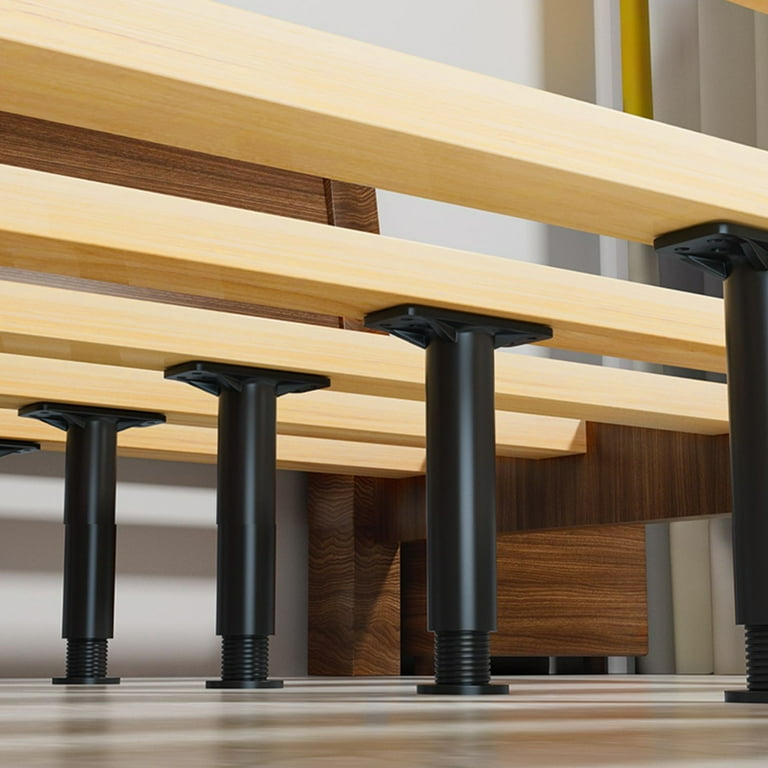
Sagging indicates insufficient weight support. Reinforce in minutes:
- Add Center Leg Support: Measure from center rail to floor. Install a telescoping leg with floor glide, adjusting until it presses firmly upward. Lock in place—this transfers 50% of mattress weight directly to the floor.
- Reinforce Side Rails: Attach heavy-duty mending plates along the entire rail interior every 12 inches. Pre-drill holes to prevent new splits.
- Fix Broken Slats: Replace snapped slats with 1×4 lumber cut to length. For sagging slats, “sister” a new piece underneath: glue, clamp, and screw through the original slat into the reinforcement.
Pro Tip: Space slats no more than 3 inches apart for optimal support—this prevents mattress sagging and reduces frame stress.
Preventative Maintenance: Keep Your Bed Frame Silent and Sturdy
Extend repair longevity with these simple habits:
- Quarterly Tightening Routine: Spend 10 minutes every 3 months checking all bolts and screws—focus on high-stress zones like center supports.
- Friction Prevention: Rub candle wax on slat ends and rail contact points twice yearly to eliminate future squeaks.
- Weight Awareness: Never exceed your frame’s rated capacity. For heavy mattresses (over 150 lbs), add a second center leg.
- Post-Move Check: Always retighten hardware after disassembly/reassembly—this prevents 90% of new squeaks.
These micro-actions prevent 80% of recurring issues, saving you future repair time.
When to Call a Professional Carpenter for Bed Frame Repair
While most wooden bed frame repair is DIY-friendly, seek expert help for:
- Antique or Heirloom Frames: Delicate finishes or historical construction require specialized techniques to preserve value.
- Severe Structural Damage: Deep cracks in load-bearing legs, extensive wood rot, or insect damage beyond surface level.
- Failed Repairs: If a reinforced joint breaks again after proper repair, underlying wood integrity is compromised.
- Safety Concerns: Any repair that feels unstable under body weight—your safety outweighs DIY pride.
A professional can often save antique frames with Dutchman repairs or epoxy consolidation, costing less than replacement.
Final Note: A silent, rock-solid wooden bed frame isn’t a luxury—it’s essential for restorative sleep and protecting your mattress investment. By diagnosing issues precisely, using the right reinforcement techniques, and performing simple preventative maintenance, you’ll transform restless nights into peaceful slumber. Most repairs take under 90 minutes and cost less than $20, making this one of the highest-impact home fixes you’ll ever tackle. Start tonight by tightening those bolts—you’ll hear (and feel) the difference immediately. For ongoing care, bookmark this guide and revisit it during your quarterly maintenance checks to keep your bed frame silently supporting you for years to come.


