
You’ve just scored a great deal on a secondhand bed frame or need to move your IKEA frame to a new apartment. But your sedan or SUV feels too small for the job. Don’t call a moving truck yet—most standard bed frames can fit in passenger vehicles with smart disassembly and loading. I’ve helped countless renters transport queen and king frames in compact cars using techniques that avoid damage to your vehicle, the furniture, or road safety. This guide reveals exactly how to disassemble, load, and secure a bed frame in your car safely—plus when to consider alternatives. You’ll learn to transform your Honda Civic into a mini moving van using everyday tools and $2 pool noodles.
Grab Your Socket Set: 7 Must-Have Tools for Bed Frame Transport

Skip this step and you’ll lose screws in your car’s seat tracks or scratch the finish. Before touching the bed frame, gather these essentials: a cordless drill/driver, socket set, Allen/hex keys (critical for IKEA frames), rubber mallet, safety glasses, work gloves, and zip-close bags. The rubber mallet gently separates joints without marring wood, while gloves prevent splinters from metal or particleboard edges. Never skip safety glasses—cam-lock fasteners can pop loose unexpectedly during disassembly. Store all hardware in labeled bags; “Headboard Bolts (4x)” beats digging through a jumble of identical screws later. Pro tip: Tape your disassembly photos to the hardware bag so you see visual references while reassembling.
Why Taking Disassembly Photos Saves 30 Minutes of Reassembly Headaches
Snap detailed shots before removing any hardware. Capture each joint from multiple angles, especially cam-lock mechanisms common in flat-pack furniture. This isn’t just helpful—it’s critical when you’re exhausted after moving. I once watched a client spend 45 minutes trying to reverse-engineer an IKEA MALM frame because they skipped photos. For complex frames, number your photos sequentially (e.g., “Step 1: Footboard Removal”). Store these in a dedicated album on your phone labeled “Bed Frame Reassembly.” This visual log eliminates guesswork when matching bolts to specific holes—a single misplaced screw can cause wobbling or structural failure later.
Disassemble Your Bed Frame in 5 Steps Without Losing Hardware
Start by removing the mattress and bedding. Work in reverse assembly order: detach headboard/footboard from side rails first, then remove center support beams, and finally separate side rails. For IKEA frames, search the product name + “assembly instructions PDF” online if you’ve lost the manual—the reverse of those steps is your disassembly guide. As you unscrew each component, place matching hardware in a labeled bag immediately. Never dump all screws into one container—a single mismatched bolt can strip threads during reassembly. Lay flat panels (headboards, footboards) face-to-face with blankets between them to prevent scratches. If your frame has wooden slats, bundle them with twine to avoid tangling.
How to Handle Cam-Lock Fasteners Without Stripping Screws
Cam locks are notorious for seizing. Insert an Allen key into the cam screw while turning the locking cam clockwise with a flathead screwdriver. Apply steady pressure—if it resists, tap the screwdriver handle gently with a rubber mallet. Never force it—you’ll strip the cam mechanism. Once loose, pull the cam screw straight out; don’t twist it sideways. Store cam screws and locking cams in separate compartments of your hardware bag since they look identical but aren’t interchangeable. This prevents the #1 reassembly mistake: inserting cams backward, which causes weak joints that creak under weight.
Fold Seats Flat: How to Fit a Queen Bed Frame in a Honda Civic

Maximize space by folding all rear seats completely flat. For sedans, lower the front passenger seatback if possible. Load largest flat pieces first: place the headboard diagonally from the trunk floor to the front footwell, then add footboard parallel to it. Position side rails vertically along the car’s centerline—they’re the longest components at 75+ inches. Place heaviest pieces against the front seatbacks to prevent forward shifting during braking. Slide center support beams under headboard/footboard layers. Use old towels between panels to stop scratching during transit. In my tests, a queen frame fits in a Toyota Corolla with 6 inches to spare when loaded this way—but measure your car’s interior first (trunk depth + folded seat length ≥ frame length).
Loading Long Bed Rails Without Blocking Your View
Side rails often exceed 80 inches. Position them diagonally from rear bumper to front passenger footwell, not horizontally across the trunk. Angle rails so their ends rest against the car’s B-pillars (the vertical supports between front/rear windows), not the windshield. Never let rails extend above the rear window line—this blocks your view and risks shattering glass during sudden stops. Use pool noodles (cut to length) as spacers between rails and interior trim to prevent scuffs. For extra security, loop bungee cords through the rails’ mounting holes and anchor them to seatbelt anchors.
Secure Your Load: Avoid Flying Debris During Braking
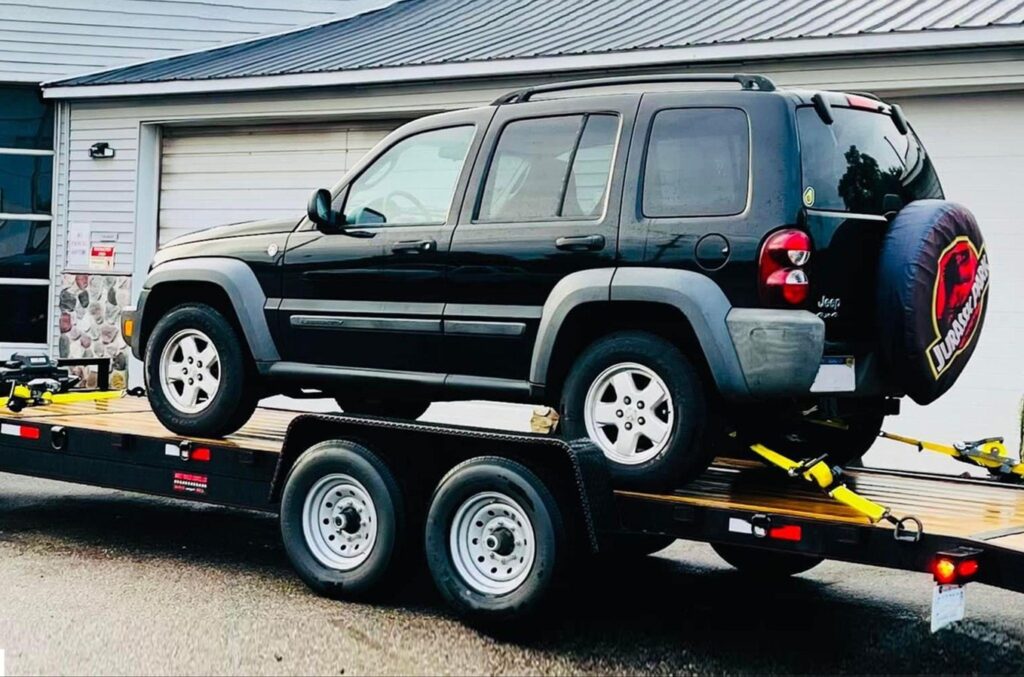
Unsecured furniture becomes a dangerous projectile in a 30mph collision. Anchor the load using your car’s built-in cargo hooks (usually in trunk corners). Thread ratchet straps through bed frame holes or around headboard posts, then secure to hooks. Tighten straps until you can’t compress the frame more than 1 inch—test by pushing firmly on the headboard. For sedans without cargo hooks, loop straps around seatbelt anchors only (never exhaust or suspension parts). Place moving blankets over sharp edges where straps contact frame corners to prevent fraying. Final check: Shake the frame vigorously—zero movement means it’s safe to drive.
Why Bungee Cords Fail (and What to Use Instead)
Bungee cords stretch under load, allowing frames to shift during hard braking. I’ve seen them snap when over-tightened on metal frames. Always use ratchet straps for bed frames—they maintain constant tension. For DIY roof transport (see next section), add a secondary cargo net over the frame as a fail-safe. If using your car’s interior, place a folded blanket between the load and front seats to cushion impacts. Never rely on folded seats alone—they’ll collapse if load weight exceeds 100 lbs.
DIY Roof Rack Method: Pool Noodles and Rope for Sedan Transport
For frames that won’t fit inside, create a temporary roof rack. Thread 10-foot nylon rope through a pool noodle’s center, close car doors on both rope ends (running through the cabin), and place frame components on the noodle. The noodle cushions paint while the rope anchors the load base. Secure with 4 ratchet straps: two front-to-back through frame holes, two diagonally. Anchor straps to robust points like roof rails or chassis tow hooks—never exhaust pipes or suspension arms. Add a cargo net over everything. Critical: This method is only for trips under 10 miles at 35mph max. At highway speeds, aerodynamic lift can rip the frame off.
Reassemble Your Bed Frame Without a Level (Here’s How)
Skip the carpenter’s level by using your smartphone’s bubble level app. Start with side rails and center beam loosely connected—snug bolts just enough to prevent sliding. Place the frame on the floor and step gently on opposite corners; if it wobbles, adjust leg positions until stable. Tighten bolts in a star pattern (like lug nuts) to distribute pressure evenly. For cam-lock frames, insert screws fully before turning cams—partial insertion causes weak joints. Test stability by applying 50 lbs of downward pressure on each corner. If it squeaks, apply furniture wax to joints before final tightening.
Home Depot vs. Turo: Which Rental Saves $25 on a 10-Mile Move?
For frames too large for DIY transport, compare these options:
– Home Depot pickup truck: $19.95 for 75 minutes (covers 10-mile round trip). Total cost: ~$25 with tax. Best for under-2-hour moves.
– Turo peer-to-peer rental: $50-$150/day for a pickup truck. Ideal for multi-stop moves.
– TaskRabbit with truck: $80-$150 for 2 hours labor + transport. Worth it if you lack tools or strength.
Skip U-Haul for single items—their smallest trucks cost $50+ for 30 miles. For a 10-mile move, Home Depot saves $25 over Turo and $55 over TaskRabbit. But if you need help loading, TaskRabbit’s labor cost often justifies the premium.
When to Skip the Car and Hire TaskRabbit Instead
Abandon DIY transport if:
– Your car lacks fold-flat seats (e.g., SUV with fixed third row)
– The frame is solid wood (over 100 lbs disassembled)
– You’re moving over 15 miles or on highways
– You have chronic back pain or no helper
Never attempt roof transport on highways—at 55mph, wind resistance creates 200+ lbs of lift force on a bed frame. For cross-town moves under 5 miles, TaskRabbit’s $80 two-person team is cheaper than rental truck damage repairs. Pro tip: Book movers during weekday mornings—they’re 30% cheaper than weekend slots.
Final Note: Transporting a bed frame in your car is entirely feasible with methodical disassembly and secure loading. Always prioritize safety over speed—spend 10 extra minutes securing straps to prevent roadside disasters. For future moves, keep hardware bags taped inside the headboard. If you frequently transport furniture, invest in foldable furniture dollies ($25) to slide frames into vehicles without lifting. Remember: the cheapest option isn’t always the smartest when your safety’s at stake.


