
Nothing ruins a good night’s sleep like a creaking, groaning bed frame. If you’re searching for how to make a timber bed frame that stays silent through the night, you’re not alone—studies show light sleepers can be disturbed by sounds as low as 10 decibels, and bed noise typically occurs in the 100-500 Hz range that’s particularly disruptive. A poorly constructed frame doesn’t just create noise; it transmits vibrations through your entire structure, turning every movement into a sleep disturbance. This guide delivers the precise engineering and woodworking techniques needed to build a timber bed frame that eliminates squeaks at the source while providing heirloom-quality durability.
Selecting Timber That Prevents Squeaks Before They Start
Your wood choice directly determines whether your bed will stay silent for decades or become a nightly annoyance. Hardwoods outperform softwoods significantly for silent construction due to their density and stability characteristics.
Hardwood Options That Stop Noise at the Source
Hard Maple (Janka Hardness 1450) offers minimal seasonal movement and exceptional vibration absorption—critical for noise prevention. Red Oak (Janka 1290) provides the perfect balance of strength-to-weight ratio while White Oak’s tighter grain structure resists moisture-related movement. For superior vibration damping, Black Cherry (Janka 995) contains natural oils that reduce wood-to-wood friction, while Walnut (Janka 1010) offers excellent shock absorption properties. Avoid pine and other softwoods—they compress under pressure, creating gaps that lead to squeaks within months.
Critical Dimensions for Silent Bed Frame Construction
Your side rails need minimum 1.5″ × 5.5″ actual dimensions (2×6) to resist deflection under load. For corner posts, use 4×4 or 6×6 lumber depending on bed size—king frames require the sturdier 6×6 posts to handle the 76″ width without bowing. Slats should be 1×3 or 2×4 lumber spaced no more than 3-4 inches apart to properly support modern mattresses. Remember: a silent frame requires minimum 1.5″ thickness for all structural components—thinner materials flex and create noise under pressure.
Engineering a Rock-Solid Frame Design That Won’t Creak

The difference between a silent frame and a noisy one lies in your structural engineering. Most DIY bed frames fail because they ignore torsional rigidity principles that prevent twisting—the primary cause of squeaks.
Triangulated Bracing That Eliminates Frame Twist
Install 45° bracing between your side rails and center support using the Warren Truss design for optimal load distribution. Your bracing members need a cross-sectional area of 20-30% of your main frame members—typically 1×3 hardwood strips. This triangulation prevents the “parallelogram effect” where rectangular frames twist under uneven weight, creating the friction that causes squeaks. For king beds, extend this bracing to create three support zones—head, center, and foot—to maintain rigidity across the full width.
Why Your King Bed Needs Three Center Support Posts
Queen beds can get by with two center posts, but king beds absolutely require three posts with a continuous center beam to prevent excessive deflection. Your center beam must have a deflection rating of less than L/360 (0.21″ for a 76″ span) to avoid stressing joints. A three-post system properly distributes 60% of the load to outer rails and 40% to the center support—critical for preventing the bowing that leads to joint separation and noise. Skip this, and your frame will develop squeaks as the side rails flex under weight.
Step-by-Step: Building Your Silent Bed Frame
Precision Joint Cutting for Maximum Stability
Mill all lumber to exact dimensions before assembly—sanded to 120-grit for proper glue adhesion. For mortise and tenon joints, cut tenons to precisely 1/3 the thickness of your timber with a minimum 1.5″ depth into the post. Through-tenons with wedges provide superior strength: cut your mortises first using a Forstner bit, then size tenons for a friction fit with ±0.5mm tolerance. Pro tip: Apply your finish to all wood surfaces before assembly—this prevents uneven moisture absorption that causes warping and joint stress later.
Drawbore Pinning Technique That Creates Permanent, Squeak-Free Joints
This traditional method creates joints that actually tighten over time. After dry-fitting your tenons, drill a 3/8″ hole through both post and tenon, but offset the hole in the tenon by 1/16″ toward the shoulder. When you drive an oak dowel through both pieces, it pulls the joint tight, eliminating any play that causes squeaks. For maximum security, add a 3°-5° tapered wedge into a slot cut across the tenon end—this creates an unshakeable friction lock that won’t loosen with movement. Apply Titebond III glue to all joint surfaces before final assembly.
Installing the Slat System That Absorbs Movement
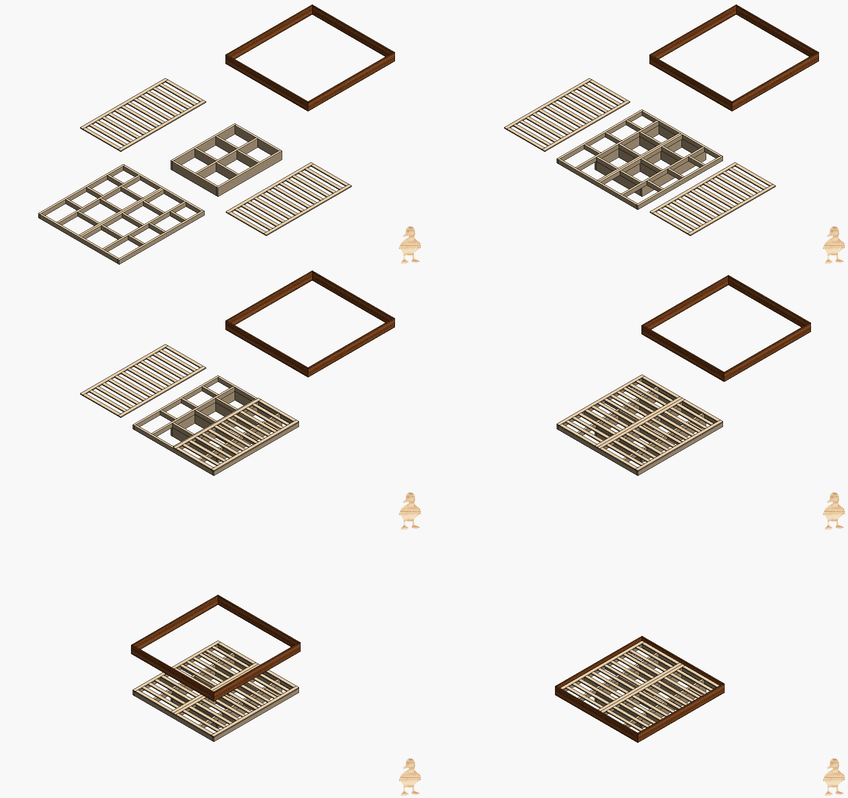
Attach a 1×2 ledger board along the inside of your side rails, positioned down exactly the thickness of your slats. Space 1×3 slats 3-4 inches apart across the ledgers, but crucially, do not screw them rigidly in place. Secure only the end slats and center slat with a single screw each to prevent shifting, while allowing others to “float.” This accommodates natural wood movement without creating binding points that generate noise. For ultimate silence, rest slats on rubber or silicone feet placed in notches on your ledgers—this breaks the vibration path completely.
Advanced Noise Dampening Techniques Most Builders Miss
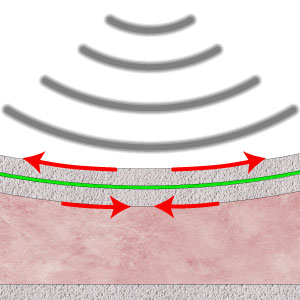
Creating a Constrained Layer Damping System
For near-silent performance, apply a vibration-absorbing sandwich to your frame’s underside: start with 1mm butyl rubber (loss factor 0.3-0.6), add a 1/8″ MDF constraining layer, and finish with 1/4″ wool felt. This system converts vibration energy into heat before it becomes audible sound—reducing impact noise by 35-45 dB. Focus this treatment on side rails and center beams where vibration originates. The constraining layer must be rigid enough to create shear forces in the viscoelastic layer—aluminum works but MDF provides better damping for furniture applications.
Floating Headboard Installation That Stops Noise Transmission
Most builders attach headboards directly to the frame, creating a major noise transmission path. Instead, create an acoustically decoupled headboard: mount wall cleats with 1/4″ cork isolation pads between metal hardware and wood surfaces. This floating system prevents vibrations from traveling through your headboard into the wall and back into the frame. Use 6mm cork underlayment (providing 6.5 dB transmission reduction) at all contact points—this simple step eliminates one of the most common noise pathways in bed frames.
Final Assembly and Testing Protocol for Complete Silence
The 5-Point Pre-Use Inspection Checklist
Before adding your mattress, verify these critical silence factors: [ ] All hardware torqued to specification (25-30 ft-lbs for 3/8″ bolts) with thread-locking fluid applied [ ] Slats spaced evenly with floating installation allowing slight movement [ ] 1/4″ adhesive-backed wool felt lining all wood-to-wood contact points [ ] No metal-to-wood contact without rubber or cork isolation pads [ ] Frame perfectly level on floor (use a 4-foot level at multiple points). Apply paraffin wax to any tenon cheeks showing minor friction—this time-tested lubricant prevents squeaks without compromising joint integrity.
Long-Term Maintenance to Keep Your Bed Frame Silent for Years
Your silent bed frame requires minimal maintenance when properly constructed, but seasonal changes affect even the best wood. Check bolt torque quarterly using the specified values (15 in-lbs for 1/4″ bolts), and apply paraffin wax to joints twice yearly—especially before winter when indoor humidity drops. For persistent high-pitched squeaks, add 1/4″ thick Sorbothane isolators at problem joints. Most importantly, never overtighten hardware—this crushes wood fibers and creates new noise points. A properly built timber bed frame should remain silent for decades with this simple maintenance routine, transforming your bedroom into the quiet sanctuary it should be.


