
You’ve unboxed your sleek Thuma bed frame, excited to sink into its eco-friendly comfort—but staring at those wooden pieces makes you wonder: Is assembling this really as simple as Thuma claims? Forget frustrating hours wrestling with Allen wrenches or cryptic instructions. Thuma’s revolutionary tool-free design means you’ll have your bed standing strong before your coffee gets cold. In this guide, you’ll discover exactly how to assemble a Thuma bed frame solo using only hand-tightened connections, avoiding the #1 mistake that causes wobble (hint: it’s over-tightening). Whether you’re a dorm newbie or a seasoned furniture assembler, you’ll gain confidence through our step-by-step walkthrough with visual checkpoints and pro tips straight from Thuma’s engineering philosophy.
Unlike traditional bed frames that require power tools and multiple people, Thuma’s minimalist design leverages precision-cut wood and gravity-lock engineering. Their signature interlocking bolster system eliminates squeaks and sagging while cutting assembly time by 70% compared to competitors. The best part? Every connection is designed for hand-tightening only—no stripped bolts or cracked wood. By following these specific steps, you’ll transform that single compact box into a rock-solid foundation that supports up to 1,000 pounds. Let’s turn that pile of lumber into your dream bed in less time than it takes to stream your favorite podcast.
Unpacking Your Thuma Bed Frame Box Without Damage
Thuma ships their entire bed frame in one surprisingly compact box—no hunting for scattered components. Before you slice through that cardboard, prepare your workspace to prevent scratches or lost parts. Clear a 10×10 foot area near your bed’s final location, ideally on carpet to cushion wood surfaces. Lay down a blanket or moving pad as your assembly zone. When opening the box, never use a box cutter near the contents—instead, slice only the top tape and lift flaps to avoid nicking wooden edges. The components nest together tightly, so gently rotate pieces outward rather than yanking them apart.
Identifying All Components at First Glance
Thuma’s packaging uses clever color-coding and orientation to simplify identification. Immediately separate these critical parts:
– The PillowBoard (Headboard): Largest piece with visible pre-drilled holes along both long edges
– Left & Right Side Rails: Identical long planks with tapered ends and interior lip channels
– Footboard/Stabilizers (2): Shorter matching pieces with identical hole patterns to side rails
– Tapered Legs (4): Smooth, unfinished wood cylinders with threaded inserts
– Wooden Bolsters (Slats): Interlocking curved planks with “T” shaped ends
– Thuma Tool: Single multi-function hex key/screwdriver (usually taped inside box lid)
Critical Pre-Assembly Checklist
Before connecting anything, verify these three elements:
1. Confirm all bolster slats have intact “T” ends—no cracks or splinters
2. Check that leg bolt holes in frame corners align perfectly (misalignment indicates warped wood)
3. Ensure lag bolts have clean threads (discard any with debris from shipping)
If any component shows damage, contact Thuma immediately—they replace parts free within 30 days. Never force connections; Thuma’s precision engineering means parts should slide together smoothly.
Attaching Side Rails to the PillowBoard Headboard Correctly
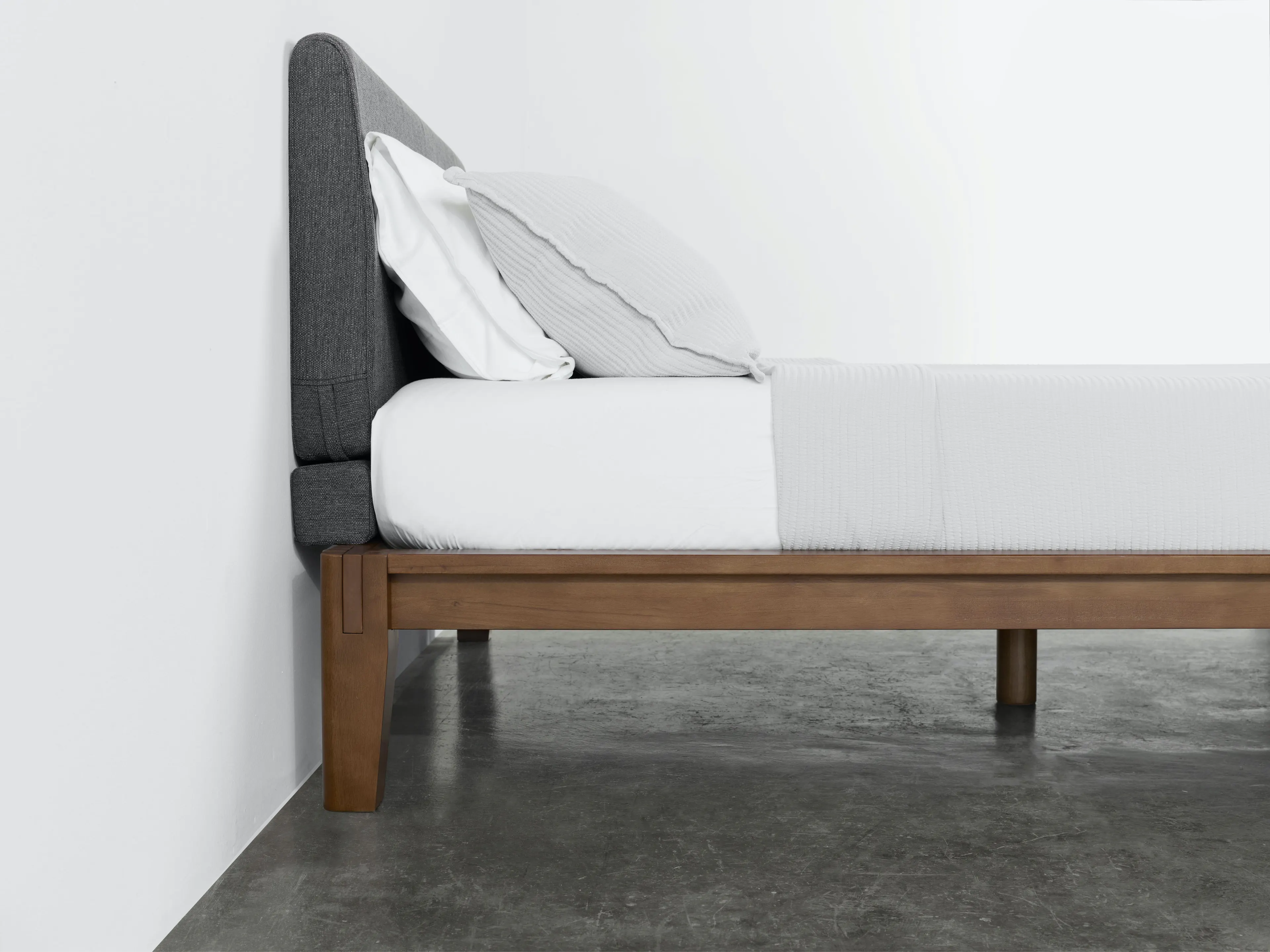
Your Thuma frame’s stability starts with this critical connection. Lay the PillowBoard flat with the side featuring visible hole patterns facing up—this is your structural spine. Position it vertically so the wider top edge (where pillows rest) faces away from your future bed location. Now take the left side rail: the side with the interior lip channel must face inward toward the PillowBoard. Align the rail’s end holes with the PillowBoard’s outer holes, ensuring both pieces sit perfectly flush. Any gap here compromises the entire structure.
Why Hole Alignment Determines Long-Term Stability
Misaligned holes cause the most common Thuma assembly failure. Before inserting bolts:
– Place one hand under the connection point to feel for gaps
– Sight down the seam from 6 inches away—light shouldn’t show through
– If misaligned, rotate the rail 180 degrees (some users install it upside down)
Thuma’s lag bolts feature oversized heads that compress wood fibers for a vibration-proof grip. Insert each bolt by hand until resistance increases, then use the Thuma tool for a final quarter-turn. Stop immediately if you feel excessive resistance—this indicates cross-threading. Back out completely and restart; forcing it strips the wood.
Visual Cues for Perfect Rail Connection
After tightening, check these three indicators:
1. The side rail’s interior lip sits exactly level with the PillowBoard’s top surface
2. No “smile” gap appears when viewing the connection from above
3. Gentle pressure on the rail’s free end produces zero wobble
If gaps persist, disassemble and flip the rail—Thuma’s design has subtle top/bottom orientations. Never insert bolts more than 1/8″ beyond the wood surface, as this prevents footboard attachment later.
Completing the Frame Rectangle with Footboard Stabilizers
With side rails secured, your frame now resembles a “C” shape. Take one footboard/stabilizer piece and position it against the open end of the left side rail. Critical detail: The footboard’s pre-drilled holes must face the same direction as the side rail’s holes—not mirrored. Align the pieces so their top edges create a continuous line. Insert lag bolts hand-tight, then apply the Thuma tool’s quarter-turn. Repeat for the right side, but pause before final tightening.
The Squareness Test Before Final Tightening
Misaligned footboards cause diagonal wobble. Before securing the second footboard:
1. Measure diagonally from PillowBoard corner to opposite footboard corner
2. Repeat for the other diagonal
3. Measurements must match within 1/8 inch
If uneven, gently twist the frame while both footboards are loosely attached. Thuma’s wood has slight flexibility when bolts aren’t fully seated. Only when diagonals match should you complete the quarter-turn on all four footboard bolts. This prevents stress cracks during use.
Why Footboards Double as Side Stabilizers
Thuma’s clever dual-purpose design makes these pieces essential for lateral stability. When properly installed, they:
– Prevent side rails from bowing outward under mattress weight
– Create compression points that lock the entire frame together
– Allow the PillowBoard to stand vertically without wall contact
Never skip attaching both footboards—using only one creates dangerous instability during sleep.
Securing Tapered Legs for Rock-Solid Foundation
With the rectangular frame complete, flip it upright so the PillowBoard stands vertically. Position one tapered leg inside each corner, aligning the leg’s threaded insert with the frame’s bottom hole. Warning: Legs must sit fully flat on your floor surface—never force them if your floor has bumps. Insert the leg bolt upward through the frame, engaging the leg’s threads. Hand-tighten until resistance increases, then apply one full turn with the Thuma tool.
Leg Bolt Tightening Threshold Explained
Thuma’s legs require precise torque:
– Too loose: Causes creaking when shifting weight
– Too tight: Compresses wood fibers, creating future gaps
– Just right: Bolt head sits 1/16″ above frame surface
Test tightness by lifting the frame 2 inches off the ground and dropping it gently—the legs shouldn’t shift position. If bolts feel loose after testing, add 1/8 turn max. Over-tightening is irreversible and voids Thuma’s lifetime warranty.
Floor Surface Considerations
Hardwood floors: Place felt pads under legs to prevent scratching
Carpet: Legs may sink slightly—check level after 24 hours
Uneven floors: Use Thuma’s free shims (included in box) under legs
Installing the Interlocking Wooden Bolster Slats System

Thuma’s game-changing bolster system replaces flimsy metal slats with curved wooden planks that lock together. Start at the PillowBoard end: insert the first bolster perpendicular to side rails, sliding its “T” end into the interior lip channel until it clicks. The convex side must face upward. Add the next bolster by aligning its “T” end with the previous piece’s groove—no force required. They should slide together with a soft thunk.
Troubleshooting Bolster Alignment Issues
If bolsters resist connecting:
– Rotate the piece 180 degrees (they have top/bottom orientation)
– Check for shipping debris in the groove channels
– Start assembly from the footboard instead of headboard
Never hammer bolsters—their interlock relies on precise curvature. If one piece won’t seat, set it aside and continue; Thuma includes extras for this reason. The final bolster should fit snugly against the footboard with zero overhang.
Why Bolsters Prevent Mattress Sagging
Traditional slats flex under pressure, but Thuma’s curved design:
– Distributes weight across 3 connection points per bolster
– Creates natural tension when locked together
– Allows airflow while eliminating “hammock effect”
Run your hand across the installed bolsters—they should feel like a single solid surface with no give.
Why Hand-Tightening Beats Power Tools Every Time

Thuma’s entire engineering philosophy rejects power tools. Their lag bolts use a proprietary thread pitch that compresses wood fibers when hand-tightened, creating a self-tightening seal as the bed settles. Power tools exceed the 12 in-lb torque limit, causing:
– Stripped bolt heads (requiring replacement)
– Crushed wood fibers (creating permanent gaps)
– Vibration-induced loosening within weeks
The quarter-turn rule exists because Thuma’s wood continues compressing for 48 hours after assembly. Over-tightening now means wobble later. If bolts feel loose after a week, apply only another quarter-turn—never full rotations.
Final Stability Checks Before Mattress Placement
Before adding your $1,500 mattress, verify these critical points:
1. Shake test: Apply firm pressure to each corner—zero lateral movement
2. Gap check: Slide a business card between connections—no insertion possible
3. Level verification: Place a smartphone level on bolsters (adjust legs if >2° off)
Address any issues now—once the mattress is on, troubleshooting becomes exponentially harder. If wobble persists, disassemble the problematic section and recheck hole alignment. Thuma’s lifetime warranty covers parts replacements, but proper assembly is your responsibility.
Your Thuma bed frame should now stand silently and solidly, ready for years of restful sleep. Remember: that slight creak you hear during assembly disappears within 24 hours as wood fibers settle. For ongoing care, tighten bolts quarterly using the quarter-turn rule and rotate your mattress every 3 months to prevent uneven wear. If you encounter persistent issues, Thuma’s customer support responds to assembly questions within 2 hours—just snap a photo of the problem area. Now place your mattress gently (never drop it), fluff your pillows, and enjoy what many call “the easiest bed assembly of their life.” You’ve not just built furniture—you’ve created the foundation for thousands of perfect nights’ sleep.


