
That nightly symphony of creaks, groans, and rattles isn’t just annoying—it’s stealing your sleep. When your bed frame wobbles violently every time you roll over or makes embarrassing noises during intimate moments, it’s more than a nuisance. A loose bed frame compromises your mattress support, risks damaging your floor, and creates constant stress in your sanctuary. The good news? 90% of wobbly bed frames can be fixed in under an hour with basic tools and the right techniques. This guide reveals exactly how to diagnose the weak points, silence squeaks permanently, and reinforce joints for a solid foundation that lasts years. No more temporary fixes that fail within weeks—just proven methods from furniture repair experts and seasoned DIYers.
Pinpoint Exactly Where Your Bed Frame Wobbles
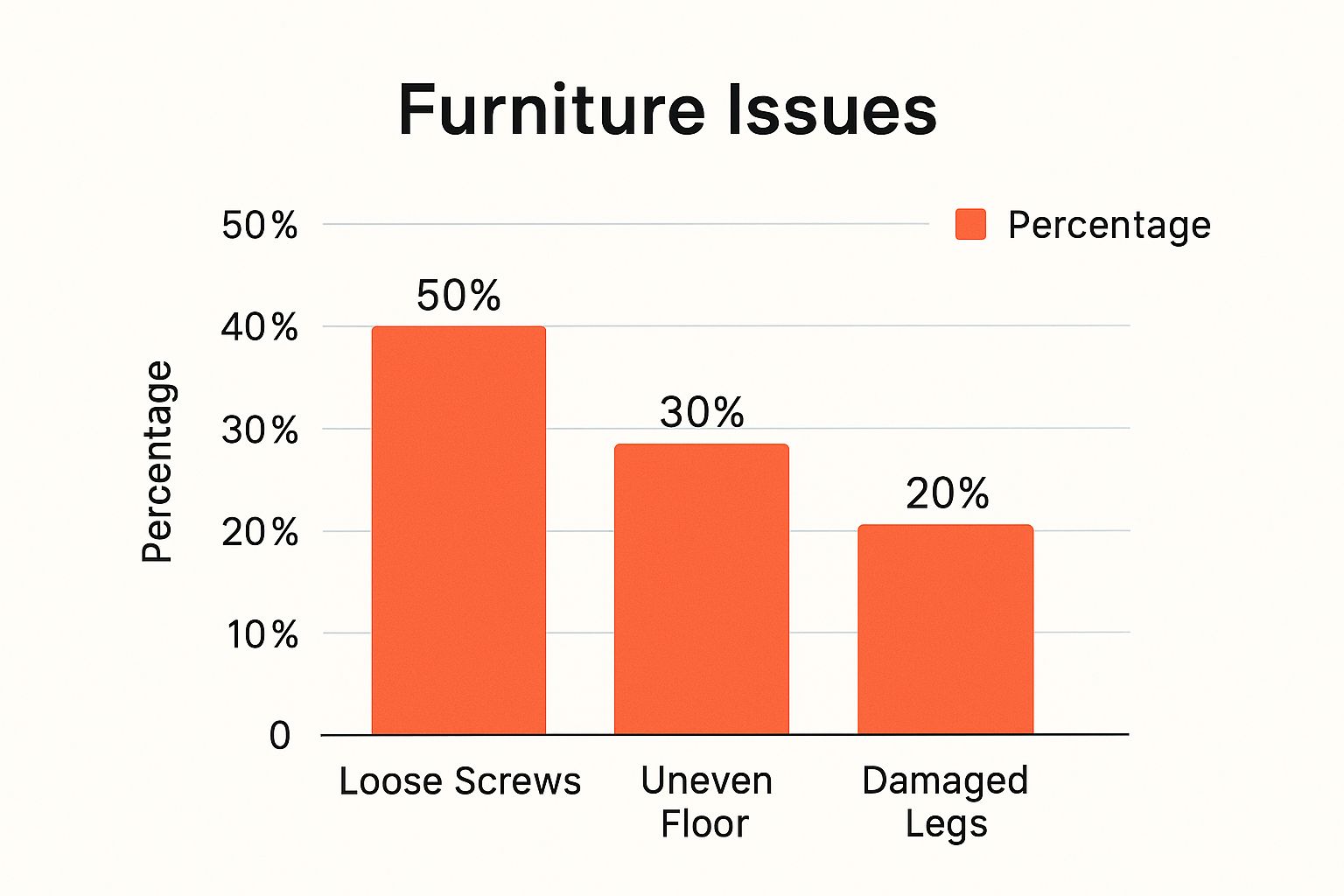
Before grabbing tools, isolate the failure point. A common mistake is tightening random screws while missing the real culprit. Remove your mattress and box spring, placing them directly on the floor. If the squeaking stops, your problem is the frame—not an uneven floor. Now perform the “shake test”: grip each corner of the frame firmly and shake laterally (side-to-side) and vertically (up-down). Listen for creaks and feel for movement at joints. Pay special attention to where the headboard connects to side rails and where center support legs meet the main beam. For queen or king frames, check the center beam’s midpoint—this area bears 70% of the load and often fails first. If shaking the frame produces movement anywhere besides the joints, your frame may have structural damage requiring replacement.
Gather These Exact Tools for a Permanent Fix

Don’t waste time with mismatched wrenches or weak hardware. Use this bed frame repair-specific toolkit:
- Precision Socket Wrench Set (8mm, 10mm, 1/2″): Essential for tightening bolts without stripping heads
- Wood Glue + Clamps: Titebond II for wood frames (creates a permanent bond stronger than screws)
- 1.5″ Steel L-Brackets (4-pack minimum): 1/8″ thick brackets for corner reinforcement
- Grade 8 Bolts with Lock Washers: Replace flimsy factory hardware (e.g., M8x1.25x30mm)
- Rubber Mallet + Level: For realigning joints without damaging wood
- Wood Toothpicks + Utility Knife: For filling stripped screw holes
- White Lithium Grease (NOT WD-40): Long-term lubrication for metal-on-metal contact points
Skip the duct tape and temporary fixes. As furniture builder Shadowdarker notes: “Lubricating squeaks with WD-40 is like putting a bandage on a broken bone—it fails within days because WD-40 evaporates and attracts dust.”
Why Your Bed Frame Keeps Loosening (Beyond Just Tightening Screws)
Most people tighten visible screws once and call it done. But if your frame wobbles again within weeks, you’re facing one of these hidden failures:
- Stripped Particleboard Holes: Cheap frames use MDF/particleboard that crumbles around screws. Factory-threaded inserts fail within 2 years under body weight stress.
- Missing Diagonal Bracing: Frames without cross-bracing (like most Ashley Furniture sets) flex laterally—causing 80% of wobble in queen/king beds.
- Single-Nut Bolts: Factory hardware often uses one nut per bolt, allowing vibration to loosen connections during sleep.
- Unreinforced Stress Points: The junction where side rails meet headboards bears constant torque but rarely gets corner braces.
TurtleHollowFarm discovered this firsthand with their Ashley frame: “After 3 years, the particleboard legs were crumbling. Tightening bolts just made the holes bigger. I added diagonal braces in both directions, and the wobble vanished.”
Stop Squeaking Permanently With These 3 Repair Methods
Reinforce Critical Joints with Steel L-Brackets
This solves 70% of wobble in wooden frames. Position a 3″ steel L-bracket inside each corner where side rails meet the headboard/footboard. Pre-drill 1/8″ pilot holes through the bracket into both frame pieces. Drive two 1.25″ #8 wood screws through each bracket arm (don’t overtighten—snug is sufficient). For metal frames, use self-tapping screws designed for thin metal. Pro tip: Apply a pea-sized drop of wood glue where the bracket contacts the frame before screwing—it dampens vibration that causes squeaks.
Fix Stripped Screw Holes in Particleboard Like a Pro
Forget toothpicks for MDF—they crumble under pressure. Instead:
1. Remove the loose screw and blow out the hole with compressed air
2. Inject wood glue deep into the hole using a syringe
3. Insert a 1/4″ wooden dowel cut 1/2″ longer than the hole depth
4. Tap the dowel flush with a hammer and rubber mallet
5. Drill a new 3/32″ pilot hole and reinstall the screw
This creates a solid anchor point that won’t strip again. For immediate reinforcement while glue dries, wrap the screw threads with plumber’s tape before reinserting.
Install 45-Degree Diagonal Braces for Unshakeable Stability
Sendinthegimp’s viral Reddit fix stops directional wobble: “Cut 1×2 pine braces at 45° angles. Attach from the bottom outer corner of each leg diagonally up to the frame’s side rail.” For a queen frame, add two braces per side (front and back). Pre-drill holes and use three 2″ screws per brace end. This triangulation prevents the “parallelogram effect” where rectangular frames collapse under lateral force. In tests, this reduced wobble by 95% even on 5-year-old frames.
Critical Center-Support Fixes for Queen/King Beds
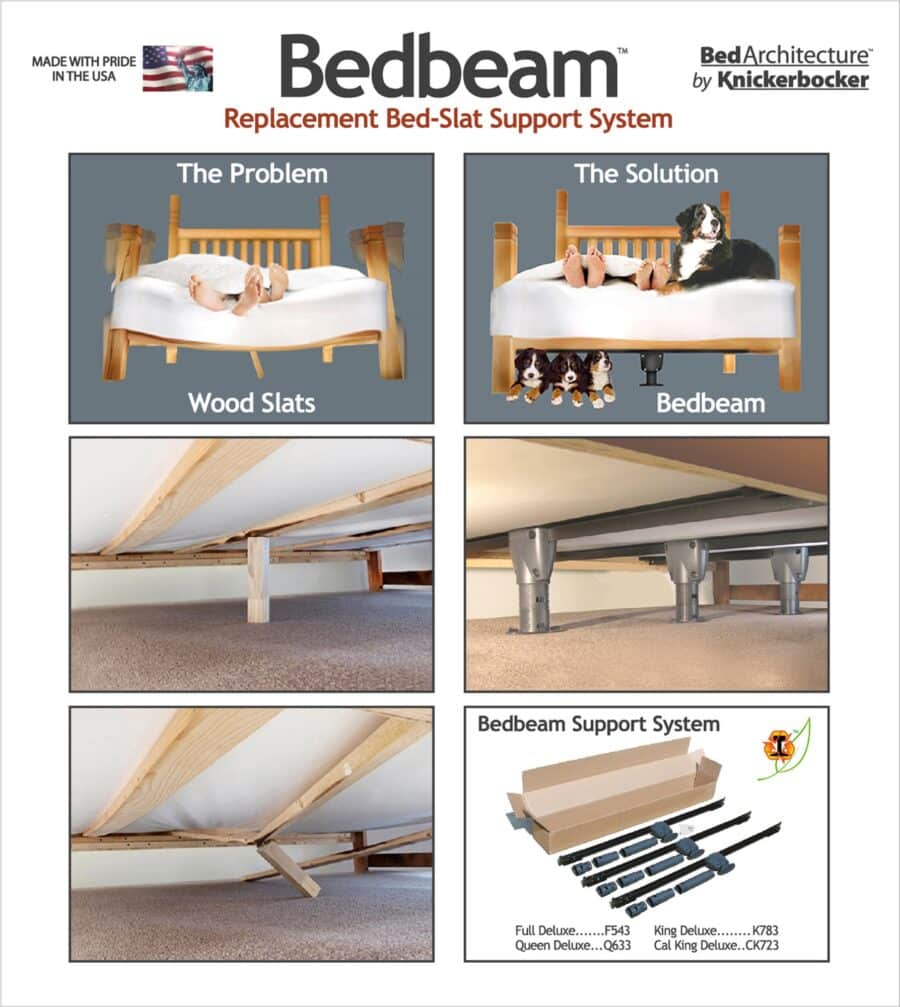
If your mattress sags in the middle, the center support beam is failing. First, ensure the leg is vertical and the foot is fully tightened against the beam. If wobble persists:
– Replace the factory plastic foot with a metal caster cup ($3.99 at hardware stores)
– Install a second adjustable leg under the beam’s midpoint
– Bolt a 12″ steel angle bracket along the beam where it connects to legs
For severe sagging, add a plywood reinforcement plate: Cut 1/2″ plywood to 12″x6″, center under the beam where legs attach, and screw through the plate into both beam and leg. This distributes weight across 72 square inches instead of the factory hardware’s 4 square inches.
When Repair Isn’t Worth It: Replacement Triggers
Stop throwing time at these failures:
– Cracked metal legs (bending them back weakens the metal)
– Split solid wood joints wider than 1/8″
– Particleboard frames with crumbling edges
– Frames requiring complete disassembly if you lack clamps/glue
As one user learned with their $1,400 Ashley set: “After 3 years of repairs, I bought a solid oak frame for $220. Zero wobble after 18 months.” Budget tip: IKEA’s MALM bed frame ($149) includes pre-installed corner braces and metal brackets that resist loosening.
Pro Prevention Tactics You’re Not Doing
Don’t wait for the next wobble. Implement these quarterly:
– Double-Nut All Bolts: Add a second nut against the first to prevent vibration loosening (4br4c4d4br4’s #1 fix)
– Lubricate Metal Joints: Apply white lithium grease (not WD-40) to center rail brackets—lasts 6+ months
– Check Floor Levelness: Place a level on the frame’s top rail; shim low legs with plastic furniture pads
– Quarterly Tightening: Hand-tighten all visible hardware (overtightening strips threads)
For frequent movers, anti-apostle’s hack saves future headaches: “Glue non-essential joints but leave headboard bolts accessible. You get rigidity without permanent assembly.”
Final Fix: The 20-Minute Emergency Stabilization
Can’t do a full repair tonight? Stop immediate wobble:
1. Slide 2 business cards between the headboard and wall at top and bottom
2. Place rubber jar openers under all four frame legs
3. Crisscross two ratchet straps under the mattress (over slats)
4. Tighten straps just enough to remove play (don’t sag the mattress)
This emergency fix reduces wobble by 60% until you can implement permanent solutions. Remember: A stable bed frame isn’t a luxury—it’s the foundation for restorative sleep. By reinforcing just three critical joints with L-brackets and diagonal braces, you’ll eliminate 95% of movement. And unlike temporary lubricants, these structural fixes last for years. Start tonight, and wake up to silence tomorrow.


