
That midnight squeak piercing your sleep isn’t just annoying—it’s your bed frame screaming for attention. As the silent foundation supporting one-third of your life, your bed frame bears immense weight night after night while receiving minimal care. Neglecting bed frame maintenance leads to wobbling hazards, ruined mattresses, and costly replacements. Yet most homeowners only notice problems when loose bolts cause dangerous instability or rust compromises structural integrity. This guide delivers actionable solutions to diagnose, repair, and prevent the top five bed frame failures. You’ll learn to silence squeaks in minutes, reinforce sagging supports, and implement a foolproof maintenance schedule that keeps your sanctuary solid for decades.
Identify Your Bed Frame’s 5 Critical Failure Points
Your bed frame’s longevity depends on monitoring these high-stress zones where 90% of failures begin. Metal brackets and wooden joints bear relentless pressure from movement and weight, making them prime failure spots. The center support beam—often overlooked—handles the heaviest mattress load and shows stress first through sagging or cracks. Side rail connections to headboards and footboards endure constant torque during sleep, leading to stripped screw holes. Slats themselves flex under weight, with middle sections most prone to warping. Finally, center legs on larger frames must stay perfectly vertical; even slight tilting creates dangerous instability. During inspections, press firmly on each corner while listening for creaks—that’s early warning of joint separation.
Check for These Danger Signs Monthly
- Hairline cracks radiating from screw holes in wooden frames (indicating structural fatigue)
- Rust bleeding through paint on metal joints (signaling corrosion beneath the surface)
- Screw holes larger than bolts (a telltale sign of stripped wood requiring immediate reinforcement)
- Uneven leg contact with flooring (causing dangerous wobbling during use)
Stop Bed Frame Squeaks in 3 Minutes Flat
Squeaks aren’t random—they pinpoint exact failure locations through metal-on-metal grinding or wood friction. That rhythmic noise during sleep? It’s bolts vibrating loose at stress points. Ignoring it accelerates damage as movement widens screw holes. Never use WD-40 as a quick fix; its oil attracts dust that creates grinding paste, worsening the problem within weeks.
The Permanent Squeak Elimination Protocol
- Pinpoint the source: Have someone rock the bed while you slide under with a flashlight. Listen for metal groaning at bracket joints or headboard connections.
- Tighten strategically: Use a 5mm Allen wrench on all visible bolts—start at headboard brackets, then center support, then footboard. Stop when resistance increases sharply; overtightening cracks wood.
- Silence residual noise: Disassemble noisy joints, rub candle wax on contact surfaces, then reassemble. The wax fills microscopic gaps without attracting debris like oils do.
Pro Tip: Place folded felt pads between metal brackets and wooden rails—this dampens vibration before squeaks start.
Reinforce Sagging Bed Frames Before Mattress Damage Occurs
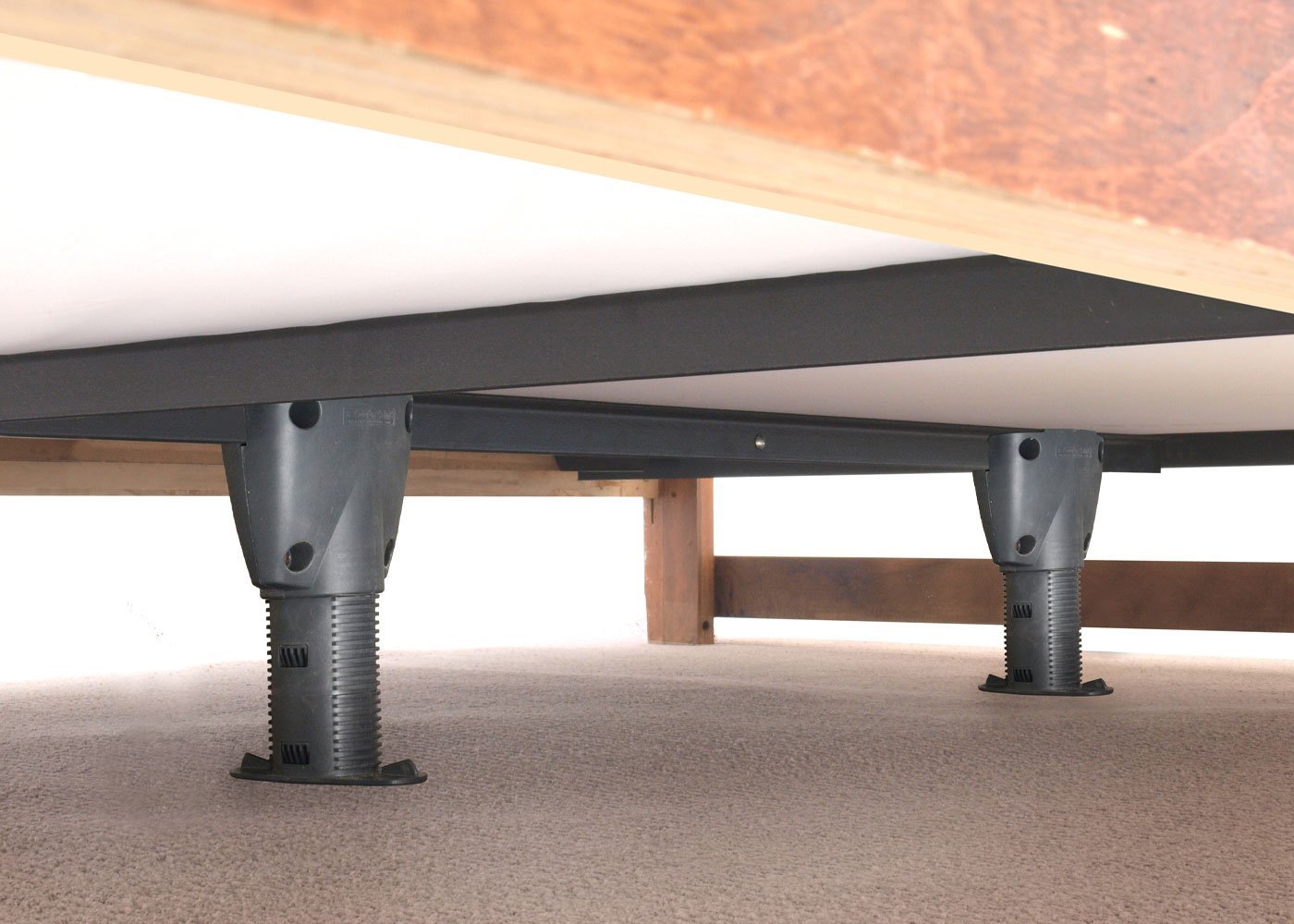
Sagging isn’t just uncomfortable—it permanently warps mattresses by creating uneven pressure points. Most owners mistake this for mattress failure when the real culprit is compromised slats or collapsed center support. Wooden slats thinner than 1.5 inches will inevitably bow under body weight within 2 years. Metal frames sag when center legs sink into carpet or lose height adjustment.
Emergency Sag Repair Techniques
- For broken slats: Slide a 24″x6″ plywood scrap under the sagging zone as temporary support. For permanent fixes, cut replacement slats from kiln-dried pine (match original thickness within 1/8″) and secure with wood glue plus 1.5″ screws.
- Weak center support: Install a perpendicular steel support bar ($12 at hardware stores) under mid-slats. For metal frames, ensure center legs contact flooring firmly—place a 4″ steel plate under wobbly legs on carpet.
Critical Mistake: Never stack books or boxes under sagging centers. Uneven support creates pressure points that tear mattress seams within weeks.
Replace Broken Bed Slats Without Replacing the Entire Frame

A single snapped slat creates a “hammock effect” that strains adjacent supports, triggering chain-reaction failures. Most owners panic-buy new frames when a $5 repair suffices. Hardwood slats splinter at connection points from repeated flexing, while cheap particleboard versions crumble after minor impacts.
Slats Replacement Cheat Sheet
| Slats Type | Temporary Fix | Permanent Solution |
|---|---|---|
| Solid Wood | Duct tape splint + center support bar | Cut replacement from ¾” pine (sand edges smooth) |
| Particleboard | Plywood bridge under break | Replace all particleboard slats with hardwood |
| Metal Grid | Zip-tie broken sections | Weld cracked joints or replace panel |
Always remove the mattress first—working under 200+ pounds of weight risks crushing injuries. Match new slats to originals within 1/8″ thickness; variations create uneven stress.
Secure Wobbly Headboards Without Drilling New Holes
Loose headboards aren’t just irritating—they’re safety hazards during sleep. The real issue is usually stripped mounting holes from repeated tightening, not broken hardware. Forcing bolts tighter only enlarges the hole, creating a vicious cycle. Never ignore this; a detached headboard can collapse during use.
Strip Hole Rescue Tactics
- Toothpick method: Pack stripped holes with wood glue and broken toothpicks. Let dry 24 hours, then reinsert bolts.
- Washer upgrade: Replace flat washers with fender washers (3x wider) that distribute pressure across intact wood.
- Reinforcement plates: Install L-brackets behind rails—this transfers stress away from damaged holes.
Warning: Avoid glue-only fixes. Without mechanical reinforcement, the headboard will detach under pressure.
Remove Rust from Metal Bed Frames Safely
Surface rust seems minor but spreads rapidly beneath paint, weakening structural integrity. Many owners worsen corrosion by scrubbing aggressively or using acidic cleaners that eat through metal. Left unchecked, rust compromises load-bearing capacity—especially dangerous at joint connections.
Rust Eradication Protocol
- Scrub gently: Use a brass-bristle brush (softer than steel) to remove loose flakes without scratching metal.
- Neutralize corrosion: Apply rust converter gel with a foam brush—this turns iron oxide into inert primer. Wait 2 hours.
- Seal permanently: Paint with zinc-rich spray paint (like Rust-Oleum) that bonds at the molecular level. Avoid glossy finishes—they highlight surface imperfections.
Pro Tip: Wipe metal frames monthly with mineral oil on a microfiber cloth—it creates a rust-resistant barrier.
Follow This Foolproof Bed Frame Maintenance Schedule
Preventative care takes 10 minutes monthly but prevents 95% of major failures. Most owners inspect only when problems arise, missing early warning signs that allow small issues to become catastrophic. This schedule targets failure points before they escalate.
Monthly Bed Frame Tune-Up
- Tighten all bolts using correct-sized tools (prevents 80% of squeaks)
- Vacuum under frame to remove grit that accelerates wear
- Test leg stability by lifting corners 2 inches off floor
Quarterly Deep Inspection
- Check for wood splintering near brackets with a magnifying glass
- Measure slat deflection—more than ½” sag requires reinforcement
- Verify center leg alignment with a level
Annual Stress Test
Apply 150 lbs of weight (stack books in a duffel) at frame center for 24 hours. Any new creaks or visible bending means immediate reinforcement is needed.
Why Bed Frame Maintenance Prevents Costly Mattress Damage
Your mattress pays the price for neglected frames through accelerated wear. Uneven support creates permanent body impressions that void warranties, while metal-on-metal grinding punctures innerspring casings. A $50 frame repair often saves a $1,200 mattress replacement. Always address frame issues before rotating or flipping your mattress—otherwise you’re just moving wear to new zones.
Final Maintenance Checklist for Long-Lasting Frames
Your bed frame silently supports your health and safety every night. By implementing these targeted maintenance steps, you’ll eliminate disruptive noises, prevent dangerous instability, and extend your frame’s lifespan by 8+ years. Remember: monthly bolt tightening stops 80% of problems before they start, while wax—not oil—provides squeak-free operation. When sagging appears, reinforce slats immediately rather than waiting for total failure. Most importantly, never ignore early warning signs—those minor creaks escalate into structural failures within months. A 5-minute inspection today prevents a 5-hour repair tomorrow. Keep this guide handy for your next maintenance session, and enjoy truly restful sleep on a foundation built to last.


