
Your dorm bed frame arrives, but when you try to fit your mattress, 5 inches hang over the end. Or worse—you’re six feet tall and wake up with your feet dangling off the edge every morning. These common dorm disasters happen because most students don’t understand the critical difference between standard twin and dorm-specific bed measurements. Getting the right dorm bed frame measurements isn’t just about comfort—it’s about maximizing your tiny 150-square-foot living space efficiently.
The vast majority of U.S. college dorms use a specific bed size that doesn’t match standard retail mattresses. While you might assume a “twin” bed frame will work, dorm rooms almost always require Twin XL specifications. This seemingly small difference creates massive problems when students bring the wrong frame or bedding. Understanding the precise dorm bed frame measurements—down to the exact inch—will save you from sleepless nights, wasted money, and the embarrassment of having to return ill-fitting furniture during move-in weekend.
By the end of this guide, you’ll know exactly what measurements to request from your housing office, how to verify your frame before assembly, and why that extra 5 inches in length makes all the difference for college comfort.
Why Standard Twin Bed Frames Fail in 95% of College Dorms
Dorm bed frame measurements follow a unique standard that trips up even careful shoppers. When you see “twin” at a furniture store, it means a 38-inch wide by 75-inch long mattress. But campus housing departments overwhelmingly use Twin XL specifications—38 inches wide by 80 inches long. This 5-inch difference creates immediate problems when students bring standard twin frames to campus.
Your college dorm bed frame must match the 80-inch mattress length precisely. A standard twin frame (75″) leaves 5 inches of mattress unsupported at the foot, causing uncomfortable sagging and premature wear. Conversely, trying to force a Twin XL mattress onto a standard frame creates dangerous gaps along the sides where the mattress extends beyond the frame’s width.
How to Confirm Your Dorm’s Exact Bed Specifications
Contact your housing office immediately with this specific question: “What are the exact internal support surface measurements of the standard bed frame provided in residence halls?” Don’t settle for just “twin” or “twin XL”—ask for the precise numbers. Some schools use variations like:
- 39″ W x 80″ L internal support surface (most common)
- 40″ W x 80″ L for newer residence halls
- 38″ W x 75″ L in older buildings (rare but possible)
Bring a tape measure to campus during orientation and verify the actual frame in an unoccupied room. Measure from the inside edge of the frame rails where the mattress sits—not the outer dimensions of the frame itself.
The Dangerous Consequences of Wrong-Sized Dorm Bed Frames
Forcing incompatible measurements creates serious issues beyond discomfort. An oversized mattress hanging over the end of a too-short frame can slide during sleep, potentially causing falls. A mattress that’s too narrow creates gaps where limbs can get trapped between the mattress and frame. These aren’t hypothetical risks—campus health centers treat numerous bed-related injuries each semester from improperly fitted dorm bed frames.
Critical Dorm Bed Frame Measurements: Inside vs. Outside Dimensions

The most crucial dorm bed frame measurements involve the internal support surface—not the outer frame dimensions. Most students make the fatal mistake of measuring only the external frame, then wonder why their mattress doesn’t fit properly.
Your dorm bed frame’s internal support surface (where the mattress actually rests) should measure exactly 39 inches wide by 80 inches long for standard Twin XL compatibility. This differs from the external frame dimensions, which typically measure 41-42 inches wide by 83-84 inches long due to the thickness of the steel tubing.
Why the 2-Inch Frame Thickness Matters for Dorm Layout
That extra 2 inches on each side might seem trivial, but in a cramped dorm room, it determines whether your bed fits through the door or blocks your closet. Always add 4 inches to the internal width measurement when planning your room layout—this accounts for the frame’s thickness on both sides.
For length, add 3-4 inches to the 80-inch internal measurement when checking if the frame will fit in your assigned space. Dorm room floors often have slight variations, so allow an extra inch of clearance at each end to prevent the frame from scraping walls during adjustment.
Height Measurements That Make or Break Your Dorm Functionality
Standard platform dorm bed frames typically stand 6-12 inches off the ground—barely enough space for shallow storage bins. But for lofted configurations, height measurements become critical:
- Minimum clearance for a desk: 50 inches from floor to bottom of mattress
- Comfortable sitting height: 54-56 inches
- Ideal clearance for a full-height desk: 60 inches
Measure your dorm room ceiling height before selecting a lofted frame. Most standard dorm ceilings are 8-9 feet high, but subtract 6-8 inches for baseboards and 12-18 inches for safety clearance above the mattress. If your ceiling is only 8 feet, a 60-inch loft leaves just 42 inches of headroom—too low for most students to stand comfortably underneath.
Loft Bed Frame Height Requirements: Getting 60 Inches of Desk Space Underneath

Lofting your dorm bed frame creates crucial workspace in cramped quarters, but only if you get the height measurements right. The magic number for comfortable desk use is 60 inches of vertical clearance between the floor and the bottom of your mattress.
Most college dorm bed frames designed for lofting provide between 50-65 inches of clearance when set at their highest position. Check your frame’s adjustment holes—they usually have multiple height settings. For proper desk clearance, your frame must measure at least 66 inches from floor to top of frame (allowing 6 inches for mattress thickness).
How to Measure for Perfect Desk Compatibility
Before assembly, verify these three critical measurements:
- Floor to bottom of mattress platform: Must be ≥54 inches
- Mattress platform thickness: Typically 1-2 inches
- Mattress thickness: Usually 6-8 inches for dorm use
Add measurements 2 and 3 together, then subtract from your frame’s maximum height setting. The result should be at least 54 inches for comfortable desk use. If it’s less than 50 inches, you’ll constantly bump your head when sitting up.
Bunk Bed Clearance Measurements You Can’t Ignore
For bunk bed configurations, the critical dorm bed frame measurement is the vertical space between beds. The minimum safe clearance is 30 inches from the top of the lower mattress to the bottom of the upper bunk support. Anything less creates head-bumping hazards when sitting up.
Most standard dorm bunk frames provide 32-36 inches of clearance—just enough for average-height students. If you’re over 5’10”, measure carefully before claiming the bottom bunk. Taller students often fare better on top where head clearance isn’t an issue.
Measuring Your Dorm Bed Frame Like a Pro: 5 Steps to Avoid Size Disasters
Don’t trust marketing terms like “dorm size” or “college fit”—verify actual measurements before purchasing or assembling. Follow this exact process to ensure perfect compatibility with your campus bed specifications.
Step 1: Measure the Internal Support Surface First
With your tape measure, find the exact dimensions where the mattress rests. Measure from the inside edge of the frame rails at multiple points—dorm bed frames often warp slightly during shipping. Record both the narrowest width and shortest length measurements, as these determine your actual usable space.
Step 2: Check Frame Thickness at Critical Points
Dorm bed frames often have thicker tubing at stress points like ladder connections. Measure the frame’s width at these locations to ensure your mattress won’t get pinched when sliding it into position. Some frames narrow by ½ inch at connection points, creating frustrating friction during mattress placement.
Step 3: Verify Ladder and Guardrail Clearance
For lofted or bunk frames, measure the space required for ladder access. Most dorm room footprints don’t accommodate ladders that extend beyond the bed’s footprint. The ladder should fit within the 41-42 inch external width without protruding into walkways.
Step 4: Test Fit Before Full Assembly
Assemble just the base frame first—don’t attach ladders or guardrails until you’ve confirmed the main structure fits your room. Many students discover too late that fully assembled frames won’t fit through narrow dorm room doors or around tight corners.
Step 5: Cross-Check Against Campus Specifications
Compare your measurements against the exact numbers provided by your housing office. Don’t assume “Twin XL” means standard dimensions—some campuses use proprietary frame sizes. If your measurements differ by more than ½ inch from campus specifications, contact housing before proceeding.
Dorm Bed Frame Safety Checks: Guardrails, Ladders, and Weight Limits You Must Verify
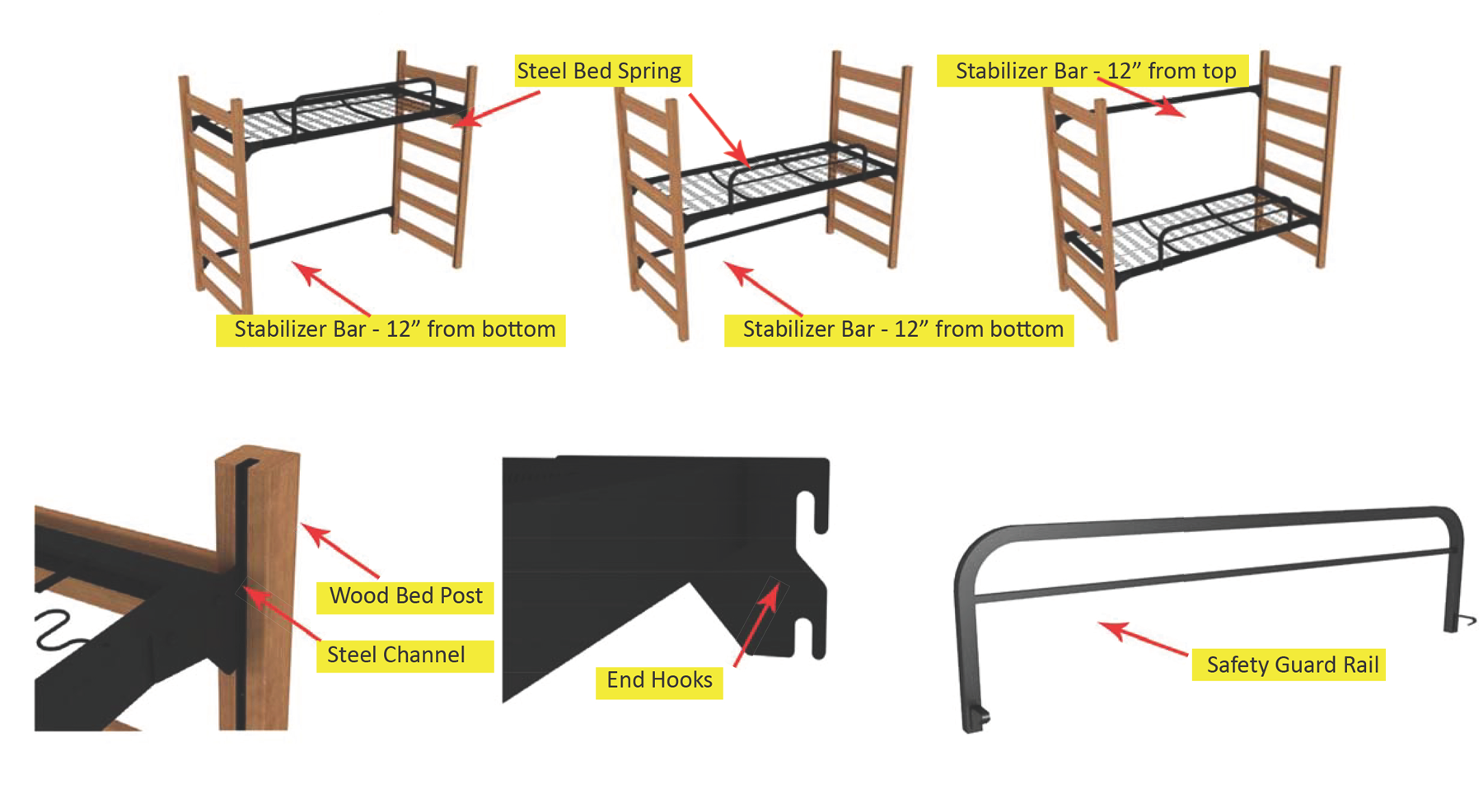
Proper dorm bed frame measurements include safety-critical elements beyond basic dimensions. Before sleeping on your newly assembled frame, complete these essential safety verifications.
Check that guardrails extend at least 5 inches above the mattress surface on all open sides of lofted and bunk beds. The gap between guardrail posts should be no wider than 3.5 inches to prevent limbs from slipping through. For ladders, ensure rungs are at least 11 inches deep with a minimum 14-inch clearance between rungs.
Weight capacity measurements matter more than students realize. Standard dorm bed frames support 250-300 pounds, but lofted configurations often have lower limits for the upper bunk (typically 200-250 pounds). Verify these ratings match your needs—exceeding them causes dangerous frame deformation over time.
The most overlooked safety measurement? Frame stability. With the mattress removed, shake the frame firmly at multiple points. Any movement exceeding ½ inch indicates loose connections that need immediate tightening. Dorm bed frames must remain completely rigid under pressure to prevent collapse during use.
Final Note: Getting dorm bed frame measurements exactly right transforms your college living experience from cramped and uncomfortable to functional and restful. By focusing on the precise 39×80 inch internal support surface, verifying loft clearance heights, and double-checking safety measurements, you’ll avoid the most common—and expensive—dorm setup mistakes. Always confirm your specific campus requirements before purchasing, and never assume “twin” means dorm-compatible. With the right measurements, your dorm bed becomes the foundation for academic success rather than a source of nightly frustration.


