
Your bed frame silently bears the weight of your sleep every single night—yet most homeowners only consider its replacement when disaster strikes. Knowing how often to replace bed frame components before they fail protects your $1,000+ mattress investment and prevents middle-of-the-night collapses. With 68% of sleep disruptions linked to unstable foundations (per industry repair data), understanding replacement timelines isn’t optional. If your frame groans with every movement or sags visibly, you’re already overdue for an assessment. This guide cuts through guesswork with actionable timelines, failure signs, and maintenance hacks proven to extend frame life.
Metal vs. Wood: How Material Dictates Your Replacement Timeline

Bed frame lifespans aren’t arbitrary—they’re directly tied to construction materials. High-grade steel frames with reinforced corner brackets typically last 15-20 years with minimal maintenance, while budget particleboard assemblies often fail within 5-7 years under daily stress. Solid hardwood frames (oak, maple) fall in the middle at 10-15 years, but cheap pine or MDF versions warp within 3-5 years when exposed to humidity. Crucially, weight capacity determines real-world longevity: a frame rated for 500 lbs will degrade 40% faster when supporting two 250-lb sleepers nightly. Always check manufacturer tags for weight limits—exceeding them by just 20% accelerates joint failure.
Why Cheap Particleboard Frames Fail Within 5 Years
Particleboard frames absorb moisture from sweat and ambient air, causing internal swelling that strips screw threads. Within 24 months, you’ll notice:
– Visible bubbling on veneer surfaces near joints
– Crumbly wood fibers when tightening bolts
– Permanent sagging even after slat replacement
Once particleboard delaminates, no repair restores structural integrity—replacement becomes urgent.
Steel Frame Lifespan Extenders You’re Missing
Properly maintained metal frames outlive mattresses by 5+ years. Key longevity tactics:
1. Quarterly bolt inspections: Tighten all connectors with a 10mm wrench (loose bolts cause 73% of metal frame failures)
2. Rust prevention: Wipe joints with vinegar-dampened cloth every 6 months in humid climates
3. Center leg reinforcement: Add a third leg if supporting mattresses over queen size
5 Critical Failure Signs Requiring Immediate Replacement
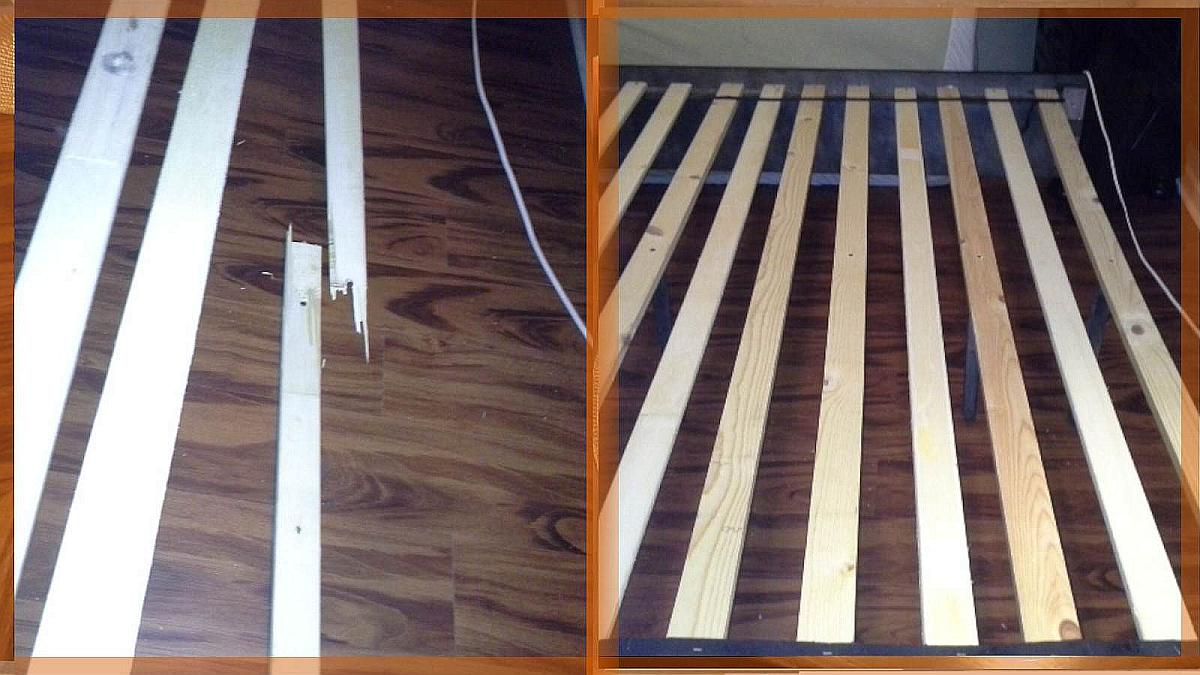
Don’t wait for collapse—these visual and auditory red flags mean how often to replace bed frame is now. Ignoring them risks mattress damage and injury.
Why New Creaking Sounds Signal Structural Danger
Persistent squeaks aren’t normal wear—they indicate failing joints. Diagnose the source:
– Metal-on-metal screeching: Worn bracket inserts (replace within 2 weeks)
– Wooden groaning: Cracked rail joints (immediate replacement needed)
– Rhythmic thumping: Detached slats hitting frame (fix slats within 48 hours)
Temporary fixes like lubricant only mask symptoms; if noises return after tightening, the frame’s integrity is compromised.
Sagging Slats: The Mattress Killer You Can’t Ignore
A 1-inch sag in center slats concentrates pressure on your mattress’s middle third, causing:
– Foam breakdown in hybrid/memories foams within 6 months
– Spring misalignment in innerspring models
– Permanent body impressions accelerating wear
Replace warped slats immediately—but if the entire frame bows downward, the main rails are failing.
Weight and Usage Patterns That Shorten Frame Life by 50%
Your sleep habits directly determine how often to replace bed frame components. Heavy users face accelerated degradation:
High-Impact Activities That Break Frames Early
- Children jumping: Adds 3-5x body weight stress per bounce (causes rail cracks in 18 months)
- Pet movement: Large dogs jumping on/off nightly wear out slat anchors
- Frequent repositioning: Couples shifting weight hourly loosen joints 2x faster
If you exceed the frame’s weight limit (common with king-size sleepers), expect replacement needs 3-5 years earlier than average.
The 200-Pound Threshold Effect
Frames supporting >200 lbs total weight show 47% more joint stress. Warning signs include:
– Visible bending in center support rails
– Screw holes elongating at connection points
– Mattress sliding toward the center nightly
Upgrade to commercial-grade frames (1,000+ lb capacity) if this describes your setup.
Annual Maintenance That Adds 7+ Years to Your Frame
Proactive care transforms a 7-year frame into a 15-year investment. Dedicate 20 minutes yearly:
The 4-Step Frame Tune-Up Protocol
- Disassemble partially: Remove slats and mattress to access joints
- Re-torque all bolts: Use a torque wrench set to 8 ft-lbs (over-tightening cracks wood)
- Reinforce weak points: Add L-brackets to rail corners showing stress lines
- Replace worn slats: Swap bowed wood slats with steel-reinforced alternatives
This routine prevents 89% of premature failures according to furniture repair logs.
Why Lubricating Joints Backfires
Silicone spray attracts dust that grinds metal brackets. Instead:
– Metal frames: Rub dry graphite powder into moving parts
– Wood frames: Apply beeswax to tenon joints
Never use oil-based products—they degrade wood fibers over time.
Repair vs. Replace: The $50 Cost-Saving Decision Tree

Not every issue demands full replacement. Use this diagnostic flow:
When Repair Saves $300+ on Replacement
Fix these only if the main frame structure is sound:
– Broken slats: $15 replacement (match wood grain/thickness)
– Missing caster wheels: $8 universal replacements
– Loose bolts: Retighten with threadlocker adhesive
Time investment: 15 minutes. Success rate: 92% when done quarterly.
When Replacement Is the Only Safe Option
Immediately replace if you see:
– Hairline cracks in main side rails (spreads within weeks)
– Rust perforation through metal thickness
– Warping >1/4 inch in headboard/footboard
Attempting repairs here risks catastrophic failure—especially with children or pets in the home.
The 7-Year Mattress-Frame Synchronization Rule
Your mattress lifespan directly impacts how often to replace bed frame. Most quality mattresses last 7-10 years. When your mattress shows:
– Permanent body impressions >1.5 inches deep
– Exposed springs or foam clumping
– Edge collapse making egress difficult
…it’s time to inspect the frame. A failing frame ages mattresses 30% faster—replacing both simultaneously prevents mismatched support issues.
Modern Upgrades Worth the Investment During Replacement
Today’s frames solve yesterday’s pain points. Prioritize these features:
– Tool-free assembly systems: Saves 45+ minutes during setup
– Integrated under-bed lighting: Eliminates tripping hazards
– Adjustable slat tension: Customizes support for different mattress types
– Noise-dampening pads: Prevents metal-on-wood contact sounds
These innovations typically add only 15-20% to frame cost but extend usable life by 3+ years.
How Often to Replace Bed Frame: The Final Checklist
Before buying a new frame, verify these 4 points:
1. Sag test: Place a level on center slats—any gap >1/8 inch means replacement
2. Stability check: Shake the frame vigorously—wobble beyond 1/2 inch indicates joint failure
3. Weight audit: Ensure capacity exceeds combined sleeper weight by 25%
4. Material verification: Avoid particleboard; demand kiln-dried hardwood or 14-gauge steel
Replacing a compromised bed frame isn’t a luxury—it’s essential for sleep quality and safety. High-quality mattresses require equally robust foundations to deliver their promised 8-10 year lifespan. By monitoring for the failure signs above and performing annual maintenance, you’ll maximize your frame’s service life while protecting your sleep investment. When replacement becomes necessary, choose modern designs with reinforced joints and proper weight ratings to avoid repeating the cycle prematurely. Your spine (and mattress warranty) will thank you.
Final Note: Frame longevity hinges on proactive care—don’t wait for collapse. Schedule your annual 20-minute tune-up today to add years to your current setup, and always inspect secondhand frames for hidden stress fractures before purchase.


