
That sudden sag in your mattress isn’t always the mattress’s fault—it’s often your bed frame silently failing. Understanding the anatomy of a bed frame is the secret to preventing premature wear, ensuring proper spinal alignment, and extending your mattress’s lifespan by years. Without the right structural support, even premium mattresses deteriorate quickly, leading to restless nights and wasted money. This guide dissects every critical component—from the often-overlooked center support legs to the spacing of slats—so you can choose a frame that actively supports restful sleep instead of sabotaging it. You’ll learn why 3-inch slat spacing is non-negotiable for foam mattresses, how to spot weak frame materials before purchase, and which components actually matter for your specific sleep setup.
Why Queen Beds Fail Without Proper Center Support
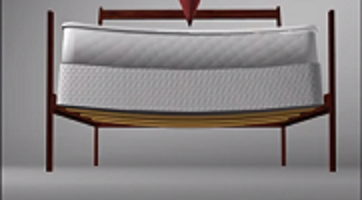
Queen and king beds collapse under pressure when critical support elements are missing. The center support beam running head-to-foot isn’t optional—it’s the backbone preventing side rails from bowing under weight. Without it, your mattress develops permanent dips within months as the frame buckles at its weakest point. This beam must connect directly to center support legs that extend to the floor, distributing weight evenly across the entire structure. For California kings, two center legs are essential since the extra length creates more leverage against the frame. Never skip these components during assembly; manufacturers specify them for durability, not convenience. If your frame lacks these legs, expect visible sagging within six months, especially with two sleepers or heavy mattresses.
Side Rails: Your Bed’s Longitudinal Lifeline
These long beams form the bed’s skeleton, connecting headboard and footboard posts while bearing 80% of the mattress load. Weak side rails bow inward when unsupported, causing slats to shift and creating dangerous gaps. Opt for rails at least 2 inches thick with reinforced corners—thin metal rails often bend under hybrid mattress weight. During assembly, align rail notches precisely with headboard posts before inserting bolts; misalignment creates stress points that lead to cracks. Check for “give” by pressing down mid-rail: any flex indicates inadequate support for heavy sleepers.
The 3-Inch Slat Spacing Rule That Saves Mattresses
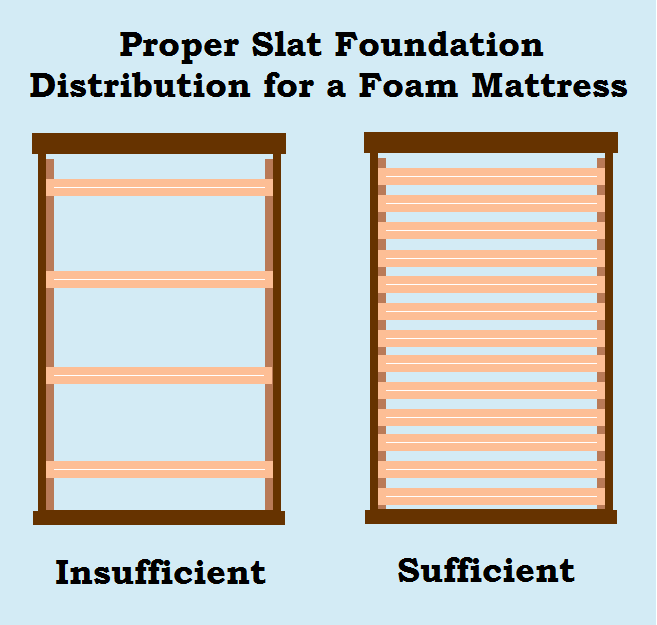
Slats spaced wider than 3 inches are a silent killer for foam and hybrid mattresses. These horizontal supports must sit perpendicular to side rails with gaps small enough to prevent mattress sagging between them. Solid wood slats (1+ inch thick) outperform thin metal rods, which can warp under constant pressure. For memory foam models, exceeding 3-inch spacing voids most warranties—manufacturers require this tight spacing to distribute weight evenly and prevent moisture buildup. When inspecting frames, slide a tape measure between slats; if you can fit a standard soda can (3.25 inches) through, reject it immediately. Replace bowed slats annually to maintain consistent support.
Headboard Posts: The Hidden Pillar Preventing Pillow Avalanche
Headboard posts do far more than anchor decorative panels—they stop pillows from sliding off the bed while providing crucial vertical stability. Tall posts (40+ inches) prevent upper-body strain when sitting up to read, but require reinforced connections to side rails. Loose post bolts cause dangerous wobbling; tighten them monthly using the manufacturer’s specified torque (usually 15-20 ft-lbs). For upholstered headboards, ensure posts have metal brackets inside the fabric—cheap foam-filled versions crack under pressure. Never mount headboards directly to walls without frame attachment; this bypasses the frame’s weight distribution and risks wall damage.
Footboard Styles: From Space-Savers to Style Statements
Low footboards (under 12 inches) maximize legroom in small bedrooms but offer zero functional benefit. Full-height footboards matching the headboard create a cohesive look but reduce usable floor space—measure your room before choosing. Storage footboards with hidden drawers solve clutter problems but add significant weight; verify your frame’s weight capacity includes this extra load. For adjustable beds, skip footboards entirely—they interfere with leg elevation mechanisms. Always check footboard post connections: loose bolts here cause mattress shifting during sleep, leading to uneven wear.
Foam Mattress Nightmares: Solid Platform Bases vs. Slat Failures
All-foam mattresses (memory foam or latex) demand absolute even support—any gap causes permanent indentations. Platform beds with solid wood bases eliminate slat spacing worries but trap moisture without ventilation holes. If using slats, they must be spaced ≤3 inches apart with no flex under pressure; foam mattresses magnify weak points faster than innerspring models. Hybrid mattresses combine coil support with foam layers, requiring the same strict slat spacing to protect the foam comfort layer. Never place foam directly on box springs—their uneven surface creates pressure points that degrade foam within months. When in doubt, consult your mattress warranty; 92% require slat spacing ≤3 inches for foam models.
Box Spring Myths: When This Foundation Actually Helps
Box springs aren’t obsolete—they absorb shock for innerspring mattresses, extending coil life by reducing metal fatigue. But they’re useless (and damaging) for foam mattresses, whose dense material can’t compress the box spring’s grid. Modern “low-profile” box springs (5-6 inches tall) pair with high bed frames for optimal height, while traditional 9-inch versions require taller frames. Never stack two box springs; the uneven surface creates dangerous pressure points. If your frame has sturdy slats ≤3 inches apart, skip the box spring—it adds unnecessary height and cost. Check manufacturer specs: some hybrid mattresses require a box spring to maintain warranty coverage.
Storage Bed Frames: Maximizing Space Without Sacrificing Support
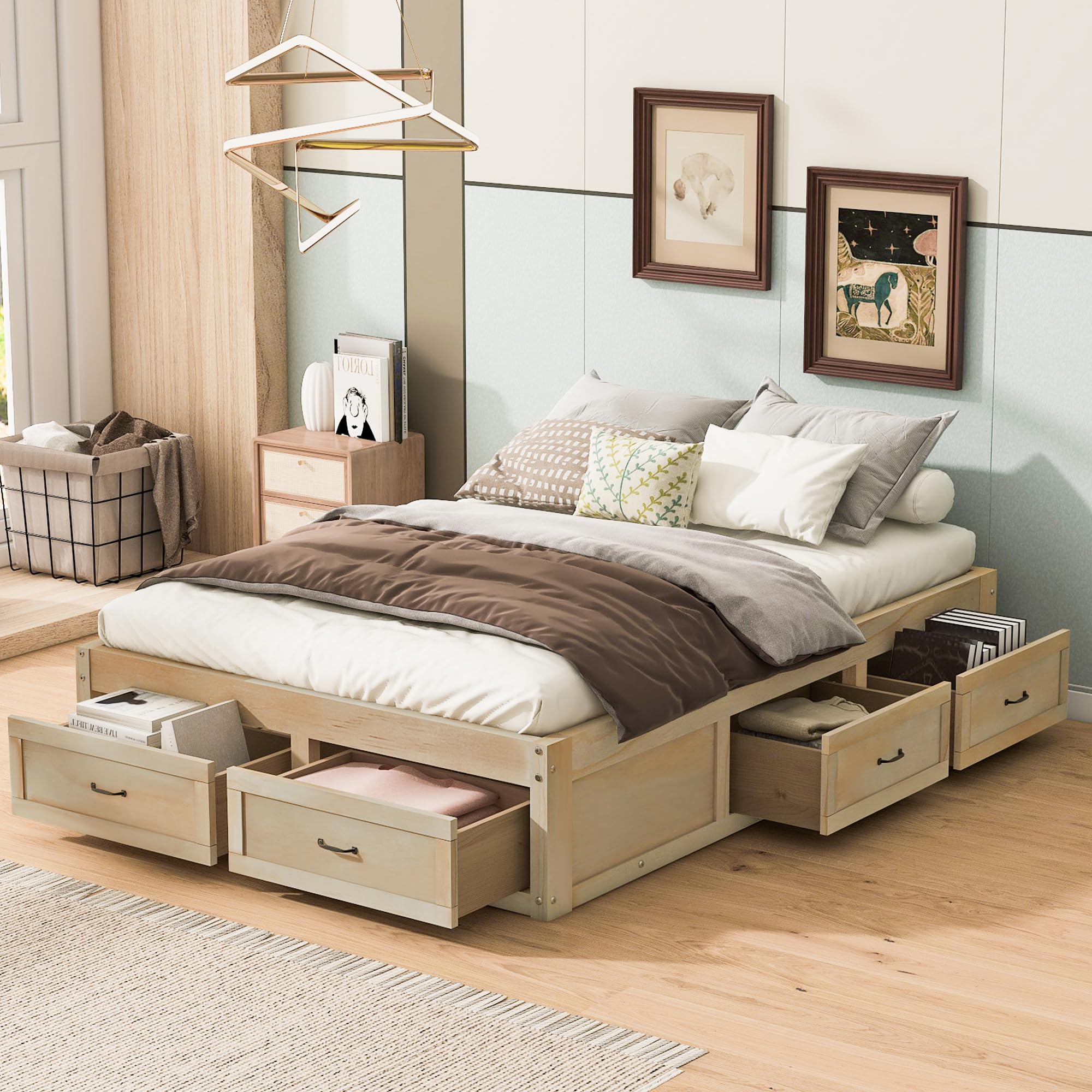
Drawers built into the frame base solve small-bedroom storage woes but introduce critical support trade-offs. Hydraulic lift mechanisms require reinforced side rails to handle the weight of stored items—standard rails often buckle under 50+ pounds of linens. For queen beds, center support legs must anchor directly under drawer tracks to prevent sagging. Avoid frames with flimsy particleboard drawers; solid wood glides last decades. Measure clearance: drawers need 10+ inches of under-bed space to open fully—low-profile platform beds often lack this. Before buying, pull open empty drawers; any sticking indicates poor alignment that worsens with weight.
Platform Bed Pitfalls: The Ventilation Trap
Solid platform bases create cozy moisture traps for foam mattresses without proper airflow. Look for bases with 1/2-inch ventilation slots spaced every 6 inches—solid wood without perforations breeds mold in humid climates. Metal platform frames solve this but transmit noise; felt pads between slats and mattress reduce squeaks. Low platform beds (under 18 inches) ease entry for seniors but complicate bedding changes—measure your mattress thickness before choosing. For heavy sleepers, verify platform thickness: sub-1-inch plywood bases warp under 300+ pounds, while 3/4-inch Baltic birch plywood handles 500+ pounds.
Assembly Landmines: Center Leg Installation Mistakes
Skipping center leg installation is the #1 cause of frame failure for queen+ beds. Legs must sit directly under the center beam’s midpoint—not offset toward the headboard. Floor protectors should be removed during initial tightening to prevent slippage; replace them after bolts are secure. Uneven floors require adjustable leg levelers—place a level across the beam before tightening. Never overtighten beam bolts; this strips wood threads. Test stability by rocking the frame vigorously before adding the mattress—any creak means loose connections. For metal frames, apply thread-locking compound to bolts monthly to prevent vibration loosening.
The 10-Minute Monthly Tune-Up That Prevents Disasters
Grab a wrench and level every 30 days to catch issues early. First, tighten all side rail bolts—loose connections cause 70% of frame collapses. Next, check slat integrity: press down mid-slat; any flex over 1/4 inch requires replacement. Inspect center legs for wobble by shaking them firmly; tighten mounting brackets if movement occurs. For wooden frames, run your hand along rails to feel hidden cracks. Finally, place a level on the beam—it should read perfectly horizontal. This routine adds years to your frame’s life and prevents midnight collapse scares.
Choosing the right bed frame anatomy transforms restless nights into deep, supported sleep. Prioritize 3-inch slat spacing for foam mattresses, mandatory center support legs for queen+ sizes, and solid materials that won’t buckle under weight. Your mattress warranty depends on these details—most void coverage for improper foundation support. Before purchasing, test frame stability in-store by pressing down mid-rail and checking bolt tightness. For immediate fixes, replace bowed slats with 1-inch thick hardwood versions and add center legs to undersupported frames. Remember: a bed frame isn’t just furniture—it’s the silent guardian of your sleep quality. Invest in its anatomy wisely, and you’ll reap years of undisturbed rest.


