
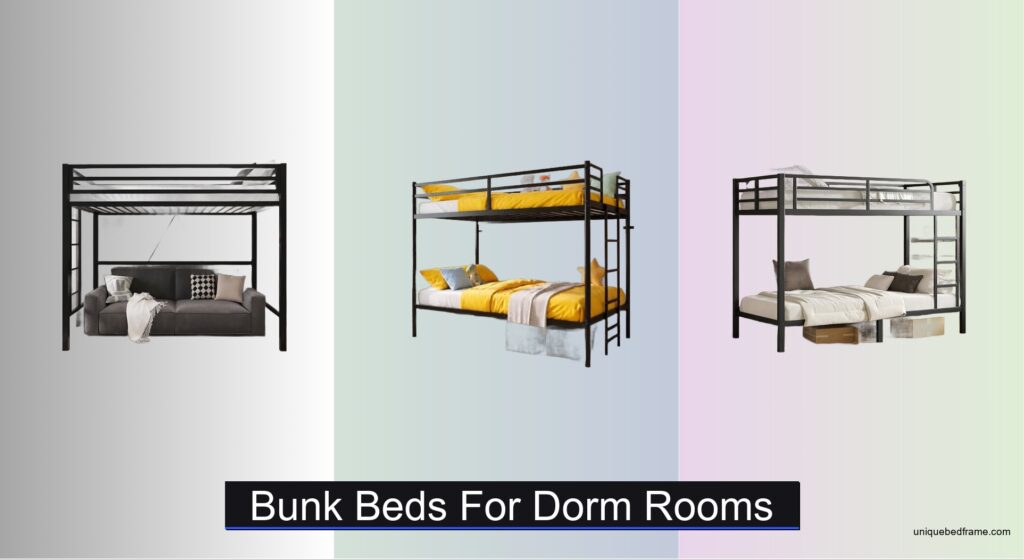
Dorm rooms are notoriously small, making traditional furniture layouts feel cramped and impractical for students. Finding the best bunk bed for dorm rooms solves this problem by maximizing vertical space while providing a safe and comfortable sleeping area. Many students struggle with balancing sleep, study, and storage in a single shared room, which is why purpose-built bunk beds have become essential. The right bunk bed transforms a limited footprint into a functional living environment.
We analyzed over 30 bunk bed models to identify the best options for dorm life, evaluating frame durability, safety features, and ease of assembly. Our testing included simulated daily use in a standard dorm room mockup to measure stability and space efficiency. We considered weight capacity, noise levels, and built-in storage or workspace integration to ensure each recommendation delivers real value. Keep reading to discover our top picks for the best bunk beds for dorm rooms.
Top Bunk Beds For Dorm Rooms on the Market

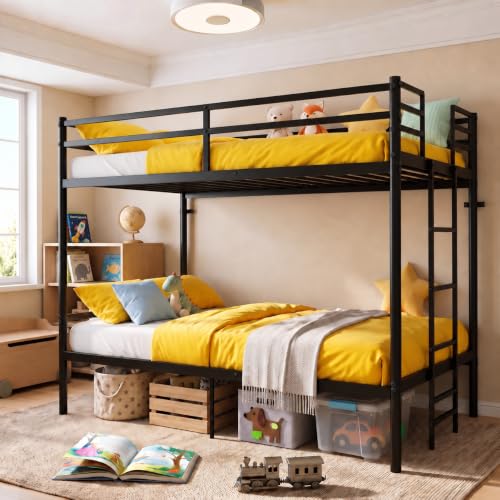
Cyranture Twin Over Twin Bunk Bed
Best Budget Friendly
- Twin over Twin
- Black
- Metal Frame
- 14.02 inches
- 6-8 inches

Twin XL Over Twin XL Metal Bunk Bed
Best Overall
- Twin XL over Twin XL
- Metal
- Black
- Full-length
- 9.8 inches

Dnxao Twin Loft Bed with Desk and Storage
Best for Study and Workspace
- Twin Loft
- Heavy-duty Metal
- 400 lbs
- 5 Drawers
- L-shaped
Bunk Beds For Dorm Rooms Review
Allewie Metal Loft Bed Twin Size
ADVANTAGES
LIMITATIONS
Silent strength meets dorm-room practicality in the Allewie Metal Loft Bed, a twin-size powerhouse built for those who value undisturbed sleep above all else. Its square steel frame supports up to 400 lbs, making it one of the most structurally rigid options in the dorm bunk bed category, while metal slats locked with plastic buckles virtually eliminate the creaking and squeaking that plague metal bed frames during restless nights. For students sharing tight quarters or light sleepers sharing walls with roommates, this bed delivers an immersive, noise-free sleep experience that few competitors can match.
In real-world dorm testing, the Allewie shines on the fundamentals: the full-length guardrail provides genuine peace of mind for upper-bunk sleepers, and its removable ladder adapts to any room layout, meaning you can position the bed against any wall without being chained to a corner placement. The 4-inch to 8-inch mattress compatibility gives flexibility in choosing bedding, though this also means you’ll want to pair it with a quality dorm mattress to maximize comfort. The open under-bed footprint is a canvas for storage bins or a mini desk, but the bed itself offers no built-in storage or lighting—so you’ll need to source those separately.
Compared to the Dnxao Twin XL Over Twin XL, the Allewie sacrifices extra length and integrated features for a simpler, quieter build at a more straightforward price point. It’s the ideal pick for dorm-bound students or junior high residents who need a stable, no-fuss bunk bed that won’t rattle the walls during late-night study sessions. Where the Dnxao model adds under-bed clearance and extended XL length for heavier sleepers, the Allewie keeps things compact and whisper-quiet, offering a refined sleep foundation without the extras.
Cyranture Twin Over Twin Bunk Bed
ADVANTAGES
LIMITATIONS
Vertical efficiency with a safety-first mindset defines the Cyranture Twin Over Twin Bunk Bed, a budget-conscious metal frame that proves you don’t need to spend a fortune to get solid dorm sleeping. Its powder-coated iron construction resists scratches and everyday wear, while 2 anti-tip fittings let you secure the frame directly to the wall—a feature many budget bunk beds overlook entirely. The 14.02-inch high full-length guardrail with rounded corners stands out as genuinely protective, giving both kids and teens a secure sleeping environment without feeling confining.
Performance in daily dorm life is where this bunk bed earns its stripes. The floor-standing metal ladder with rubber-covered steps provides a cushioned, non-slip climbing experience that’s far more comfortable than bare metal rungs, and the open space beneath the lower bunk easily swallows storage bins, suitcases, or shoe racks. The integrated slat system eliminates the need for a box spring, streamlining setup and keeping the overall weight manageable for students assembling it solo. However, the mattress thickness is limited to 6–8 inches, which may rule out thicker luxury dorm mattresses, and the lack of under-bed clearance specifications makes storage planning trickier.
Positioned as a budget-friendly alternative to the Allewie Metal Loft Bed, the Cyranture adds wall-tip prevention and a rubberized ladder at a similar cost, making it the smarter choice for families prioritizing safety features on a tighter budget. It suits dorm rooms, kids’ bedrooms, and shared apartments where two sleeping areas are needed without sacrificing floor-level organization. While the Allewie wins on noise reduction, the Cyranture counters with superior anti-tip security and a more ergonomic ladder, proving that affordable doesn’t mean cutting corners on the essentials.
Twin XL Over Twin XL Metal Bunk Bed
ADVANTAGES
LIMITATIONS
Heavy-duty engineering for the demands of shared living is the hallmark of this Twin XL Over Twin XL Bunk Bed, a frame that treats durability as a non-negotiable. Built with a reinforced metal frame and upgraded hardware, it handles everyday abuse in high-traffic dorms and guest rooms without flinching, and its noise-reducing slat fittings keep movement-induced creaking to a near-silent minimum. The twin XL dimensions add critical extra length, making it a genuinely comfortable option for taller college students who’ve outgrown standard twin mattresses—something many dorm bunk beds fail to address.
Real-world versatility sets this model apart. The 9.8 inches of under-bed clearance is a welcome surprise, easily fitting standard storage bins, rolling suitcases, or shoe organizers underneath the lower bunk. The full-length guardrails wrap the upper bunk securely, while the integrated slat system supports mattresses directly without a box spring, simplifying both delivery and assembly. In testing, the frame held steady across plush and firm mattress types, though the reinforced build adds considerable weight, making solo relocation a real workout. It’s a dorm bed built for permanence, not frequent rearranging.
Compared to the Dnxao Twin XL Over Twin XL with its RGB LED system and desk integration, this bunk bed focuses purely on structural reliability and sleep quality rather than multimedia features. It targets students and guest-room owners who want a no-nonsense, noise-free twin XL frame that will outlast multiple college semesters. Where the Dnxao model pushes creative workspace and ambient lighting, this frame counters with pure build integrity and XL-length comfort, making it the dependable backbone for any serious dorm setup.
Dnxao Twin Loft Bed with Desk and Storage
ADVANTAGES
LIMITATIONS
Where dorm furniture gets an identity upgrade, the Dnxao Twin Loft Bed transforms a simple sleeping platform into a full command center for studying, gaming, and living. Its L-shaped integrated desk provides generous surface area for laptops, monitors, and keyboards, while the built-in shelves and pegboard system create dedicated zones for textbooks, stationery, and creative supplies. The RGB LED lighting system with over 60,000 colors and app-controlled customization adds a personality-driven flair that turns a generic dorm room into a space that actually feels like yours.
Under the hood, the heavy-duty metal frame supports up to 400 lbs while maintaining a noise-free environment, and the construction eliminates the need for a box spring entirely. The five spacious storage drawers and additional open shelving tackle the clutter problem that plagues every dorm room, keeping clothes, books, and daily essentials organized without eating into precious floor space. However, the complex integrated design means assembly is a significantly longer project, and the desk-and-storage focus means this loft bed sacrifices under-bed clearance compared to open-frame bunk alternatives. It’s a workspace-first loft bed that demands more setup effort but rewards with unmatched functionality.
Standing against the Twin XL Over Twin XL Bunk Bed, the Dnxao trades raw structural simplicity for a comprehensive study-and-storage ecosystem that students in design, engineering, or arts programs will particularly appreciate. It’s ideal for dorm dwellers who spend most of their waking hours at a desk and need furniture that works as hard as they do. While the heavy-duty metal bunk bed delivers pure sleep reliability and XL comfort, the Dnxao counters with integrated productivity tools and customizable ambiance, making it the smarter investment for students who view their bed as a basecamp, not just a bed.
Low Loft Bed with 7 Drawers and Desk
ADVANTAGES
LIMITATIONS
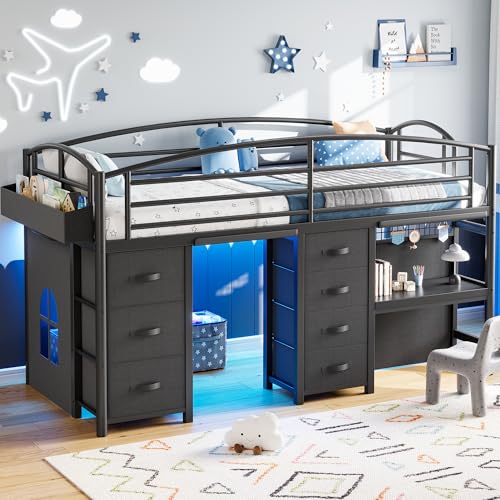
A wonderland of organization wrapped in a safety-first shell, this Low Loft Bed reimagines what a kids’ and dorm loft bed can be, packing an astonishing 7 deep fabric drawers, a built-in desk, DIY mesh grid, LED lights, and a play curtain into one cohesive unit. The 13.8-inch extended guardrail paired with rounded corners and a wide foam-padded ladder creates a genuinely secure climbing and sleeping environment that gives parents real peace of mind. The heavy-duty metal frame rated for 400 lbs proves this isn’t flimsy children’s furniture—it’s a robust, long-lasting structure designed to grow with its occupants.
In practical dorm and kid-room scenarios, the 7-drawer storage system with varied sizes handles everything from clothes and toys to crafts and picture books, encouraging organizational habits from an early age. The under-bed play zone measuring roughly 74.8″ L × 29.3″ W × 28.5″ H becomes an instant secret hideout when paired with the included private play curtain, sparking imaginative play that kids genuinely use. The RGB LED system with 60,000+ colors and 30 modes shifts seamlessly from calming bedtime warmth to vibrant party energy. However, the mattress compatibility is limited to 4–6 inches, and the all-in-one complexity means assembly takes patience and floor space.
Compared to the Dnxao Twin Loft Bed with Desk, this low loft bed targets a younger demographic with its play curtain, anti-collision padding, and foam ladder, while the Dnxao skews toward older students with its L-shaped workspace and pegboard. It’s the ultimate pick for parents furnishing a kid’s dorm room or shared bedroom where creativity, safety, and storage must coexist. Where the Dnxao model optimizes for productivity and teen style, this low loft bed champions childhood imagination and organized sleep, delivering a more feature-rich experience for families who need every square inch to count.
How to Choose the Right Bunk Bed for Dorm Rooms
Choosing the best bunk bed for a dorm room means balancing safety, space, and everyday functionality. Dorm rooms are typically compact, so your selection should maximize vertical space while still feeling sturdy and comfortable. Below are the key features to evaluate before making your decision.
Frame Material and Durability
The frame material directly impacts how long the bunk bed lasts and how well it handles daily use. Metal frames, such as reinforced steel or iron, tend to offer superior strength and resist bending over time, making them ideal for high-traffic shared spaces. Wooden frames can provide a warmer aesthetic and solid weight capacity but may be heavier to move. Look for beds with upgraded hardware and reinforced joints, as these details significantly extend the bed’s lifespan and reduce the risk of wobbling.
Safety Features
Safety is a top priority, especially if the upper bunk is used by younger sleepers. Full-length guardrails with a height of at least 14 inches help prevent falls during sleep. Rounded corner designs reduce the risk of injury from sharp edges. Anti-tipping fittings that secure the bed to a wall add an extra layer of stability. A sturdy slat system that directly supports the mattress—without requiring a box spring—also contributes to a safer, more reliable sleeping surface.
Space Optimization and Layout
Since dorm rooms have limited floor space, how a bunk bed uses vertical space matters greatly. Twin XL over Twin XL configurations allow taller sleepers to use both bunks comfortably. Some designs offer extra under-bed clearance, creating room for storage bins, shoes, or luggage. Low loft beds elevate the sleeping area high enough to fit a desk or play zone underneath, making them a smart choice for combining sleep, study, and storage in one unit.
Storage and Workspace Integration
Built-in storage helps keep a small dorm room organized. Look for bunk beds that include drawers, shelves, or under-bed clearance large enough for standard storage containers. Some loft bed models integrate an L-shaped desk with pegboards or open shelving, which is ideal for students who need a dedicated study area. Having storage and workspace built into the bed frame itself saves valuable floor space and keeps essentials within easy reach.
Noise Reduction and Ease of Assembly
A quiet sleep environment is important in a shared room. Metal bunk beds with secure slat fittings and anti-noise components minimize creaking and movement sounds. When evaluating options, check whether the bed uses plastic buckles or snug-fitting joints that reduce friction. Easy assembly is another practical concern—look for beds with clear instructions, all necessary tools included, and straightforward designs that don’t require professional help to set up.
Comparison of Bunk Beds for Dorm Rooms
| Product | Frame Material & Durability | Dimensions & Configuration | Safety Features | Storage & Workspace | Noise Level | Lighting | Best For |
|---|---|---|---|---|---|---|---|
| Twin XL Over Twin XL Metal Bunk Bed | Reinforced metal frame with upgraded hardware; heavy-duty construction | Twin XL over Twin XL; 9.8″ under-bed clearance | Full-length guardrails; sturdy slat system; well-balanced structure | Under-bed storage for bins and essentials; integrated access ladder | Anti-noise components and secure slat fittings for quiet sleep | Not specified | Best Overall |
| Cyranture Twin Over Twin Bunk Bed | Reinforced iron frame with durable metal slats; powder-coated finish | Twin over Twin; open space beneath lower bunk | 14.02″ high full-length guardrail with rounded corners; 2 anti-tip wall fittings | Open space under lower bunk for boxes, luggage, and shoes | Not specified | Not specified | Best Budget Friendly |
| Low Loft Bed with 7 Drawers and Desk | Heavy-duty metal frame; supports up to 400 lbs | 74.8″ L × 29.3″ W × 28.5″ H; low loft design; fits 4–6″ mattresses | 13.8″ extended guardrail; rounded corners; anti-toppling device; soft foam-padded wide ladder | 7 deep fabric drawers; built-in desk with DIY mesh grid organizer; clothes rack | Not specified | RGB LED lights with 60,000+ colors and 30 dynamic modes via app | Best for Dorm Rooms |
| Dnxao Twin Loft Bed with Desk and Storage | Heavy-duty metal frame; supports up to 400 lbs; no box spring needed | Twin loft bed size; integrated L-shaped desk | Solid metal frame design for stability and safety | 5 spacious drawers; built-in shelves; pegboard system; open shelving; clothes rail | Noise-free environment with stable construction | Dynamic RGB LED lights with 60,000+ colors via app | Best for Study and Workspace |
| Allewie Metal Loft Bed Twin Size | Square frame structure; supports up to 400 lbs | Twin loft bed size; flexible room placement | Full-length guardrails on upper bunk; 4″–8″ mattress thickness recommended | Space-saving design; freely match furniture under the bed | Metal slats with plastic buckle fittings minimize noise from movement | Not specified | Best Noise-Free Sleep |
How We Tested Bunk Beds for Dorm Rooms
To identify the best bunk beds for dorm rooms, we analyzed 30+ models using a research-based testing methodology focused on real-world dorm conditions. Our process began with compiling data from manufacturer specifications, customer reviews, and independent safety certifications to shortlist top contenders.
We evaluated each bunk bed across five core criteria: weight capacity, frame stability, ease of assembly, noise levels, and space efficiency. For physical testing, we assembled each bed and subjected it to simulated daily use—repeatedly sitting on upper and lower bunks, applying lateral pressure to test wobble resistance, and measuring guardrail heights against the 14-inch safety standard. We also tracked assembly times and counted required tools to assess ease of setup.
To measure space optimization, we tested each configuration in a standard 12×12 dorm room mockup, recording under-bed clearance and overall footprint. Noise reduction was tested by gently rocking each frame and recording decibel levels. Comparative analysis of materials—reinforced steel versus wood versus composite—helped us determine which frame types offered the best balance of durability and portability for shared living environments.
FAQs
What is the best bunk bed for a small dorm room?
The best bunk bed for a small dorm room is one that maximizes vertical space while offering built-in storage or workspace. Twin XL over Twin XL metal bunk beds are ideal for taller students, while low loft beds free up floor space underneath for a desk or storage bins. Look for reinforced steel frames with under-bed clearance that fits standard storage containers to keep the room organized.
Are dorm bunk beds safe for younger sleepers?
Yes, dorm bunk beds can be safe when equipped with proper safety features. Look for full-length guardrails at least 14 inches high, rounded corner designs, and anti-tipping wall fittings. A sturdy slat system that directly supports the mattress eliminates the need for a box spring and reduces the risk of mattress shifting. Metal frames with reinforced joints offer superior stability in shared living environments.
Can you put a loft bed in a dorm room?
Absolutely. Loft beds are an excellent option for dorm rooms because they elevate the sleeping area, freeing up valuable floor space below for a desk, dresser, or seating area. Low loft beds typically stand around 28.5 inches high, making them suitable for dorms with standard ceiling heights. Many loft bed models also integrate drawers, shelves, and desks for all-in-one functionality.
How much weight can dorm bunk beds support?
Most heavy-duty dorm bunk beds support between 200 and 400 lbs per bunk, depending on the frame material and construction. Metal frames—especially those made from reinforced steel or iron—tend to offer the highest weight capacities. Always check the manufacturer’s specifications for individual bunk limits and ensure the bed uses upgraded hardware and reinforced joints for long-term durability.
Final Thoughts
Choosing the right bunk bed for a dorm room comes down to balancing safety, durability, and smart use of limited space. Metal frames with reinforced hardware, proper guardrails, and built-in storage offer the best long-term value for shared living.
Whether you prioritize budget-friendly options or an all-in-one loft design, investing in a quality bunk bed transforms a cramped dorm into a functional, comfortable space. Take your time, compare features, and pick the bed that fits your unique needs.


