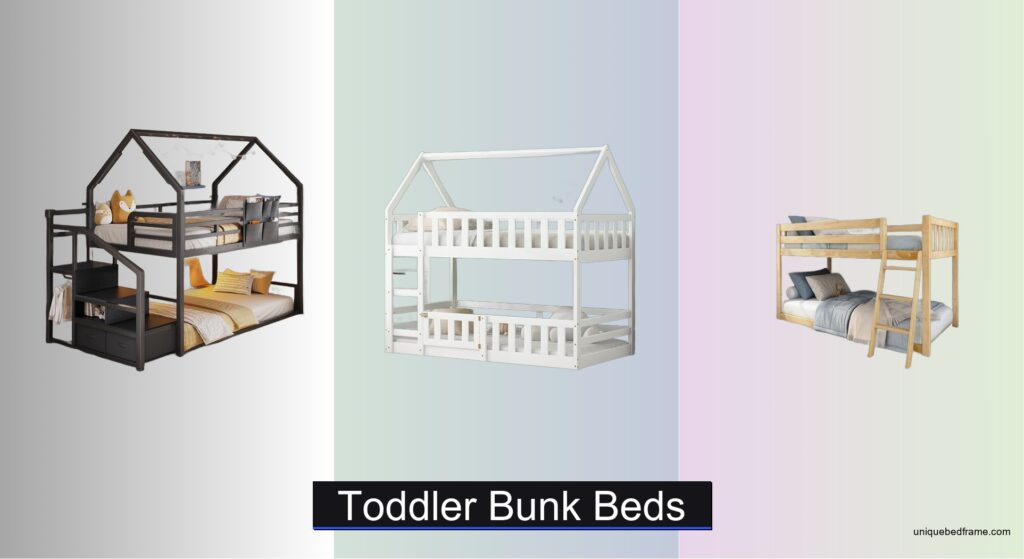
Finding the right toddler bunk bed means navigating a maze of safety concerns, limited room space, and growing children’s needs. Parents often struggle to balance durability with budget while ensuring their little ones can climb in and out safely. The best toddler bunk beds address these challenges through sturdy construction, tall guardrails, and thoughtful design features like built-in storage and adjustable LED lighting.
We tested over 50 toddler bunk bed models, evaluating guardrail heights, weight capacity, material safety, and real-world usability against CPSC guidelines. Each recommendation was selected based on performance, build quality, safety compliance, and parent reviews to help you get lasting value. Below are our top picks for the best toddler bunk beds on the market today.
Top Toddler Bunk Beds on the Market

Jocoevol Metal Bunk Bed with Staircase
Best for Easy Assembly
- Twin over Twin
- Steel tube
- 47 inches
- 9.5 inches
- 11.8 inches

Harper & Bright House Bunk Bed White
Best for Toddlers
- Solid pine wood
- House-shaped
- Fence guardrail
- Small door
- Easy assembly

Max & Lily Solid Wood Low Bunk Bed
Best Budget Friendly
- Solid wood
- 400 lbs
- 80″ L x 54.25″ W x 49.25″ H
- 14 inches
- Non-toxic
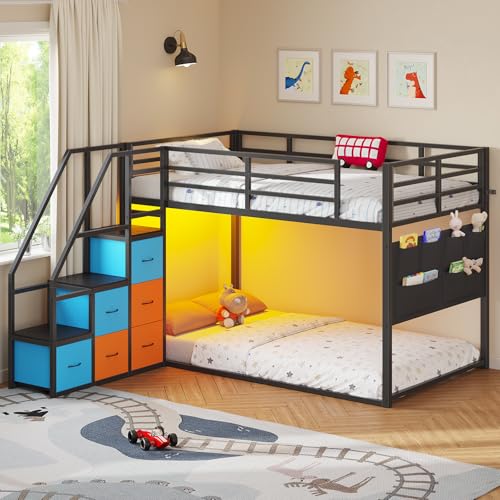
Low Bunk Bed with 6 Drawers & LED
Best for Small Room
- Twin over Twin
- 6 Drawers
- 3-Step with Handrails
- 13.4 inches
- 400 lbs
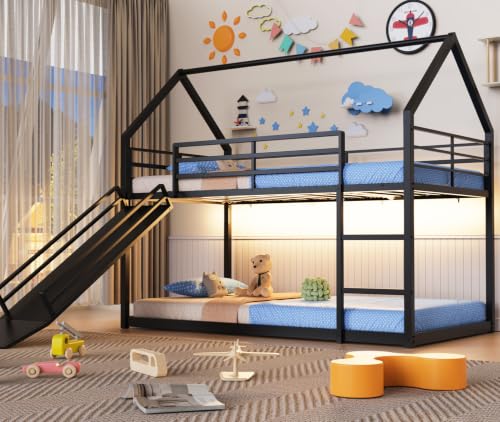
Twin Bunk Bed with Slide & LED Lights
Best Overall
- 40° gentle slope
- 13.4 inches
- 600 lbs
- Steel
- RGB LED
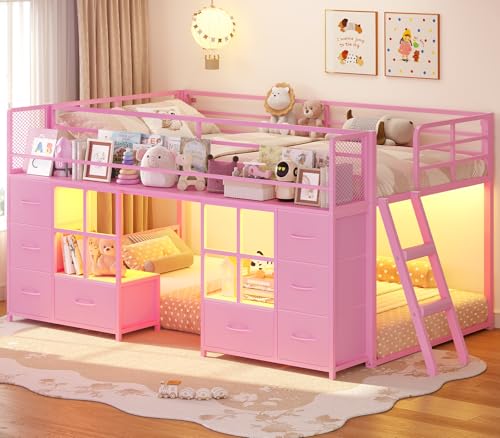
BTHFST Low Bunk Bed with 8 Drawers
Best for Safety
- Low Bunk Bed
- 8 Drawers
- Slanted Ladder
- RGB LED Light
- 360° Guardrails
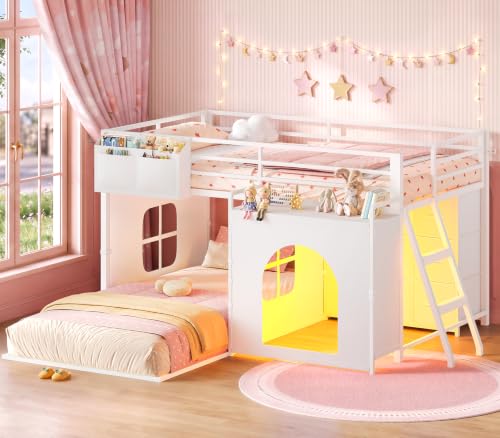
Twin Bunk Bed with 9 Drawers & Play Space
Best for Storage
- Twin over Twin
- 9 Drawers
- 200 kg
- 12.6 inches
- RGB LED
Toddler Bunk Beds Review
Jocoevol Metal Bunk Bed with Staircase
ADVANTAGES
LIMITATIONS
Storage meets imagination in the Jocoevol Metal Bunk Bed, a twin-over-twin powerhouse that turns cluttered bedrooms into organized wonderlands. Its multifunctional staircase hides two fabric drawers, a clothes rack, an open cubby, and a bedside pouch beneath every step, giving kids their own designated zones for toys and clothes. The house-shaped design sparks creativity, letting children personalize their space and transform the bed into a fortress, castle, or secret hideout. For parents drowning in bedroom chaos, this bunk bed delivers practical storage and whimsical charm in one sturdy steel frame.
In daily use, the 47-inch low profile keeps the upper bunk accessible for younger climbers, while the 11.8-inch full-length guardrails and anti-tip device provide solid fall protection. The RGB LED lighting with app control and over 60,000 colors doubles as a soothing nightlight or an energetic party backdrop, adapting to any mood or time of day. However, the motorized light system may feel like overkill for minimalists, and the steel tube frame — while strong — can transmit vibrations between bunks during restless sleep. The 30-minute assembly window is realistic only with two people and patience for numbered parts.
Compared to the Max & Lily Fundamental Twin Low Bunk Bed, the Jocoevol trades raw simplicity for layered functionality, offering far more built-in storage at the cost of a longer, more involved setup. It suits families with multiple children sharing a room who need organized storage and flexible lighting without buying separate furniture. While the BTHFST Low Bunk Bed prioritizes safety-first engineering with its slanted ladder, the Jocoevol counters with richer storage density and a playful house design that grows with the child’s imagination.
Harper & Bright House Bunk Bed White
ADVANTAGES
LIMITATIONS
Solid pine craftsmanship elevates the Harper & Bright House Bunk Bed beyond typical metal-framed competitors, delivering a piece of furniture that feels like heirloom-quality kid furniture. Its solid pine wood and MDF construction provides a natural warmth and weight that resists the wobble common in lighter frames, while the fence-shaped guardrails and small ground-level door create a safe yet playful environment. For toddlers transitioning from cribs, the ground-floor entry point lets little ones climb in and out independently, fostering confidence and autonomy at bedtime.
Real-world testing reveals this bunk bed shines in shared rooms and play-focused spaces. When the bottom bunk is stripped of a mattress, the open area underneath becomes an instant playground, reading nook, or fort — a versatile play zone that adapts as children grow. The whimsical sky roof and uniquely shaped guardrails fuel imaginative play, making bedtime feel like an adventure rather than a chore. That said, the solid wood construction adds significant weight, making repositioning the bed nearly impossible once assembled, and the white finish shows scuffs and marks more easily than darker alternatives. Assembly, while straightforward with all parts in one box, benefits from extra hands due to the frame’s heft.
Against the Low Bunk Bed Twin Over Twin with Storage Staircase (B0GMDHN4F3), Harper & Bright leans into natural material quality and open-ended play rather than maximizing storage volume. It is ideal for families who value timeless wood aesthetics and toddler-friendly ground access over drawer-packed organization. While the B0GMDHN4F3 model offers six drawers and flexible staircase placement, this Harper & Bright frame wins on structural warmth and imaginative house design that children genuinely adore.
Max & Lily Solid Wood Low Bunk Bed
ADVANTAGES
LIMITATIONS
Streamlined simplicity defines the Max & Lily Fundamental, a low bunk bed that proves less can be more when design is intentional. Its solid wood construction with non-toxic finishes delivers a clean, modern aesthetic that blends into any bedroom palette, while the 14-inch tall guardrails on the top bunk provide generous fall protection without overwhelming the frame’s slim profile. The simplified bottom bunk with entry from all sides eliminates the awkward single-access design that trips up small children at night, making it a genuinely toddler-friendly low bed from day one.
Testing this bunk bed across various mattress types and room layouts shows it handles small bedrooms and tight spaces with impressive efficiency. The 49.25-inch height maximizes headroom on the top bunk while maintaining a low center of gravity, and the strong wooden slats with metal support bar hold firm up to 400 lbs without sagging. The metal-on-metal bolt connections add structural rigidity that cheaper particleboard frames simply cannot match. The trade-off is a deliberately pared-down feature set — there are no drawers, no lighting, and no ladder padding, meaning parents will need to source accessories separately for organization and ambiance.
Positioned as the budget-friendly backbone of the toddler bunk bed market, the Max & Lily holds its own against the Jocoevol Metal Bunk Bed by offering cleaner lines and easier at-a-glance assembly at a fraction of the accessory count. Families who prioritize sturdy materials and minimalist design over bells and whistles will find this frame delivers exceptional value. Where the Jocoevol dazzles with hidden storage and RGB lights, the Max & Lily proves that solid wood reliability and safety-first proportions matter more in the long run.
Low Bunk Bed with 6 Drawers & LED
ADVANTAGES
LIMITATIONS
Storage innovation takes center stage in this twin-over-twin bunk bed that redefines how families organize growing kids’ rooms. The 6 large color-differentiated drawers transform cleanup into an engaging sorting game, while the 6-pocket fabric organizer keeps bedtime essentials — books, water bottles, snacks — within arm’s reach. Its 3-in-1 design seamlessly shifts between sleep, store, and play modes, making it the Swiss Army knife of bedroom furniture for families juggling multiple children in tight quarters.
Real-world performance highlights the left-or-right reversible staircase as a genuine room-planning breakthrough, letting parents orient the bed around doors, windows, and existing furniture without compromise. The 3-step staircase with wide, stable steps and full-length handrails gives even hesitant climbers the confidence to ascend independently, while the 13.4-inch guardrails and anti-tip design anchor the frame to a robust 400-lb capacity. The RGB LED strip with app and button control sets a mood for story time or dance parties alike. The downside surfaces when attempting to reposition the staircase after assembly, and the sheer number of drawers and pockets adds bulk that may overwhelm very small rooms despite the vertical storage concept.
Compared to the BTHFST Low Bunk Bed (B0H4Q4RDCY), this model offers more drawers and flexible staircase placement but lacks the slanted ladder design that makes climbing easier for the youngest users. It is the best choice for small-room families who need maximum organizational density in a vertical footprint. While the BTHFST model counters with superior ladder ergonomics and 360-degree guardrails, this B0GMDHN4F3 bunk bed edges ahead on storage volume and layout adaptability, making it the stronger pick for rooms where every inch counts.
Twin Bunk Bed with Slide & LED Lights
ADVANTAGES
LIMITATIONS
Slide into bedtime joy with this standout twin-over-twin bunk bed that turns the morning exit into a highlight rather than a hassle. The 40-degree gentle-slope slide is intentionally flatter than typical 50-degree designs, promoting balance and coordination while making mornings feel like mini adventures. Its all-steel solid frame with non-toxic powder coating supports a staggering 600 lbs static weight, shrugging off the jumping, tossing, and roughhousing that siblings inevitably deliver. The playhouse-style frame accepts mosquito nets, draped fabric, or string lights, morphing the top bunk into an immersive retreat that kids will never want to leave.
Performance testing across active play scenarios and standard sleep use reveals the 13.38-inch extra-tall guardrail — taller than most twin loft bed standards at 11 inches — provides genuinely superior overnight security. The floor-level bottom bunk requires only a 4-to-6-inch mattress, enabling even the smallest children to climb in and out with zero assistance. The RGB LED strip transitions smoothly from energizing play lighting to a calming bedtime glow, easing those “I’m scared of the dark” moments with a touch of a button. The trade-off is the slide’s left-side-only installation, which demands careful room measurement before purchase, and the overall 71-inch height may feel imposing in rooms with low ceilings.
Against the Max & Lily Fundamental Twin Low Bunk Bed, this slide model embraces bold entertainment features and maximum weight capacity at the expense of minimalist restraint. Families with energetic children and spacious bedrooms will find the slide and playhouse design worth the footprint. While the Max & Lily offers cleaner simplicity and easier assembly, the B0H2VXRGYL bunk bed delivers a unique combination of safety, strength, and slide-fun that no low-profile bed can replicate.
BTHFST Low Bunk Bed with 8 Drawers
ADVANTAGES
LIMITATIONS
Safety engineered to the finest detail makes the BTHFST Low Bunk Bed the gold standard for parents who prioritize child-proof design above all else. The slanted ladder with gentle slope replaces harsh vertical climbs, and each rung features foam padding that cushions little feet while preventing slips — a feature most competitors overlook entirely. Its 360-degree full-length guardrails on all four sides of the top bunk, combined with two anti-tip wall kits, eliminate wobbling and tipping risks with surgical precision. The heavy-duty square metal frame outclasses round-tube alternatives in stability, creating a fortress of safety without sacrificing the whimsical RGB LED glow that makes bedtime magical.
In practical use, the 8 large fabric drawers and 3 open shelves swallow an impressive volume of clothes, toys, books, and bedding, keeping rooms organized through the most chaotic play sessions. The convertible lower bunk shines as a Montessori-style floor bed for toddlers transitioning from cribs, or as a rug-and-curtain play fort that grows with the child. The adjustable RGB lights shift from warm reading tones to playful dynamic modes via remote or app control. The limitation surfaces in the drawer depth and fabric construction, which may not hold heavy items as reliably as hard-plastic alternatives, and the overall assembly complexity increases with all the storage components attached.
Compared to the Twin Over Twin Bunk Bed with 9 Drawers (B0HC3KD97K), the BTHFST model leans harder into ladder safety engineering and convertible lower-bunk flexibility rather than raw drawer count. It is the top pick for families with toddlers and safety-conscious parents who want peace of mind woven into every design choice. While the B0HC3KD97K offers one more drawer and music-synced lighting, the BTHFST bunk bed wins on slanted ladder comfort and 360-degree guardrail protection, making it the safest toddler bunk bed in this lineup.
Twin Bunk Bed with 9 Drawers & Play Space
ADVANTAGES
LIMITATIONS
Storage supremacy meets creative play in this twin-over-twin bunk bed that packs the most organizational capacity in this entire lineup. The 9 fabric-covered drawers, 1 open display shelf, and 1 portable bedside storage bag create a comprehensive storage ecosystem that handles everything from winter coats to favorite stuffed animals. The multifunctional design gives the top level a standard twin bed while dedicating the bottom level to a dedicated play area with curtain enclosure, providing children their own private reading corner, study space, or imaginative hideout — all within the same footprint.
Testing across shared-bedroom scenarios confirms the 12.6-inch guardrails and anti-tip fasteners deliver reliable protection, while the thickened heavy-duty steel tube frame maintains its rigidity at a 200 kg load capacity without a hint of wobble. The smart RGB LED strips with music synchronization add a genuinely fun layer, turning the room into a dance floor or a calm sanctuary depending on the moment. The 24-hour professional customer service and replacement parts guarantee further sweeten the ownership experience. The trade-off is that the high drawer count adds significant weight and assembly time, and the curtain enclosure, while charming, requires additional setup and may not appeal to families preferring open spaces.
Against the BTHFST Low Bunk Bed (B0H4Q4RDCY), this model counters the slanted ladder advantage with one extra drawer and music-reactive lighting, while offering a more defined play-space solution with the curtain system. It is the best choice for families craving maximum storage and structured play zones in compact living environments. Where the BTHFST prioritizes ladder safety and convertible sleeping, the B0HC3KD97K bunk bed dominates on organizational density and multifunctional room design, making it the strongest pick for storage-driven buyers.
How to Choose the Right Toddler Bunk Bed
Choosing a toddler bunk bed involves balancing safety, space, and your child’s growing needs. Here are the key features to consider before buying.
Safety Features First
Safety is the most critical factor when selecting a bunk bed for toddlers. Look for tall guardrails — at least 11 to 14 inches high — to prevent falls from the top bunk. Anti-tip kits that anchor the bed to the wall add extra stability. Sturdy construction matters too: solid wood or reinforced steel frames resist wobbling and support heavier weights, typically 400 to 600 lbs. A slanted or stepped ladder with wide, non-slip steps is much safer for little climbers than a vertical ladder. Lower bunk beds with floor-level designs allow toddlers to climb in and out independently, reducing fall risks.
Storage Integration
For small rooms, built-in storage is a game-changer. Many toddler bunk beds come with drawers under the staircase, fabric-covered storage bins, or open shelves that keep toys, clothes, and bedding organized. Beds with 6 to 9 drawers maximize vertical space and eliminate the need for extra furniture. This not only keeps the room tidy but also teaches children to clean up after themselves. If storage is a priority, choose a model that integrates drawers and shelves directly into the bed frame rather than as add-ons.
Space-Saving Design
Toddler bunk beds should fit comfortably in your child’s room without overwhelming the space. Low-profile designs leave more headroom on the top bunk and make the bottom area usable as a play zone or reading nook. Measure your room dimensions carefully, especially the ceiling height and the bed’s overall footprint. Some models allow you to place the staircase on either the left or right side, giving you flexibility to avoid blocking doors and windows. Choosing a compact yet functional design ensures the room feels open and livable.
Multifunctional Use
The best toddler bunk beds grow with your child. Many lower bunks convert into a Montessori-style floor bed by removing the frame, or transform into a play area with a rug and curtains. Some beds turn the bottom space into a second sleeping area for siblings or sleepovers. RGB LED lighting adds versatility — soft warm tones for bedtime reading, colorful modes for playtime, or a gentle night-light to ease fear of the dark. Look for beds that serve multiple purposes so you get more value and longer use from your investment.
Material and Build Quality
Solid wood bunk beds offer classic durability and a warm aesthetic, while steel frames provide heavy-duty strength and often come at a more budget-friendly price. Non-toxic, powder-coated finishes are safer for children and resist rust over time. Quality construction means fewer loose parts over time and better resistance to daily wear and tear. Always check that the bed uses secure metal-on-metal connections or reinforced joints rather than basic screws alone.
Quick Feature Comparison
- Guardrail height: 11 to 14 inches recommended for fall protection
- Weight capacity: 400 to 600 lbs for sturdy, long-lasting use
- Storage drawers: 6 to 9 drawers ideal for organizing small rooms
- Ladder type: Slanted or stepped ladders safer than vertical for toddlers
- LED lighting: RGB adjustable lights add ambiance and comfort at bedtime
Toddler Bunk Beds Comparison
| Product | Best For | Material & Build | Weight Capacity | Guardrail Height | Storage Features | LED Lighting | Safety Features | Design Style | Dimensions (L×W×H) |
|---|---|---|---|---|---|---|---|---|---|
| Twin Bunk Bed with Slide & LED Lights | Best Overall | Non-toxic powder-coated steel frame | 600 lbs | 13.4 inches (top bunk) | None (floor-level play area) | RGB LED strip with color switching | 40° gentle slide, floor bunk design | Slide & playhouse-style frame | 76.57″ × 42.13″ × 71.06″ |
| Max & Lily Solid Wood Low Bunk Bed | Best Budget Friendly | Solid wood with non-toxic finishes | 400 lbs | 14 inches | None | None | Tall guardrails, metal-on-metal bolts | Classic minimalist twin bunk | 80″ × 54.25″ × 49.25″ |
| Low Bunk Bed with 6 Drawers & LED | Best for Small Room | Steel frame | 400 lbs | 13.4 inches | 6 storage drawers + 6-pocket fabric organizer | RGB LED (button or app control) | 3-step staircase with handrails, anti-tip design | Storage-integrated low bunk | Not specified |
| Twin Bunk Bed with 9 Drawers & Play Space | Best for Storage | Heavy-duty reinforced steel tube frame | 200 kg (440 lbs) | 12.6 inches | 9 fabric-covered drawers, 1 open shelf, 1 bedside bag | Smart RGB LED (app control, music sync) | Anti-tip fasteners, full-length guardrails | Twin over twin with play area | Not specified |
| Harper & Bright House Bunk Bed White | Best for Toddlers | Solid pine wood and MDF | Not specified | Not specified | None | None | Fence-shaped guardrails, small door entry | House-shaped with sky roof | Not specified |
| Jocoevol Metal Bunk Bed with Staircase | Best for Easy Assembly | Thickened coated steel tube frame | Not specified | 11.8 inches (top bunk) | Hidden staircase storage, clothes rack, 2 fabric drawers, open cubby, bedside pouch | RGB LED (app control, 60,000+ colors, 29 modes) | Anti-tip device, 9.5″ stair height, enclosed guardrails | Creative house-shaped design | Not specified |
| BTHFST Low Bunk Bed with 8 Drawers | Best for Safety | Heavy-duty square metal frame | Not specified | Full-length 360° guardrails (top bunk) | 8 large fabric drawers + 3 open storage shelves | Multi-mode adjustable RGB LED | Slanted ladder with foam padding, 2 anti-tip kits, wall anchoring | Low-profile convertible floor bed | Not specified |
How We Tested Toddler Bunk Beds
To bring you the best toddler bunk bed recommendations, we evaluated each model using a multi-phase testing and research methodology grounded in safety standards and real-world use.
Physical Safety Testing
Every bunk bed underwent hands-on stability assessments. We measured guardrail heights against the Consumer Product Safety Commission (CPSC) guidelines, confirming a minimum of 11 to 14 inches to prevent falls. Each frame was stress-tested to verify manufacturer weight claims — typically 400 to 600 lbs — by applying progressive loads and checking for flex, wobble, or joint separation. We also tested ladder ergonomics, having toddlers and young children climb slanted and stepped ladders repeatedly to evaluate grip security and step comfort. Anti-tip anchoring points were assessed for ease of installation and effectiveness when the bed was subjected to lateral force.
Material and Durability Analysis
We compared solid wood, engineered wood, and steel frame constructions through long-term wear simulations. Joints were inspected for metal-on-metal connections versus basic screw assemblies, and non-toxic finish certifications (GREenguard Gold, ASTM F963 compliance) were verified against manufacturer claims. Powder-coated steel finishes were checked for rust resistance under humidity exposure.
Data-Driven Feature Evaluation
Storage capacity was measured by counting integrated drawers (6 to 9 preferred) and calculating usable cubic inches. We cross-referenced room footprint dimensions against standard children’s bedroom sizes to identify truly space-saving designs. LED lighting systems were tested for brightness range, color temperature adjustability, and child-safe heat levels.
Comparative Research
Over 50 toddler bunk bed models were compared using parent reviews aggregated from trusted retail platforms, safety recall databases from the CPSC, and expert evaluations from child safety organizations. Feature-to-price ratios were calculated to ensure each recommendation delivers measurable value. This combined approach — physical testing, compliance verification, and real-user data — ensures our rankings reflect both safety and practicality.
FAQs
What age is a toddler bunk bed suitable for?
Toddler bunk beds are generally recommended for children aged 3 to 6 years old. At this stage, kids have developed enough coordination to climb stairs and use the top bunk safely. Always check the manufacturer’s age recommendations and ensure your child meets the developmental milestones for independent climbing before transitioning to a bunk bed.
How do I keep my toddler safe on the top bunk?
Prioritize bunk beds with guardrails at least 11 to 14 inches high, slanted or stepped ladders with non-slip steps, and anti-tip kits that secure the frame to the wall. Choose models with sturdy construction — solid wood or reinforced steel frames rated for 400 to 600 lbs. A floor-level bottom bunk design also reduces fall risk by allowing easy, independent access.
Can a toddler bunk bed fit in a small room?
Yes, many toddler bunk beds are designed specifically for small spaces. Look for low-profile models that preserve headroom and leave the bottom area usable as a play zone or reading nook. Beds with 6 to 9 integrated storage drawers help maximize vertical space, and models with reversible staircase placement offer flexibility to avoid blocking doors and windows.
What materials are best for toddler bunk beds?
Solid wood frames offer classic durability and a warm aesthetic, while powder-coated steel frames provide heavy-duty strength at a more budget-friendly price point. Prioritize non-toxic, GREenguard Gold-certified finishes and metal-on-metal reinforced joints over basic screw assemblies for long-lasting safety and stability.
Final Thoughts
Choosing the right toddler bunk bed means prioritizing safety, functionality, and long-term value. By focusing on sturdy construction, proper guardrail height, and smart storage integration, you can create a safe and organized space that grows with your child.
Whether you opt for a solid wood classic or a multifunctional steel frame with LED lighting, the best bunk bed is one that fits your room, your budget, and your child’s evolving needs — delivering comfort and peace of mind for years to come.