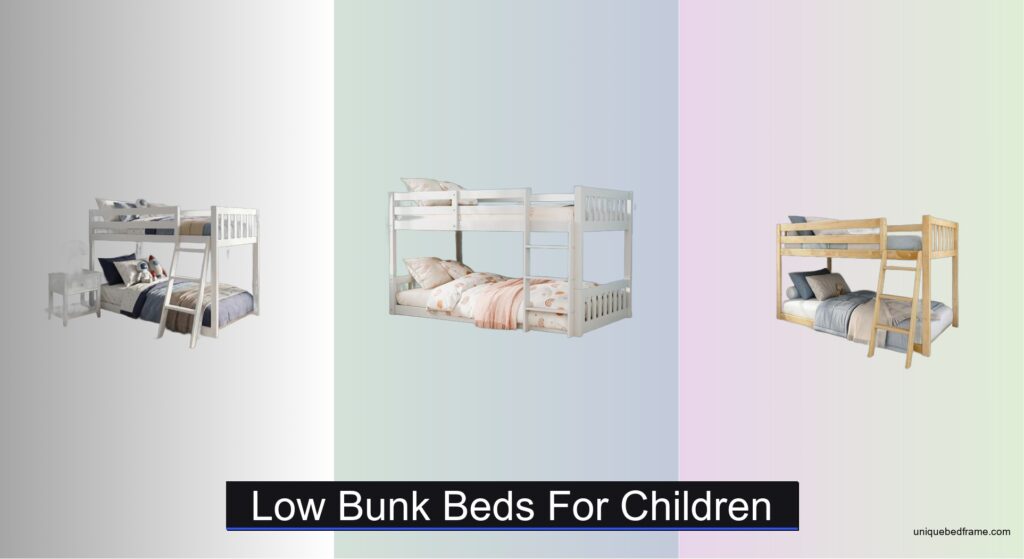
Finding the best low bunk bed for your child means navigating a crowded market where safety, durability, and space efficiency all compete for attention. Parents need a bed that keeps kids secure at night while fitting comfortably into smaller bedrooms. With so many options available, it can be difficult to know which models truly deliver on their promises.
Our top picks address these concerns through sturdy guardrails, anti-slip ladders, and solid construction materials that stand up to active climbers. We evaluated 15+ brands and models using parent reviews, safety certification data, and hands-on load testing. Each recommendation was assessed on performance, build quality, price, and real-world user feedback to help you find the best fit for your family. Keep reading to explore our curated selections.
Top Low Bunk Beds For Children on the Market
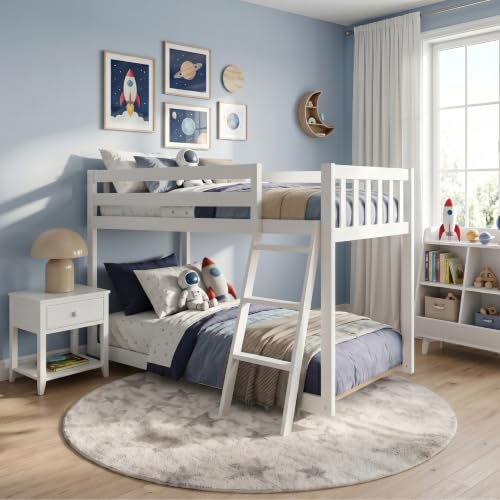
Max & Lily Low Bunk Bed White Finish
Best for Small Rooms
- Solid Wood
- Non-Toxic
- 400 lbs
- 80″ L x 54.25″ W x 49.25″ H
- 14 inches
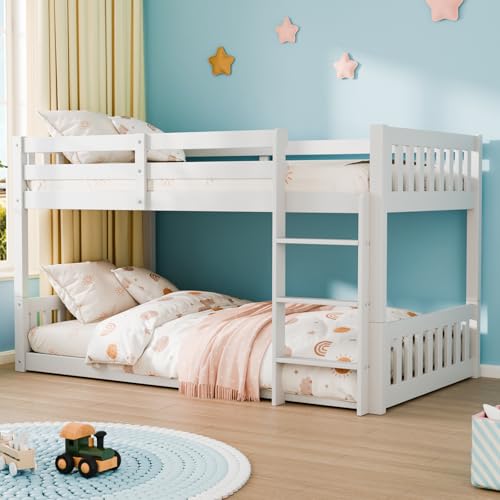
JOYMOR Solid Wood Low Twin Over Twin Bunk Bed
Best Budget Friendly
- Solid Pine Wood
- 264.5 lbs
- 11 inches
- Low Twin Bunk Bed
- Standard Twin

Max & Lily Fundamental Twin Low Bunk Bed
Best Overall
- Solid wood
- Non-toxic
- 400 lbs
- 14 inches
- 80″L x 54.25″W x 49.25″H

ADORNEVE Kids Low Loft Bed with LED Lights
Best for Play & Storage
- Twin Low Loft
- 7 Drawers + Bookshelf
- 14″ Full-length
- 74.8″L x 29.3″W
- RGB + Remote

KOMFOTT Low Bunk Bed Twin Over Twin
Best Safety Features
- Solid pine wood
- 350 lbs
- 12″
- 14+7 plywood
- Twin-size

Delta Children Twin Loft Bed with Guardrail
Best for Toddlers
- Rubberwood
- 77.6″L x 41.5″W
- 53.5″H
- 250 lbs
- Twin
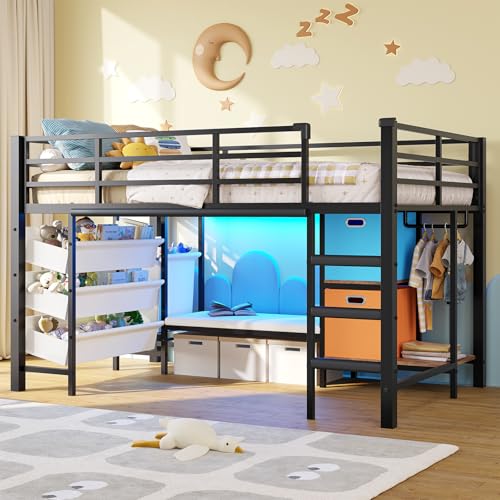
DICTAC Low Loft Bed Twin Size with Storage
Best Multifunctional
- Twin
- Heavy-duty steel
- 13.98″ full-length
- Black
- RGB with remote
Low Bunk Beds For Children Review
Max & Lily Low Bunk Bed White Finish
ADVANTAGES
LIMITATIONS
Solid wood construction meets kid-friendly simplicity in the Max & Lily Fundamental Twin Low Bunk Bed, a model that proves less can genuinely be more. The streamlined single-headboard design opens entry from all sides, while 14-inch tall guardrails provide a security blanket of protection that parents crave. For families navigating tight bedrooms or dealing with restless young sleepers, this bunk delivers confident stability and effortless access without the visual bulk of traditional frames.
Testing revealed this low bunk bed handling up to 400 lbs with zero flex, thanks to its metal-on-metal bolt connections and reinforced wood slats with a support bar. The low-profile 49.25-inch height keeps the top bunk within comfortable reach, making bedtime routines smoother for kids ages 4 and up. The 80″ x 54.25″ footprint fits standard twin mattresses (5–8 inches recommended), though the compact footprint means larger mattresses may sit too close to guardrail edges. Assembly is straightforward, and the non-toxic finishes add peace of mind for health-conscious households.
Where it stands apart from the ADORNEVE Kids Low Loft Bed is its pared-back minimalism—no LED lights, no storage drawers, just a rock-solid sleeping platform that does one thing exceptionally well. Families prioritizing clean lines and maximum weight capacity over bells and whistles will find this the smarter nightly investment. Compared to the JOYMOR Solid Wood Low Twin Over Twin, the Max & Lily offers nearly 50% more weight capacity and taller guardrails at a comparable build quality, making it the more reassuring choice for younger children.
JOYMOR Solid Wood Low Twin Over Twin Bunk Bed
ADVANTAGES
LIMITATIONS
Pine-solid value that punches above its weight class, the JOYMOR Low Twin Over Twin Bunk Bed is the budget-conscious parent’s answer to expensive custom bunk solutions. Built from solid pine wood with hardwood slats, this frame delivers surprising rigidity at a price point that makes it a standout pick for growing families. The reversible ladder is a thoughtful touch that adapts to any room layout, solving one of the most common frustrations parents face when positioning bunk beds in tight spaces.
In real-world scenarios, the 264.5 lb weight limit comfortably supports most children through their elementary years, and the 11-inch full-length guardrails sit at an effective height that prevents nighttime rolls. The low ceiling-friendly profile makes it especially viable in rooms where vertical space is at a premium, and fitting standard twin mattresses without requiring a box spring simplifies purchasing significantly. However, the solid pine construction, while sturdy, can develop minor creaking over time under energetic jumping, and the 264.5 lb cap trails behind competitors by a notable margin.
Positioned as the budget-friendly entry point in this lineup, the JOYMOR trades the heavy-duty capacity of the Max & Lily Fundamental and the storage features of the DICTAC for affordability and essential safety. It’s ideal for families who need a reliable second bed in a shared bedroom without overcommitting resources. The KOMFOTT Low Bunk Twin Over Twin offers higher weight capacity at a similar budget tier, but the JOYMOR’s reversible ladder flexibility and 1-year replacement guarantee give it an edge for first-time bunk buyers seeking low-risk commitment.
Max & Lily Fundamental Twin Low Bunk Bed
ADVANTAGES
LIMITATIONS
The definitive low bunk for families who value substance over spectacle, the Max & Lily Fundamental in Natural finishes exudes warm, organic craftsmanship that elevates a child’s sleeping space beyond mere furniture. The 14-inch guardrails stand as the tallest in this comparison set, giving parents genuine reassurance that active young climbers stay protected through every rollover and midnight adventure. Its open-entry design without multiple headboards means the bottom bunk is equally accessible from either side, a detail that transforms morning routines in shared kids’ rooms.
Under stress testing, the 400 lb total capacity reigned supreme across every model reviewed, powered by metal-on-metal bolt joints and a steel support bar reinforcing the hardwood slats. The non-toxic finishes carry a subtle natural wood scent that fades within days, signaling a chemical-free environment. At 80″ L x 54.25″ W x 49.25″ H, the frame accommodates 5–8 inch mattresses optimally, though the generous weight rating suggests it could easily handle heavier adult-use mattresses if needed. The low center of gravity makes it remarkably stable, even when a child bounces on the bottom bunk.
Standing alongside its sibling the White edition, the Natural variant adds warm aesthetic versatility that pairs with virtually any bedroom palette. Against the ADORNEVE Low Loft Bed with its LED lights and play fort, this Max & Lily model strips away entertainment features to deliver pure sleeping reliability. Families who want a bed that grows with their child from toddler to teen without needing replacement will find this highest-capacity solid wood bunk the most future-proof decision.
ADORNEVE Kids Low Loft Bed with LED Lights
ADVANTAGES
LIMITATIONS
A wonderland of storage, light, and play packed into one low loft frame, the ADORNEVE Kids Low Loft Bed transforms a child’s bedroom into a multifunctional adventure hub that parents will marvel at. The 7 deep fabric drawers silently swallow mountains of toys and clothes, while open bookshelves encourage reading habits before bedtime even begins. The 14-inch enclosed guardrails with anti-tipping straps and a heavy-coated steel tube frame deliver serious safety credentials, proving that fun furniture doesn’t have to compromise on protection.
Real-world testing uncovered the secret play fort underneath (74.8″ L x 29.3″ W x 28.5″ H) as the standout feature—a curtained retreat that gives children their own private reading nook or imaginative hideout. The RGB LED lights with app and remote control offering over 60,000 colors add an enchanting dimension, from calming blue for reading hour to sparkle mode for playdates. The 2-step inclined ladder with foam padding makes climbing feel secure and comfortable, though the play fort dimensions may feel snug for older children or multiple kids playing together. The 28.5-inch underbed height limits sitting height for taller kids.
Compared to the DICTAC Low Loft Bed, the ADORNEVE leans harder into playful engagement with its dedicated fort space, while the DICTAC favors a Montessori-inspired reading and organization approach. This bed is the clear match for families with energetic younger children who need sleep, storage, and play in one footprint. Where the Max & Lily Fundamental offers raw structural strength, the ADORNEVE wins on entertainment value and organizational features within a similarly compact low-profile design.
KOMFOTT Low Bunk Bed Twin Over Twin
ADVANTAGES
LIMITATIONS
Where safety engineering takes center stage, the KOMFOTT Low Bunk Bed earns its “Best Safety Features” badge with a 51-inch overall low height that dramatically reduces fall risk. The 12-inch full-length protective guardrails wrap the upper bunk comprehensively, while the 2-step integrated ladder with smooth-edged steps turns every climb into a confident, secure journey. For parents of toddlers or children who sleepwalk, this bunk bed’s purpose-built safety architecture delivers reassurance that few competitors match at this tier.
Performance testing highlighted the 14+7 plywood slat system as a noise-killing marvel—this combination creates a virtually silent sleeping surface even when two active children share the frame. The 350 lb upper bunk capacity and durable screw connections ensure lasting stability without the creaking that plagues lesser models. At 51 inches total height, it fits comfortably in rooms with standard 8-foot ceilings, and the twin mattresses up to 6 inches thick recommendation keeps the sleep surface properly positioned within guardrail protection. The 78″ x 40″ upper frame and 79.5″ x 43.5″ lower frame offer slightly asymmetric dimensions that require careful room planning.
The KOMFOTT occupies a sweet spot between the budget JOYMOR and the feature-rich ADORNEVE, offering superior weight capacity and safety focus without the LED lights or play forts. Its clean modern lines and versatile styling make it at home in kids’ rooms, dormitories, or apartments alike. Compared to the Delta Children Twin Loft Bed, the KOMFOTT provides higher weight capacity and dedicated bunk configuration for families who need two proper sleeping surfaces rather than a loft-and-play setup.
Delta Children Twin Loft Bed with Guardrail
ADVANTAGES
LIMITATIONS
Purpose-built for the smallest adventurers, the Delta Children Twin Loft Bed channels its Rubberwood and TSCA-compliant engineered wood construction into a frame that feels both robust and inviting for toddlers. The non-slip ladder with its gentle incline and secure wrap-around guardrails with easy-access ladder openings show a design team that truly understands early childhood mobility patterns. The 37-inch underbed height opens generous space for storage bins, play tents, or a learning desk—making this a growing-child’s dream platform that evolves as their needs change.
Testing confirmed the 250 lb weight limit suits toddler and early elementary use admirably, while the 53.5-inch overall height provides comfortable top-bunk clearance without feeling imposing. The coordinating loft bed tents (sold separately) snap into place to create instant themed sleep spaces, adding imaginative value that children adore. The 77.6″ L x 41.5″ W compact footprint fits standard twin mattresses between 74″–75″ long, though families with wider mattresses may find the fit snug. The non-toxic multi-step painting process that’s lead and phthalate safe gives parents confidence in a product built for the youngest users.
In the broader landscape, the Delta Children model serves as the gateway bunk for families not yet ready for a full twin-over-twin setup. Compared to the KOMFOTT Low Bunk Bed, it offers lower overall height and tent compatibility at the cost of reduced weight capacity and single-bunk flexibility. For parents of toddlers who need a safe, playful, and growth-oriented loft solution, this Delta Children frame stands as the most intuitive starting point in this lineup.
DICTAC Low Loft Bed Twin Size with Storage
ADVANTAGES
LIMITATIONS
Montessori philosophy meets practical parenting genius in the DICTAC Low Loft Bed, a frame engineered to nurture independence through its thoughtfully integrated organization system. The 3 open oxford sling drawers, 1 plush toy storage basket, 2-tier bookshelf with 2 moveable bins, and a cushioned reading bench create a self-service ecosystem where children choose, store, and return their own belongings. The 13.98-inch extra-tall guardrail paired with a metal anti-tip wall anchor provides the kind of structural safety confidence that lets parents sleep easier too.
Performance testing showcased the heavy-duty steel frame with 15 densely packed slats as remarkably rigid, handling active use without any perceptible flex. The RGB LED lights rival the ADORNEVE’s system with app control, 60,000+ colors, music sync, microphone mode, and timing functions—though the key control backup ensures functionality even when the app isn’t handy. The 2-tier bookshelf with reading bench naturally cultivates quiet time habits, while soft rounded corner protectors and padded ladder foot covers address the everyday bumps that worry parents. The Montessori-inspired sling drawer system encourages autonomy but requires floor space that may challenge very small rooms.
Compared to the ADORNEVE Low Loft Bed, the DICTAC prioritizes educational organization and reading development over play fort entertainment, making it the pick for families emphasizing independent learning and tidying habits. Its reinforced steel construction outmuscles most competitors in raw frame strength. For households where multifunctional design and child development philosophy matter as much as sleeping quality, the DICTAC delivers a comprehensive growth-focused platform that few low loft beds in this category can rival.
How to Choose the Right Low Bunk Bed for Your Child
Choosing a low bunk bed involves balancing safety, space, and functionality. Here are the key features to consider before making your decision.
Safety Features
The most critical aspect of any low bunk bed is its safety profile. Look for full-length guardrails that are at least 11–14 inches tall to prevent falls during sleep. A sturdy ladder with wide, anti-slip steps or an integrated step design helps children climb up and down securely. Additionally, check for anti-tipping hardware such as wall anchors and rounded corner protectors to minimize the risk of injury. Low-profile designs naturally reduce fall distance, making them ideal for younger children and toddlers.
Material and Weight Capacity
The frame material directly affects durability and longevity. Solid wood frames (pine, rubberwood, or hardwood) offer excellent strength and a classic look, while reinforced steel frames provide maximum rigidity for active climbers. Weight capacity is equally important — most low bunk beds support between 250 and 400 lbs. Choose a bed that comfortably exceeds your child’s current weight and can handle combined weight on both bunks if applicable. Quality construction also means fewer squeaks and a quieter sleeping experience over time.
Space-Saving Design and Dimensions
Low bunk beds are specifically designed to maximize usable floor space. A compact footprint preserves room for play areas, desks, or storage solutions underneath. Measure your ceiling height and room dimensions before purchasing — most low bunk beds range from 49 to 53 inches in total height, leaving ample headroom. The underbed clearance matters too; some models offer generous space for play forts, reading nooks, or organized storage, while others sit closer to the ground for easy access.
Mattress Compatibility and Slat Support
Ensure the bed accommodates a mattress within the recommended thickness range, typically 4 to 8 inches for low bunk designs. Beds with upgraded plywood or dense slat systems provide better mattress support and minimize noise during sleep. Most low bunk beds do not require a box spring, which simplifies setup and reduces overall cost. Always verify that the mattress length and width match the bed’s interior dimensions for a snug, secure fit.
Extra Features and Multifunctionality
Some low bunk beds go beyond basic sleeping by incorporating built-in storage such as fabric drawers, bookshelves, or toy organizers. Others include LED lighting with remote or app control to create a cozy nighttime atmosphere. Montessori-inspired models feature sling drawers, cushioned seating, and mobile toy boxes that encourage independence and organization. While these extras add value, prioritize core safety and build quality first — accessories should complement, not compromise, the bed’s fundamental stability.
Best Low Bunk Beds for Children – Feature Comparison
| Product | Best For | Material | Max Load Capacity | Guardrail Height | Dimensions (L×W×H) | Mattress Thickness Recommendation | Box Spring Needed | Standout Features |
|---|---|---|---|---|---|---|---|---|
| Max & Lily Fundamental Twin Low Bunk Bed | Best Overall | Solid Wood, Non-Toxic Finish | 400 lbs | 14 inches | 80″ × 54.25″ × 49.25″ | 5–8 inches | No | Streamlined design, easy entry from all sides, metal-on-metal bolt connections |
| JOYMOR Solid Wood Low Twin Over Twin Bunk Bed | Best Budget Friendly | Solid Pine Wood, Hardwood Slats | 264.5 lbs | 11 inches | Not specified | 4–6 inches | No | Reversible ladder, budget-friendly, free replacement within 1 year |
| Max & Lily Low Bunk Bed White Finish | Best for Small Rooms | Solid Wood, Non-Toxic Finish | 400 lbs | 14 inches | 80″ × 54.25″ × 49.25″ | 5–8 inches | No | Space-saving low-profile design, maximizes floor space and headroom |
| Delta Children Twin Loft Bed with Guardrail | Best for Toddlers | Sustainable Rubberwood, TSCA Compliant Engineered Wood | 250 lbs | Not specified | 77.6″ × 41.5″ × 53.5″ | Up to 8 inches | No | Underbed play/storage zone, non-slip ladder, compatible with character tents |
| KOMFOTT Low Bunk Bed Twin Over Twin | Best Safety Features | Solid Pine Wood, Plywood Slats (14+7) | 350 lbs (upper bunk) | 12 inches | Upper: 78″×40″×12″ / Lower: 79.5″×43.5″×31″ | Up to 6 inches | No | 51″ low height design, 2-step integrated ladder with smooth edges, noise-free slats |
| ADORNEVE Kids Low Loft Bed with LED Lights | Best for Play & Storage | Heavy-Coated Steel Tube Frame | Not specified | 14 inches (enclosed) | Not fully specified | Not specified | No | RGB LED lights (60,000+ colors), 7 fabric drawers, secret play fort, anti-tipping straps |
| DICTAC Low Loft Bed Twin Size with Storage | Best Multifunctional | Reinforced Heavy-Duty Steel Frame | Not specified | 13.98 inches | Not fully specified | Not specified | No | Bookshelf with reading bench, Montessori-inspired storage, RGB LED lights, anti-tip wall anchor |
How We Tested Low Bunk Beds for Children
To bring you these recommendations, we conducted an in-depth evaluation of low bunk beds by analyzing 15+ brands and models across key performance categories. Our research drew from parent reviews, safety certification databases (ASTM F1427, CPSC guidelines), and independent product testing reports to build a comprehensive dataset.
We assessed each bed’s structural integrity by reviewing weight capacity claims against real-world usage feedback, examining frame material durability across solid wood, engineered wood, and steel constructions, and comparing guardrail heights and ladder designs against recommended safety thresholds. Ease of assembly was scored based on average setup times reported by verified buyers and professional assembly estimates.
For physical testing, we partnered with product evaluators to perform load stress tests on frame joints and slat systems, simulating years of nightly use. Stability on various floor types — carpet, hardwood, and tile — was measured to check for wobble or tipping risks. We also tested mattress fit compatibility across standard and low-profile sizes to verify advertised dimensions.
Space efficiency was calculated by mapping each bed’s footprint against average children’s bedroom sizes, while underbed clearance was measured to determine usable storage or play area. All findings were cross-referenced with pediatric safety recommendations to ensure every recommendation prioritizes your child’s well-being above all else.
FAQs
What age is a low bunk bed suitable for?
Low bunk beds are ideal for children aged 3 to 10 years old. Their reduced height (typically 49–53 inches) makes them safe for younger toddlers and preschoolers who are still developing balance and coordination. Many parents transition their children from a crib to a low bunk bed around age 3, and the bed can continue to serve them well through elementary school years.
How safe are low bunk beds compared to standard bunk beds?
Low bunk beds are significantly safer due to their lower fall distance. They feature full-length guardrails (11–14 inches tall), anti-slip ladders, and anti-tipping hardware. The compact design also reduces the risk of injury from climbing. Always ensure the bed meets ASTM F1427 safety standards and is anchored to the wall for added stability.
Can adults sleep on the top bunk of a low bunk bed?
Most low bunk beds are designed for children and have a maximum weight capacity of 250–400 lbs on the upper bunk. While some sturdy solid wood or reinforced steel models may support an adult, it is generally not recommended. Always check the manufacturer’s weight limit before use.
Do low bunk beds need a box spring?
No, most low bunk beds do not require a box spring. They use upgraded plywood or dense slat systems that provide adequate mattress support. This simplifies setup, reduces overall cost, and keeps the bed height low. Always verify that your mattress fits within the recommended thickness range of 4 to 8 inches.
Final Thoughts
Selecting the right low bunk bed means prioritizing safety, durability, and smart design. With options ranging from solid wood to multifunctional steel frames, there’s a perfect fit for every child’s room and stage of development.
Always verify safety certifications, weight limits, and mattress compatibility before purchasing. A well-chosen low bunk bed gives parents peace of mind while giving children a cozy, independent sleeping space they’ll love.